Moselle · Germany
Schloss Lieser
Read more Read less
The winery Schloss Lieser looks back on a fascinating history that reaches back to the 19th century. The castle was built between 1885 and 1895, the winery founded in 1904. Today the winery is owned by Thomas Haag and stands for a long tradition in the production of high-quality Mosel wines. It is picturesquely situated on the Mosel and extends over some of the best sites in the region. The steep slopes and the slate soil offer ideal conditions for the cultivation of Riesling, which is the main grape variety of the winery. The winery combines traditional winemaking methods with modern technology to produce wines of exceptional quality. The range of Weingut Schloss Lieser includes a wide palette of wines that reflect the diversity and quality of the Mosel region. Particularly noteworthy are the Rieslings, which are the trademark of the winery and are known for their elegance, freshness, and minerality. At Schloss Lieser, quality is the top priority. The winery relies on careful manual work in the vineyard and gentle processing of the grapes in the cellar to unfold the full potential of the wines. Winemaking takes place taking into account traditional methods and state-of-the-art viticultural techniques to produce wines of the highest quality and authenticity.

Filters
12 products


Robert Parker Wine Advocate 2020
Awarded by Robert Parker Wine Advocate


About Schloss Lieser
From dilapidated castle to reference address of the Middle Mosel
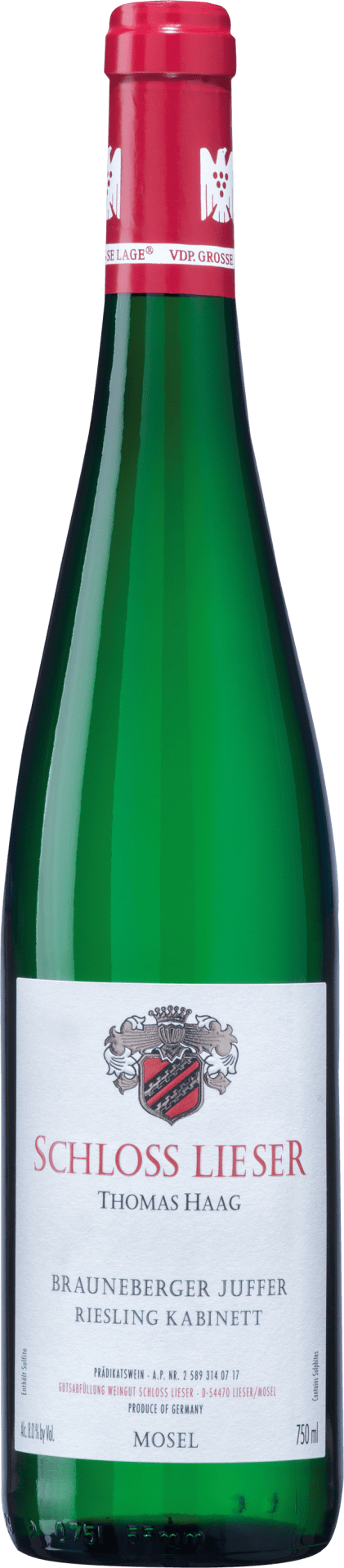
The Neo-Renaissance Schloss Lieser in the village of the same name on the Middle Mosel was built around 1875 for the industrialist Eduard Puricelli; from 1904, it served as a winery for the estates of the Barons von Schorlemer. After decades of decline, Thomas Haag took over the run-down property in 1992 as cellar master and director — and finally bought it together with his wife Ute out of insolvency in 1997. Thomas comes from the Fritz Haag winery dynasty in Brauneberg: his father Wilhelm shaped the Mosel over generations, and his brother Oliver continues to run the family winery Fritz Haag today. Instead of taking over the parental legacy, Thomas decided to stay in Lieser and build up Schloss Lieser independently. What began with six hectares almost exclusively in the Niederberg Helden site grew through consistent reinvestment: at the beginning of the 1990s, a parcel share in the Graacher Himmelreich was added, and in 2002, the first parcels in the Brauneberger Juffer and Juffer Sonnenuhr followed. Today, the winery manages around 25 hectares, spread over eight VDP.Grosse Lagen and 185 individual parcels.
Spontaneous fermentation, slate soil, selective hand-picking — no step without a reason
The vineyards are located without exception in south and southwest-facing sites with slopes of up to 80 percent. The soil is almost everywhere blue Devonian slate: it stores heat during the day, releases it to the vines at night, and shapes the characteristic minerality of the wines. Thomas Haag controls yield and quality through natural yield reduction and multiple selective hand-picking — a must for vineyards whose vines are sometimes over 100 years old.
In the cellar, Schloss Lieser works consistently with spontaneous fermentation: all wines ferment with natural yeasts at low temperatures in the historic vaulted cellar, depending on the style in stainless steel tanks or traditional Mosel Fuder barrels. Interventions are kept to a minimum — the goal is to let the terroir of each individual site speak, not to shape it. The winery is also certified according to Fair'n Green, the VDP's sustainability program.
Eight Grosse Lagen, one style: precision from Kabinett to Grosses Gewächs
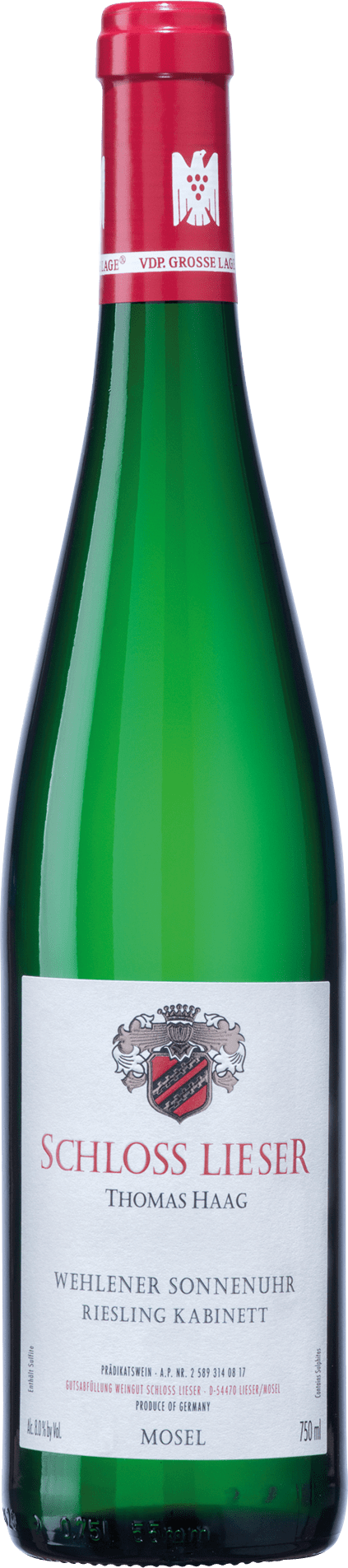
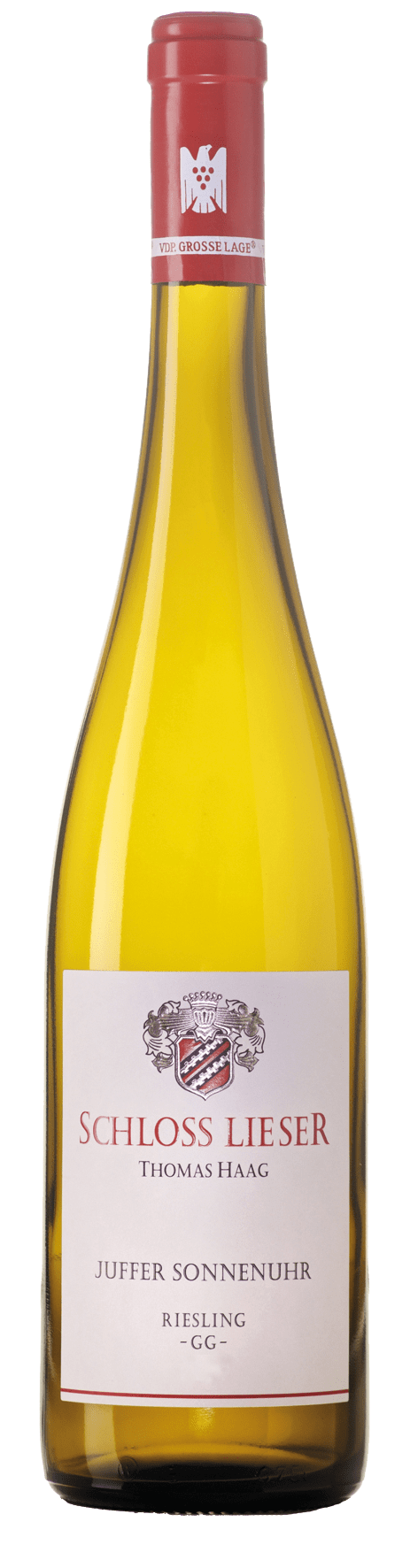
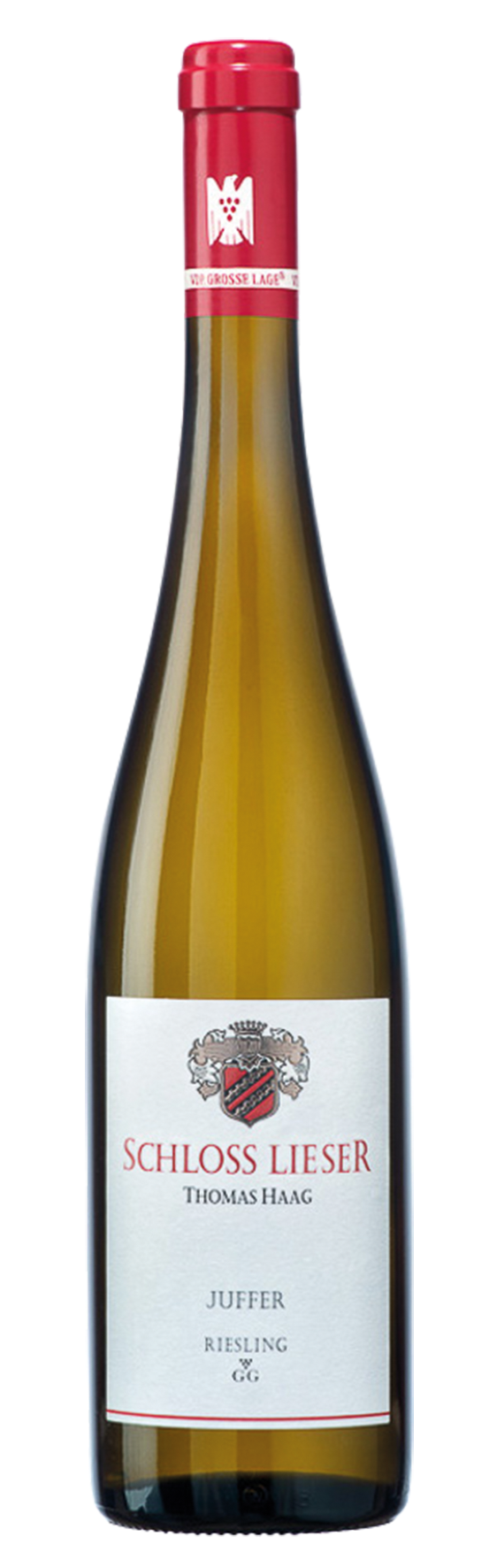
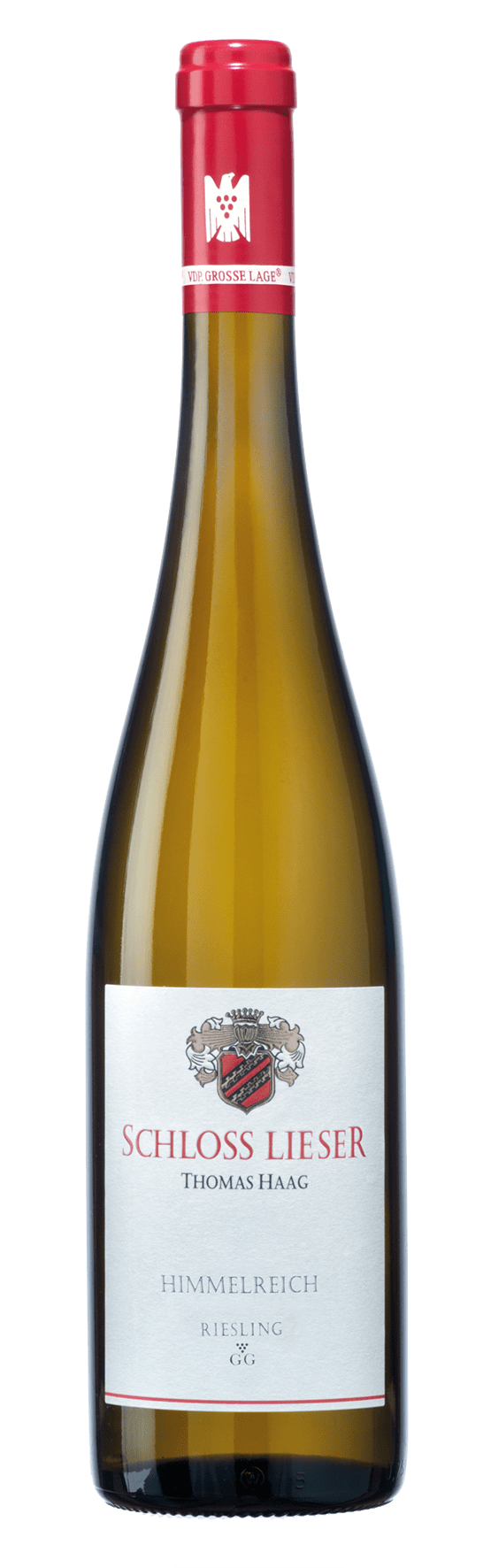
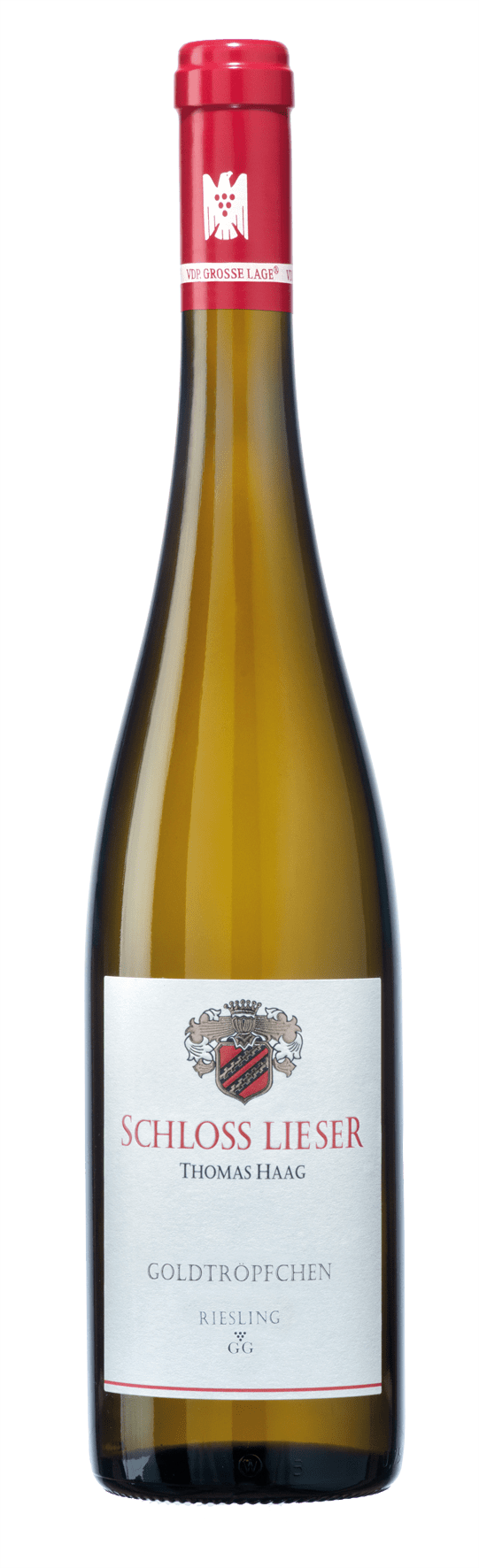
The range covers the entire style of Mosel Riesling — from light, bone-dry structured estate wines to fine-fruity Kabinetts to the dry Grosses Gewächs from Niederberg Helden, Brauneberger Juffer, Juffer Sonnenuhr, Goldtröpfchen, Graacher Himmelreich, and Wehlener Sonnenuhr. In addition, there are parcels in the Bernkasteler Doctor. The house style is clear: low alcohol levels, a lively, never sharp acid structure, slate minerality in the finish, and a sweetness-acidity balance that makes the wines storable for many years. The Grosses Gewächs openly carry the terroir of their origin in the glass — anyone who drinks Niederberg Helden alongside Goldtröpfchen has two unmistakable characters in front of them. In 2015, Gault&Millau named Thomas Haag Winemaker of the Year; since then, Schloss Lieser has held the highest rating in all five major German wine guides — as the only winery in Germany.