From the mountain village of Cerè to the front row of Italian viticulture
The history of the winery begins in the early 20th century, when Silvio Quintarelli first practiced viticulture on leased land in Valpolicella and finally founded the estate as his own property in Negrar in 1924. He met his son Giuseppe – simply called "Bepi" in Valpolicella – with a legacy that he would transform into something extraordinary. Born in Negrar in 1927, Giuseppe took over the business in the early 1950s and dedicated the next six decades to a single goal: to prove that the hills above Negrar, between Lake Garda and Verona, can produce wines of absolute world-class quality. A trip to Burgundy in the 1980s strengthened his conviction – he recognized the parallels between the soils of Valpolicella and Burgundy and decided to consistently exploit the region's potential. In January 2012, Giuseppe Quintarelli died at the age of 84. Today, his daughter Fiorenza, her husband Giampaolo Grigoli, and his grandchildren Francesco and Lorenzo continue to run the winery in his spirit.
Patience as a working principle: Appassimento, wooden barrels, no compromise
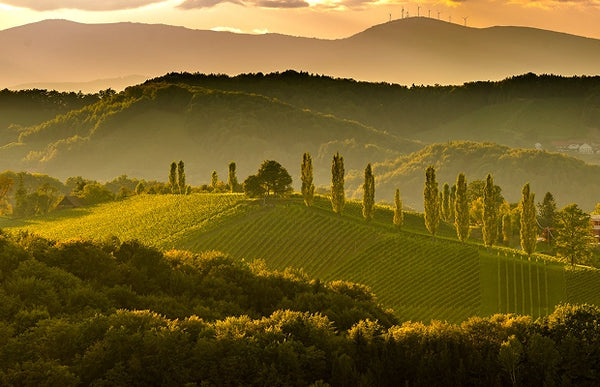
The estate – the Azienda Agricola Giuseppe Quintarelli in Cerè di Negrar – is located at an altitude of around 500 meters and covers twelve hectares of vineyards in DOCG and DOC sites. The altitude brings freshness, which gives the wines a clear acid structure despite their power. The classic grape varieties of the region are grown: Corvina, Corvinone, and Rondinella, supplemented by Cabernet Franc and Cabernet Sauvignon, which Bepi was one of the first winemakers in Valpolicella to plant at all. The core of the cellar work is the Appassimento: harvested grapes are dried after the harvest using several methods – on wooden racks, in flat crates, or hanging – before they are pressed and slowly fermented. The wines then mature in large Slavonian oak barrels, the botti: the Amarone for at least seven to eight years, the Riserva for up to ten. Only when the family deems the maturity worthy does the wine leave the cellar. In weak vintages, no Amarone is produced – a principle that is hardly to be found in the modern wine trade. The winery does not maintain a website and does not engage in any marketing; the handwritten labels on each bottle are the only external identifying mark.
Amarone, Alzero, Primofiore: a range without gaps
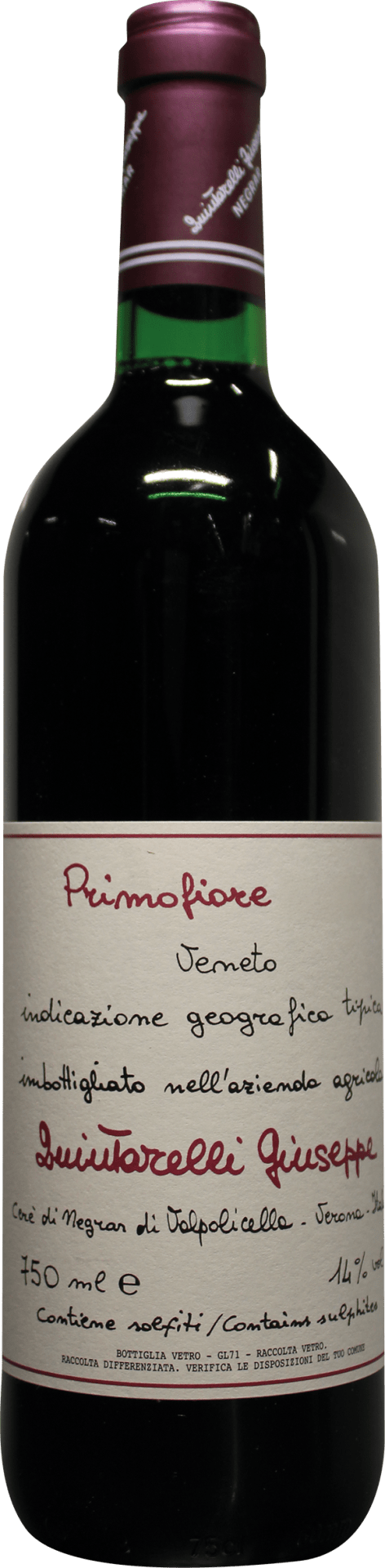
The Amarone della Valpolicella Classico – a cuvée of around 55% Corvina and Corvinone, 30% Rondinella, and other indigenous and international varieties – is considered the reference point for the entire style. It shows dried cherry, leather, tar, and violets, has structure for decades, and a finish that lingers in the glass long after it is empty. The Valpolicella Classico Superiore is made partly from fresh grapes and partly from grapes dried for two months and matures on the Amarone lees – more depth than the typical profile of this category would suggest. Next to it is the Alzero, Bepi's personal homage: Cabernet Franc, Cabernet Sauvignon, and Merlot, dried for four months, aged first in French barrique, then in Slavonian oak – a wine that transfers the Appassimento logic to Bordeaux grape varieties and develops a very unique character, dark, spicy, and dense. The Primofiore combines local varieties with partially dried Cabernet and shows that even the most accessible wine of the estate bears the house's signature style: red fruit, spice, fresh acidity, fine structure from a year in Slavonian oak. Anyone who opens one of these wines has time – and gets it back.