Since 1925: How a family helped write the Aglianico world of Southern Italy
It all started with a simple decision: Anselmo Paternoster, a winemaker from Barile, bottled Aglianico wine for the first time in 1925 — not for his own consumption, but for sale. What seemed like a small entrepreneurial gesture at the time laid the foundation for one of the most significant wineries in Southern Italy. His son Giuseppe, known as Pino, took the helm and became the first qualified oenologist in the region — and one of the key figures behind the founding of the DOC Aglianico del Vulture in 1971. With Fabio Mecca, the fourth generation now continues to lead the winery as an oenologist. Since 2016, Paternoster has been part of the Tommasi Family Estates, a Northern Italian winemaking family from Valpolicella — a partnership that focuses on continuity without compromising the identity of the house.
Volcanic soil, parcel thinking, and historical tuff cellars
Monte Vulture, a volcano that became extinct about 130,000 years ago in the north of Basilicata, created the foundation for everything that defines Paternoster. Its cooled lava flows left behind a porous, mineral-rich, pyroclastic soil that stores water and releases it slowly during dry summers. It is precisely this dark subsoil that gives Aglianico del Vulture its mineral fingerprint and its aging potential. Paternoster's approximately 20 hectares of vineyards are spread across the historical sites of Barile at altitudes between 450 and 643 meters: Rotondo, Macarico, Pian di Carro, and Gelosia — small parcels, each with its own geological signature. Vinification is consistently carried out parcel by parcel to make the differences between the sites readable in the glass. The grapes for the Don Anselmo grow on particularly old vines, with naturally low yields between 35 and 40 quintals per hectare. The wines are stored and aged in historical tuff cellars, dug into the volcanic rock in Barile — more than a hundred centuries-old caves that keep temperature and humidity constant throughout the year.
Aglianico with attitude: structure, depth, no compromises
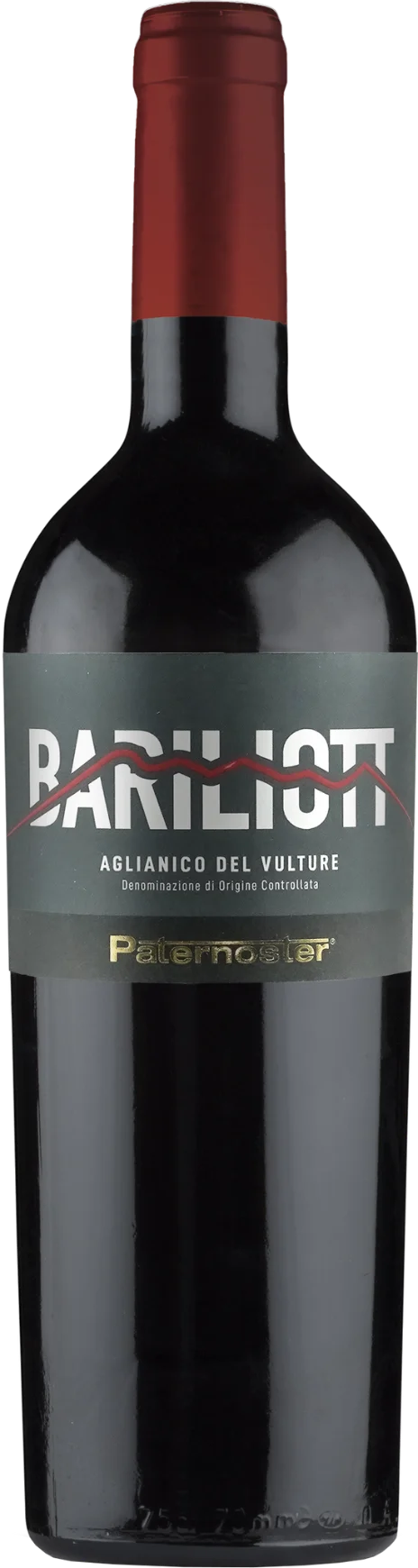
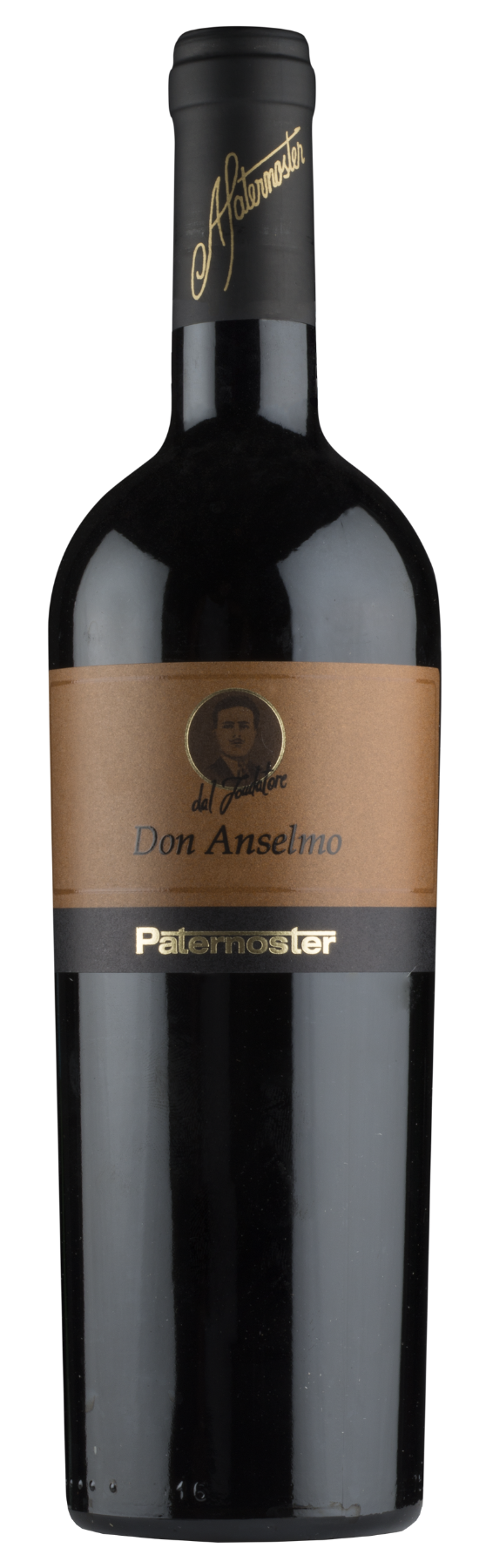
Paternoster has focused on a single grape variety: Aglianico. The annual production is deliberately limited to a maximum of 150,000 bottles. In addition to the entry-level cuvée Bariliott — made from younger Aglianico vines — the assortment includes the Don Anselmo, the flagship of the house, named after the founder and grown on selected old parcels. Both stand for the unmistakable style of the Vulture: intense fruit, firm tannin structure, dense acidity, and a long, mineral finish. Aglianico del Vulture is often compared by connoisseurs to the great red wines of the north — and rightly so, because the combination of volcanic soil, high altitude, and a long growing season produces wines with serious aging potential. Anyone who drinks Paternoster holds a piece of Basilicata in their hand: rugged, powerful, and unmistakably authentic.