From Burgenland to Friuli: a family puts down roots
The story of Jermann does not begin in Italy. 1881, Anton Jermann left a village on the border between Austria and Slovenia and settled in Villanova di Farra in Friuli — at that time still part of the Austro-Hungarian Empire, today the municipality of Farra d'Isonzo in the province of Gorizia. Within a few generations, simple farmers became winegrowers who understood their location in northeastern Italy for what it is: a hinge between Mediterranean climate and Alpine coolness, between Slavic, Germanic and Roman influences.
The real turning point came in the early 1970s. Silvio Jermann, a trained oenologist and grandson of the founder, took over the business and broke with what Friuli had to offer at the time: heavy, oxidative white wines for the mass market. He went to Canada, gained experience, returned with clear convictions — and met with resistance from his father, who would have preferred to see the winery as a side business. Silvio prevailed. Today, Jermann is one of Italy's most famous wine addresses, and since the Antinori family became majority shareholders, the winery is also well-positioned for the future in terms of capital.
Two estates, one principle: purity before effect
Today, Jermann manages 170 hectares of vineyards at two locations: the main estate in Villanova di Farra in the Isonzo area and a second winery in Ruttars in the Collio, which was inaugurated on 07.07.07 — Silvio Jermann's penchant for numbers is legendary. Both locations stand for powerful yet fresh white wines; the ponca-rich flysch rock of the Collio and the deeper alluvial soils of the Isonzo complement each other in the range.
In the cellar, an unwritten law applies, which is literally written above the entrance to the winery: "Cleanliness, order, cleanliness." Fermentation takes place primarily in stainless steel tanks at controlled temperatures to preserve fruit aromas and freshness; for prestige cuvées like Vintage Tunina and Dreams, French oak barrels are used, which add depth and texture without masking the terroir. Hand-harvesting with strict selection is standard. Chemical pesticides and herbicides are avoided — long before this became a marketing argument. 20 hectares of the property have been converted to organic viticulture.
Vintage Tunina and the art of the cuvée
The heart of the range is the Vintage Tunina: a field blend of Sauvignon Blanc, Chardonnay, Ribolla Gialla, Malvasia Istriana and Picolit, first released from the 1975 vintage. The name goes back to a mistress of Casanova who lived on the vineyard of the same name. At the time, Silvio Jermann fermented an interplanted old-vine vineyard just as it had grown — a concept that was considered eccentric in the modernized Italian wine world of the 1970s. The combination of spontaneity, long lees aging and the courage to create a cuvée made the wine a reference for all of Italy.
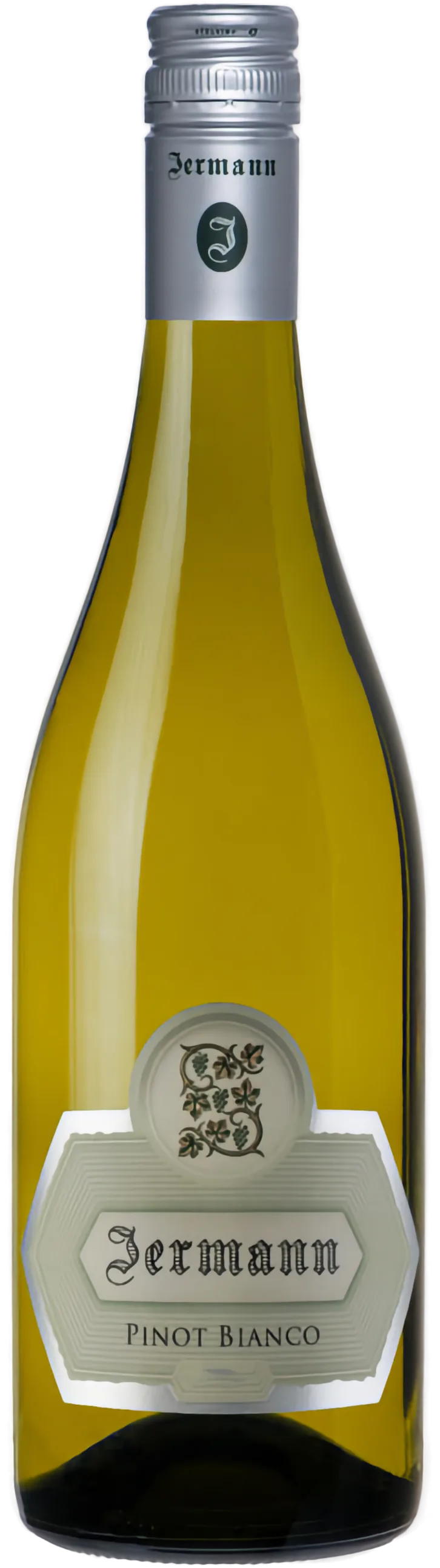
The range extends from the varietal Pinot Bianco with its clear, mineral line to the Vinnae, a Ribolla Gialla-based cuvée with lively acidity and aromatic precision, to rarities like the Pignacolusse from the autochthonous Pignolo grape variety — a red wine that shows that Jermann understands Friuli in all its varietal diversity. The range is rounded off by Dreams, a barrel-aged Chardonnay whose name refers to a U2 song that Silvio Jermann listened to on repeat while working on the wine. All wines share a stylistic feature: freshness and structure as equal partners, no wood for the sake of wood, no extract for the sake of points.