From the meeting point of the drove roads to Diageo classic
In 1897, lawyer John Grant, merchant George Sellar, and architect Alexander Mackenzie founded the Strathspey Distillery Co. Ltd. in Inverness-shire. Gaelic-speaking neighbors had long called the place Dail Chuinnidh – "meeting place" – because several drove roads for Highland cattle drovers converged here. Just one year after its founding, the company ran into financial difficulties; A. P. Blyth bought the distillery and gave it the name of the village: Dalwhinnie.
The following decades remained turbulent. In 1905, Dalwhinnie briefly passed into US ownership; with Prohibition, it returned to a Scottish blender in 1919 and became part of the Distillers Company in 1926. A fire partially reduced the distillery to rubble and ashes in 1934; the stills did not run again until 1938. When the license for Dalwhinnie passed to James Buchanan, the distillery was included in the Classic Malts selection as a representative of the Highlands in 1988 – a milestone that turned Dalwhinnie from a blend supplier into an independent single malt brand.
Working in the coldest inhabited place in Great Britain
At around 326 meters above sea level, Dalwhinnie is one of the highest distilleries in Scotland, nestled between the mountain ranges of the Cairngorms National Park. The climate is correspondingly harsh: Dalwhinnie is considered the coldest settlement in Great Britain, with an average temperature of only 6 degrees, and the distillery still operates its own weather station to this day. This location also shapes the raw materials: the water comes exclusively from the Lochan an Doire Uaine high in the Drumochter Hills and flows as the Allt an t’Sluic over the surrounding peat bogs into the distillery.
For maturation, Dalwhinnie relies on a detail that has become rare: wooden worm tub condensers, where the vapors are led through a copper coil through cold water outdoors. A modernization in the 1980s initially replaced these tubs with modern shell-and-tube condensers – at the end of the reconstruction, however, the worm tubs returned because the switch to the condensers had changed the end product too much. This return to the traditional process is considered one of the reasons for the soft, complex character of the distillate.
Gentle Spirit: Malt sweetness instead of peat power
Unlike many Highland neighbors, Dalwhinnie does not rely on smoky power, but on restraint. The distillery is known for its fresh, gentle, and elegant style, with green apple and orchard fruit alongside honey-sweet, malty notes. The majority of the stock is matured in ex-bourbon casks made of American oak, which emphasizes the bright fruit and honey sweetness instead of masking it with sherry spice.
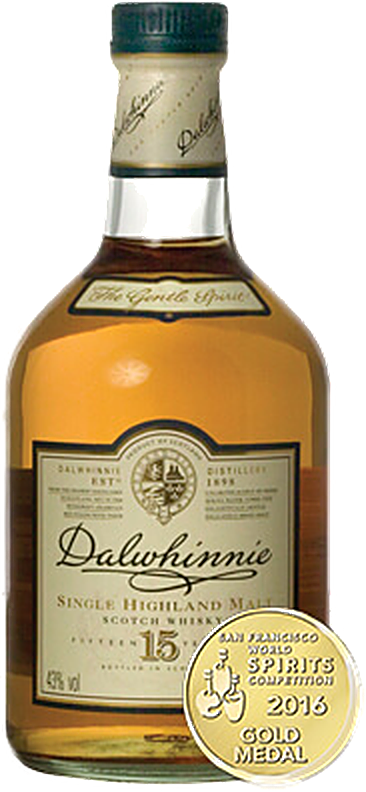
The core of the range is still the 15 Years Highland Single Malt, that Classic Malt bottling that made Dalwhinnie famous in 1988. Neat or with a splash of still water, it shows its malty balance most clearly; as a nightcap after a hearty game dish or with mature cheddar, it fits just as well as for a quiet tasting by the fireplace.