From Verolanuova to Marsala: the Minini family in Sicily
The roots of Corte dei Mori lie in Lombardy. In 1920, Francesco Minini founded a small winery in Verolanuova, shortly after returning from the First World War. He had little money but great determination. At the beginning of the 1960s, the estate was completely rebuilt at a new location. To this day, the winery is based as Cantine Francesco Minini in Verolanuova near Brescia.
Mario Minini sought a new challenge and found it in Sicily. Near Marsala, he acquired 80 hectares of land and converted an old post station into a winery. Thus, Corte dei Mori was born, one of several wineries that the family has built or taken over in various regions of Italy.
Lombard cellar technology, Sicilian vines
The winery combines Sicilian viticultural tradition with the vinification of Lombardy. The vines are typical for the island: Nero d'Avola, Grillo, Grecanico, Inzolia, and Vermentino. The grapes for the Vermentino grow on gentle hills in western Sicily near Marsala, where a light sea breeze blows. The higher altitudes around Marsala provide the Grillo.
Vermentino and Grillo ferment in stainless steel tanks and then mature in the bottle. This keeps fruit and freshness in the foreground. In addition to the wines from Corte dei Mori, Minini also offers Appassimento wines, where grapes are dried before fermentation. In Sicily, these are a Syrah and a Nero d'Avola from the tank line.
Fresh Vermentino, spicy Nero d'Avola
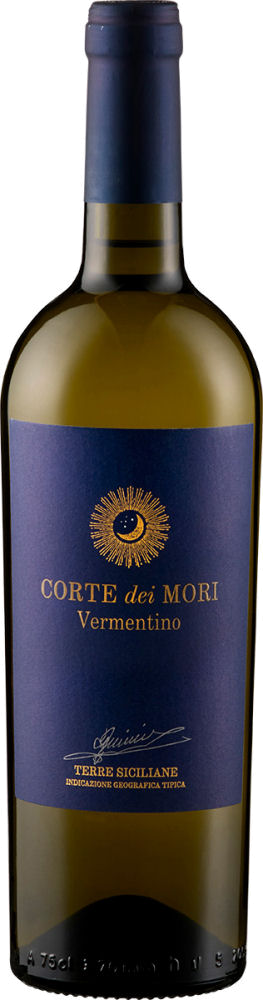
The Corte dei Mori assortment includes Vermentino, Grillo, Grecanico-Inzolia, a Rosato, and Nero d'Avola. The Vermentino Et. Blu has 13% vol and about 6 g/l acidity. It smells of apricot, peach, and white flowers, plus a hint of vanilla and herbs. On the palate, it appears structured and fresh; the finish is slightly mineral. Serve it well chilled with grilled fish or Mediterranean salads.
The Nero d'Avola of the line shows itself deep ruby red, with aromas of blackberry, sour cherry, and pepper, plus a trace of eucalyptus. It is dry, silky in the mouth, and has harmonious tannins. At 15 to 18 °C, it goes well with pasta with tomato sauce, tender pork and beef, or mild cheese. Overall, these are modern, accessible wines that clearly reveal their origin.