Pioneers of a forgotten region: the Tipa family and Castello ColleMassari
When Claudio Tipa and his sister Maria Iris Bertarelli acquired Castello ColleMassari in the Tuscan village of Cinigiano in 1998, the Montecucco DOC was barely known outside the region. The area is wedged between Brunello di Montalcino to the northeast and Morellino di Scansano to the south — for too long, it lived in the shadow of its more famous neighbors. Tipa, a native Sicilian who had previously worked in the industrial sector, had never left his passion for wine behind. With the purchase of the historic estate, a facility whose origins date back to the Middle Ages and which once served as a Cistercian-style agricultural farm, he meant business. With the very first vintage bottled in 2000, ColleMassari sent a clear signal: Montecucco had been underestimated.
Today, Claudio Tipa's portfolio includes several top Tuscan wineries, including Grattamacco in Bolgheri and Poggio di Sotto in Montalcino. The heart of the operation remains Castello ColleMassari — a 1,200-hectare estate, of which around 110 hectares are planted with vines.
Organic viticulture and a cellar that works according to the laws of gravity
From the very beginning, ColleMassari has operated according to the principles of certified organic viticulture — without herbicides or pesticides in the vineyards, which are situated on stony-loamy soils at an altitude of 320 meters at the foot of Monte Amiata. The microclimate here is exceptional: strong day-night temperature differences ensure that the grapes ripen slowly and retain acidity and aromatics.
Claudio Tipa designed the cellar himself — a structure spanning over 6,000 square meters across four floors that relies entirely on gravity. Grapes and must are moved from top to bottom without pumps, which processes the harvest gently and preserves aromatic integrity. Large wood dominates the aging cellar; modern barriques are used only for Cabernet Sauvignon, if at all. Cellar master Luca Marrone leads this process with a focus on terroir expression rather than technical intervention.
Sangiovese as the benchmark: what distinguishes the wines from Montecucco
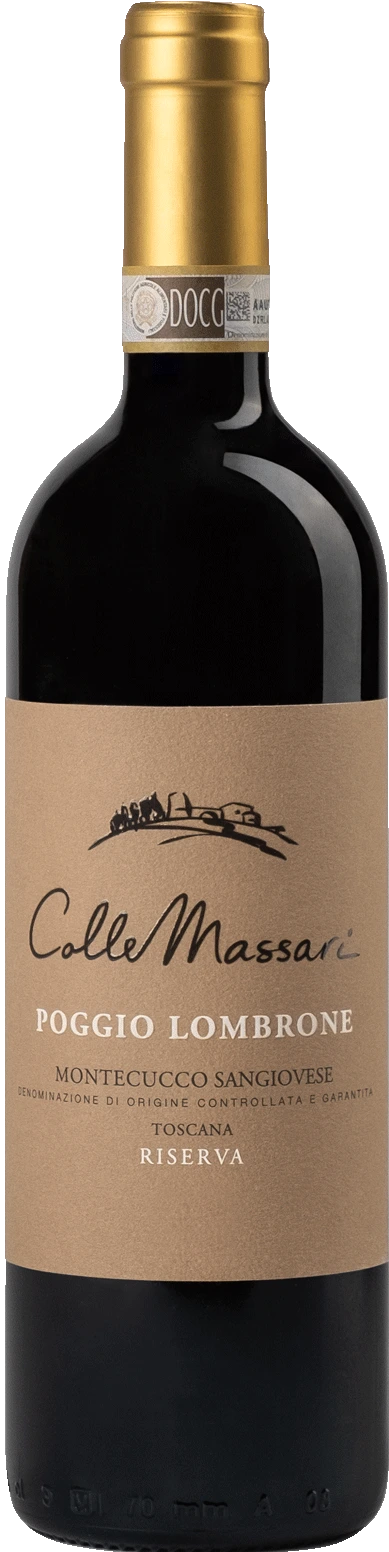
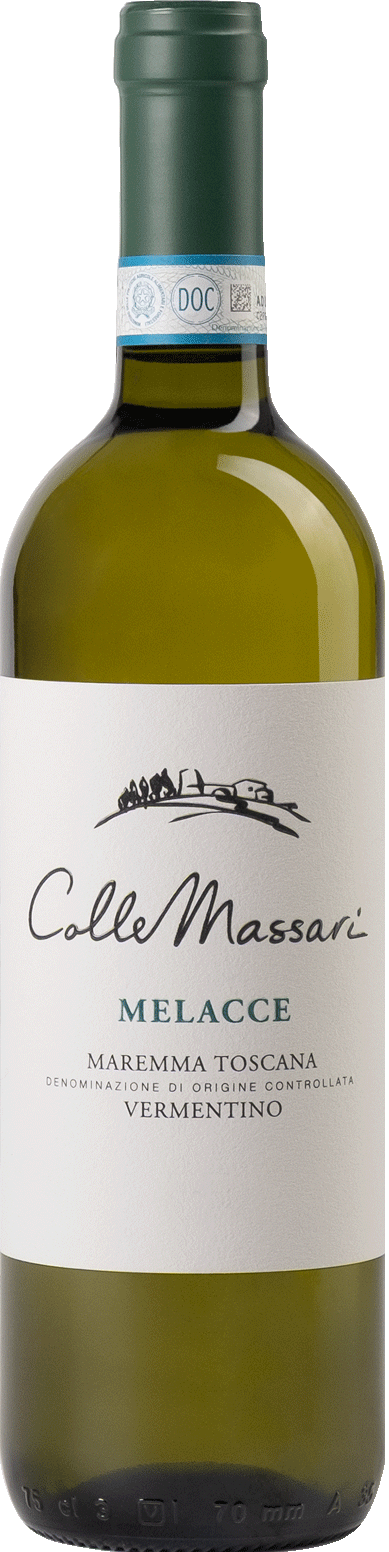
Around 80 percent of the vineyard area is planted with Sangiovese, supplemented by Ciliegiolo, Montepulciano, and smaller portions of other varieties. Vermentino dominates the whites — it represents the fresh, salty side of the winery, reflecting its proximity to the coast — about 30 kilometers to the Tyrrhenian Sea. The flagship in the red wine category is the Poggio Lombrone, a Montecucco Sangiovese Riserva DOCG from a single cru with vines over 60 years old. It shows what Sangiovese can achieve at this location: depth and structure without the heaviness of some Brunello sites. The fact that the direction is right was confirmed in 2014 by Gambero Rosso with the award for "Winery of the Year" — barely a decade and a half after the first vintage.