From Carmelite monks to Premier Cru Classé
The history of Château Rieussec dates back to the 18th century: at that time, the Carmelite monks from Langon cultivated the estate, which is located on the border of the municipalities of Fargues and Sauternes. With the French Revolution, the estate was confiscated and auctioned off as national property around 1790. Several changes of ownership followed — including the Gasqueton family, also owners of Château Calon-Ségur in Saint-Estèphe — until the estate was classified as Premier Grand Cru Classé de Sauternes at the Paris World Exhibition in 1855. In 1984, the Domaines Barons de Rothschild (Lafite) took over the winery and initiated the most consistent phase of its history: a new cellar was built in 1989 in the heart of the vineyard, grape selection was significantly tightened, and in difficult vintages like 1993, the Grand Vin was completely omitted for quality reasons. Today, Saskia de Rothschild is responsible for the estate, with Olivier Trégoat as director and Bertrand Roux as cellar master in charge of technical operations.
Noble rot requires patience: vineyard, terroir and vinification
The 85 hectares of vineyards of Château Rieussec are located on one of the highest points of the appellation — up to 78 meters above sea level, right next to Château d'Yquem. The soils consist of gravel, sand and clay over limestone. The vineyard is planted mainly with Sémillon, supplemented by Sauvignon Blanc and a small proportion of Muscadelle. The geographical location, directly at the confluence of the Ciron river into the Garonne, creates the humid autumn mornings and the morning mists typical of Sauternes, which favor the development of Botrytis cinerea — so-called noble rot.
Harvesting is done exclusively by hand in several passes, with only optimally botrytized berries entering the small pneumatic presses. Stems and seeds are carefully separated. Each plot is pressed and fermented separately, then aged in barrels. Multiple tastings per barrel determine which batches are included in the Grand Vin. The aging period is around 30 months in French oak barrels. Under Saskia de Rothschild, the estate has also acquired B-Corp certification — a sign of its growing commitment to sustainability.
Golden Sauternes and a dry counterpart
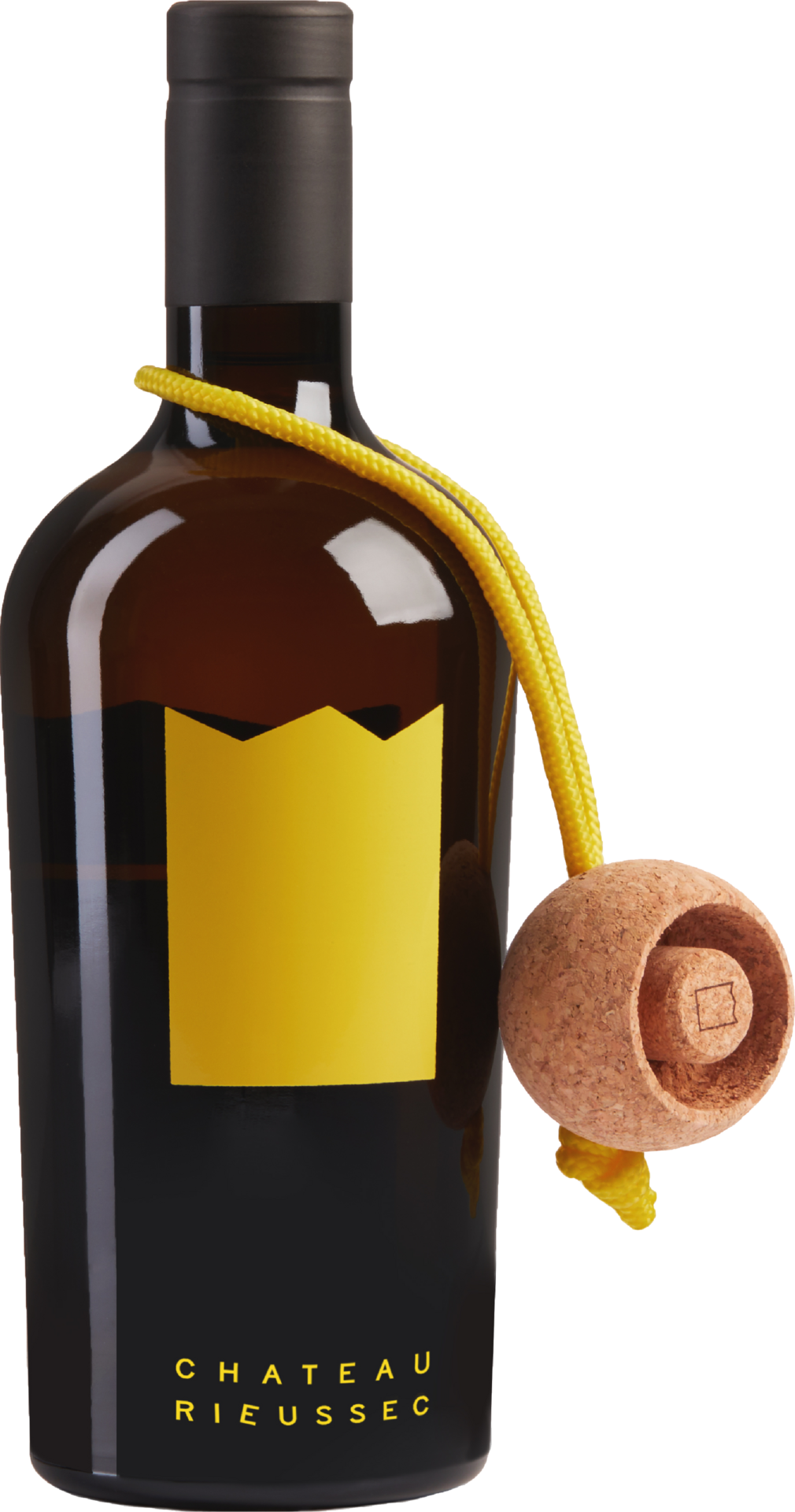
The heart of the range is the Château Rieussec, a concentrated sweet wine with aromas of dried apricot, honey, candied citrus peel and a hint of saffron — the direct result of botrytis, which extracts water from the Sémillon and concentrates the natural sugars and aromas. The wine shows a dense, multi-layered texture combined with lively acidity, which ensures freshness and length on the finish. As a second wine, the Carmes de Rieussec is available, which is produced according to the same selection criteria and impresses with a distinct citrus note — its name is a direct homage to the estate's founding monks.
Those looking for a dry Bordeaux Blanc will find it in the “R” de Rieussec: a blend of Sémillon and Sauvignon Blanc, partly from the same vineyards as the Grand Vin, 20 percent fermented in barriques. The result is an aromatically precise, fresh white wine that translates classic Sauternes elegance into a dry, more everyday form. The Grand Vin is a must with foie gras, but it also opens up to strong blue cheese, aged Mimolette or as an accompaniment to a Tarte Tatin.