From medieval lordship to the figurehead of Moulis-en-Médoc
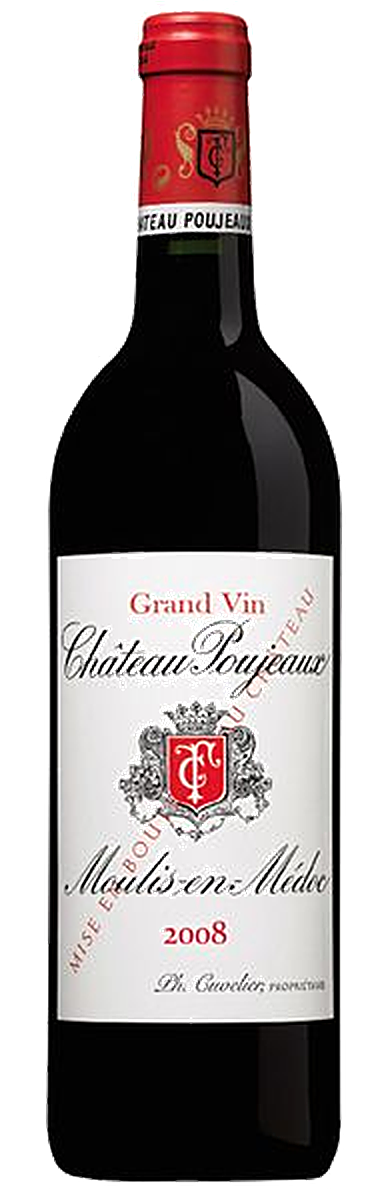
The history of Château Poujeaux dates back to the Middle Ages, when the estate was still a dependency of the Latour Saint-Mambert lordship – today's Château Latour in Pauillac. In the 19th century, the estate gained its independent identity and began to produce its own wines. The Theil family managed the property for decades and expanded its reputation. In 2008, Philippe Cuvelier acquired the Château – he and his family were already established as owners of Clos Fourtet, a Premier Grand Cru Classé in Saint-Émilion. With the change, a new era began for one of the most traditional estates of the Moulis-en-Médoc appellation.
In the classification of the Crus Bourgeois, Château Poujeaux was included in the highest category, the Crus Bourgeois Exceptionnels – an award that was granted to only nine estates in the entire Médoc.
Hand-picking in the vineyard, precise vinification in the cellar
The 70-hectare vineyard estate is located as an almost closed single block on the crest of Grand Poujeaux in the northeast of the appellation. The soil consists mainly of Quaternary gravel layers – deep Günz gravels that store heat, drain water, and force the vines to root deeply. The vines have been in the ground for an average of 30 years, planted with a density of 10,000 vines per hectare.
Today, Matthieu Cuvelier and director Christophe Labenne manage the estate together, advised by oenologist Stéphane Derenoncourt. In the vineyard, the team relies on manual harvesting in small crates, green harvesting for yield control, as well as mechanical and manual grape selection. In the cellar, vinification is carried out separately according to grape variety, age of the vines, and origin of the parcel. Fermentation takes place as whole berries with gentle extraction, and aging lasts 12 months in French oak barrels, 30% of which are new. The quantity selection between Grand Vin and second wine is consistent – the annual production is between 21,000 and 24,000 cases of the main wine.
Structure, depth, and the typical face of Moulis
The Grand Vin Château Poujeaux relies on a classic Médoc blend: 50% Cabernet Sauvignon, 40% Merlot, 5% Cabernet Franc, 5% Petit Verdot. The result is deeply colored, dense red wines with a framework of fine-grained yet expressive tannins. Dark berries, graphite, and spice accents dominate the nose; the finish shows the mineral imprint of the gravel soil. The second wine La Salle de Château Poujeaux as well as Haut de Poujeaux from the Haut-Médoc appellation complement the range for earlier drinking occasions. Poujeaux goes well with leg of lamb, entrecôte à la bordelaise, or strong aged cheeses – and also cuts a fine figure in a blind tasting.