Four generations of Moreau on the edge of Catusseau
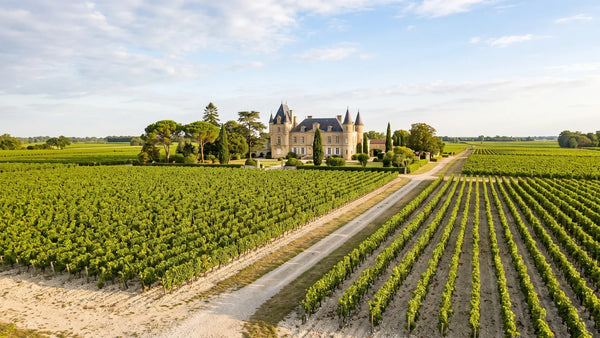
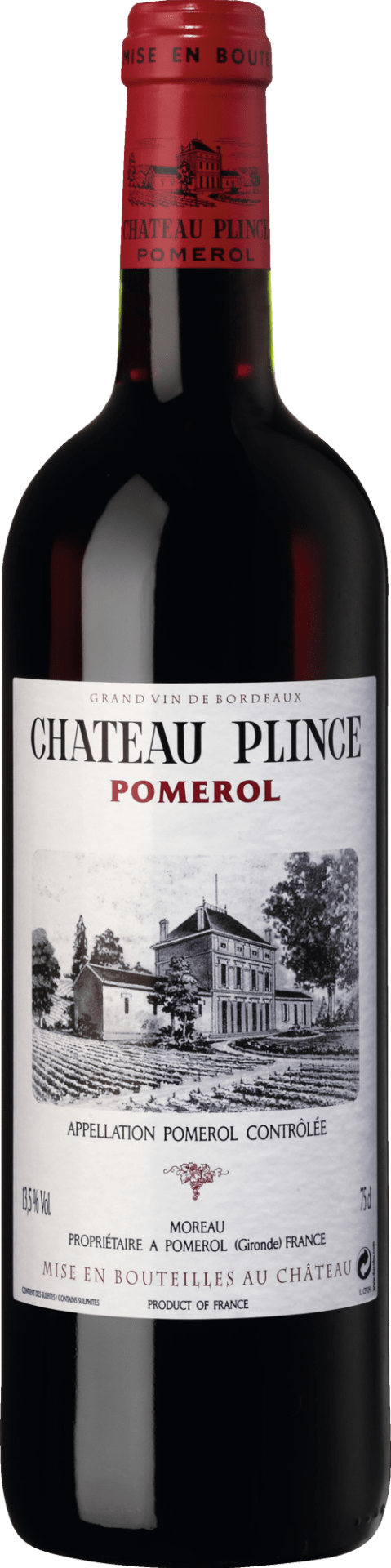
Château Plince is located on the eastern outskirts of Pomerol, just before Libourne and near the village of Catusseau. The neighbors are Château Nénin and Château La Pointe. According to their own information, the estate has belonged to the Moreau family for more than a century. Importers speak of more than four generations. Today, Michel Moreau manages the property as Gérant.
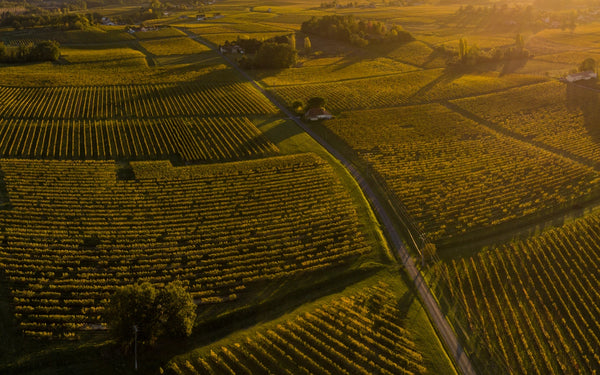
The vines stand in a single contiguous block. The house is surrounded by a park with chestnut trees, a rarity in Pomerol because even the gardens there are often planted with vines. It has won gold medals several times at the Concours Agricole de Paris, most recently for the 2000, 2007, 2012, and 2016 vintages.
Ferruginous sand, concrete tanks and one-third new wood
The vineyard stands on dark sand over an iron-rich subsoil, known in Bordeaux as “crasse de fer.” Throughout the year, the Moreaus work classically by hand in the foliage and with green harvesting so that the grapes ripen evenly.
After the harvest, the grapes are carefully sorted and filled into temperature-controlled concrete tanks. A week of cold maceration follows before fermentation. Fermentation lasts one to two weeks, after which the wine remains on the skins for another one to two weeks. Malolactic fermentation and maturation for 12 to 18 months take place in French barriques, one-third of which are new.
Since 2022, the estate has been restructuring its vine stock. A new planting of almost 3,900 square meters, directly adjacent to the existing block, increases the vineyard area from 8.66 to around 9 hectares. As soon as all areas are in production, the share is expected to be 87% Merlot and 13% Cabernet Franc.
Classic Pomerol with Merlot at the center
Previously, the wine consisted of 72% Merlot, 23% Cabernet Franc, and 5% Cabernet Sauvignon. This creates a Pomerol in a classic style with ripe fruit, depth, and concentration. The wine is considered soft and supple. The French wine press describes younger vintages with cassis and leather (2018) or with sweet spices, plum, and undergrowth (2019).
On average, the estate bottles around 55,000 bottles per year. The Grand Vin Château Plince is the centerpiece of the range. It pairs well with dishes with depth, such as game terrine, fried duck liver, or a braised roast. Decant it shortly before serving, then it will show its fruit more clearly.