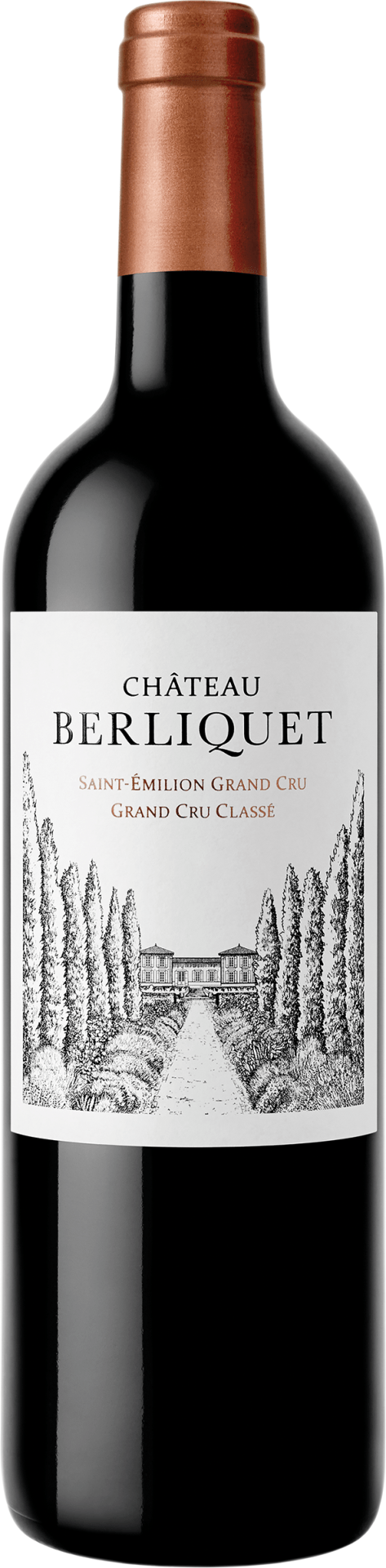
Since 1768 in Saint-Émilion: one of the oldest addresses on the Right Bank
Château Berliquet appears on the Belleyme maps in 1768 — at a time when most estates on the Right Bank did not yet have their own names. As early as 1784, the estate was selling its wine under its own name, a rarity for the time. After changing owners — including the de Sèze and Pérès families — the Count de Carles acquired the Château in 1918. His successor, Vicomte Patrick de Lesquen, joined the local cooperative in 1953; it was not until the end of the 1970s that Berliquet returned to self-vinification with its own cuvier.
In 2017, the Wertheimer family — owners of Chanel — bought the estate. For the group, it is their third Bordeaux engagement after Château Canon and Château Rauzan-Ségla, and Nicolas Audebert, who already manages Canon, took over the management. What followed was not a radical reinvention, but a patient return to terroir and craftsmanship.
Horse in the vineyard, amphora in the cellar: terroir as a guide
The approximately nine-hectare vineyard rectangle lies on the argilo-calcareous plateau of Magdeleine, wedged between Château Canon and Bélair-Monange, with a south-west exposure towards the Dordogne. The vine planting has remained unchanged for almost 200 years — a single block. The green-grey tertiary clay layers over the limestone subsoil decisively shape the mineral basic character of the wines. Since the 2024 vintage, Berliquet has been officially organically certified; soil cultivation is traditionally carried out with a horse, which loosens and aerates the soil row by row.
In the cellar, the team vinifies plot-by-plot in small 20-hl stainless steel and concrete tanks. Part of the harvest is fermented as whole bunches. Aging takes place for 16 months in French oak barriques, 50% of which are new, with the first half on the fine lees. Parts of the cuvée mature in amphorae — a deliberate means of preserving fruit and rock character without excessive wood influence. Pumping-over, racking, and aging duration are recalibrated vintage by vintage.
Limestone, cherry, structure: what Berliquet shows in the glass
The cuvée consists of 70% Merlot, 25% Cabernet Franc, and 5% Cabernet Sauvignon. The profile is not trimmed for opulence: the limestone tones give the wines a cool tension that is maintained even in warm vintages. Typical are aromas of sour cherry, dark plum, and a hint of herbs, carried by fine-grained tannins and a long, mineral-influenced finish. Not a heavyweight, but a wine with precision and groundedness — classic Saint-Émilion without gimmicks. Pairs well with entrecôte with herb butter, game poultry, or mature Tomme cheese. Serving temperature: 16–18 °C.