From Florentine tradition to the Apulian Murgia
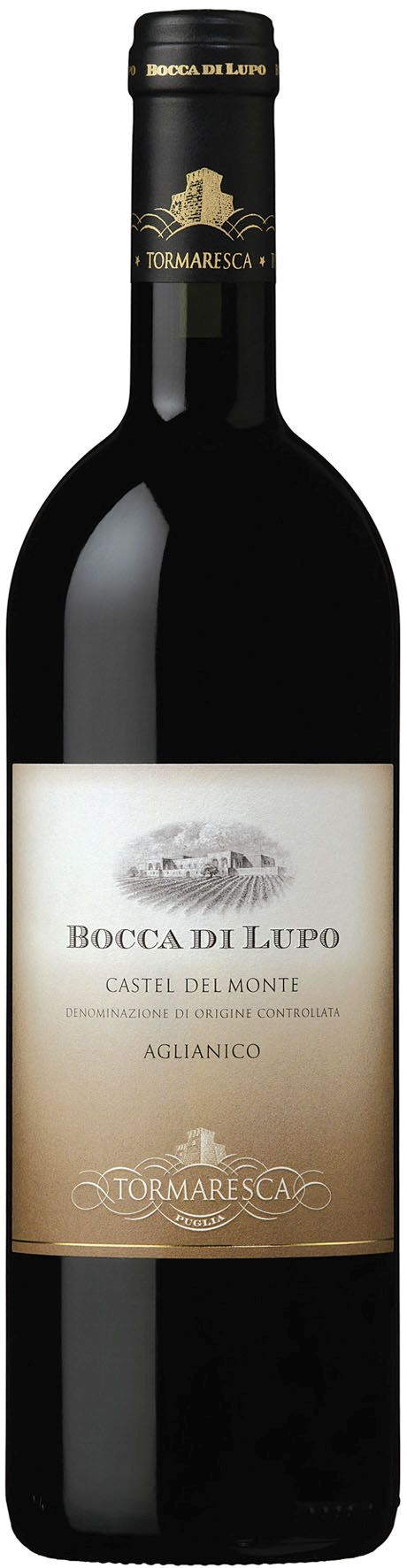
The Marchesi Antinori are among the oldest winemaking families in Italy — their history in viticulture goes back over 26 generations. In 1998, Piero Antinori decided to expand the family's commitment to Southern Italy and acquired the Tenuta Bocca di Lupo in the heart of the DOC Castel del Monte, near Minervino Murge in the northern Murgia. At a time when Apulia was still known almost exclusively for bulk wine and very few wines in the region reached the level of a controlled designation of origin, this was a clear bet on the qualitative potential of a long-underestimated landscape. The name "Bocca di Lupo" — literally "wolf's mouth," idiomatically "good luck" in Italian — has stood for this breakthrough ever since.
The winery, now an independent unit within the Tormaresca group, is managed by Renzo Cotarella, who, as oenologist and CEO, shapes the stylistic signature of the wines. What began as an exploration project has visibly helped shape the wine landscape of the region: Apulia now has several DOCG appellations, and soils like those around Castel del Monte are internationally recognized as a serious origin for red wines with depth and aging potential.
Barren limestone, organic farming, cellar in the rock
The approximately 140 hectares of vineyards of the Tenuta lie at an altitude of 250 to 300 meters on the Murgia plateau. The soils are barren, calcareous, and rich in stones — typical Murgia soils that force the vines to grow deep roots and naturally limit yields. The distinct thermals between hot days and cool nights preserve aromatic precision and give the wines a freshness and tension unusual for Southern Italy. The entire production follows the principles of organic farming — all wines carry the organic certificate. In the cellar, the team works with care: the grapes are harvested at optimal ripeness, maceration lasts about 15 to 18 days, and fermentation takes place in steel tanks at controlled temperatures. Subsequent maturation takes place in French oak barriques. The historic winery itself is partly built directly into the tuff and rock, which creates natural temperature consistency — from the upper level, the view opens up over the Murgia to the volcanic cone of the Vulture.
Autochthonous grape varieties, international class
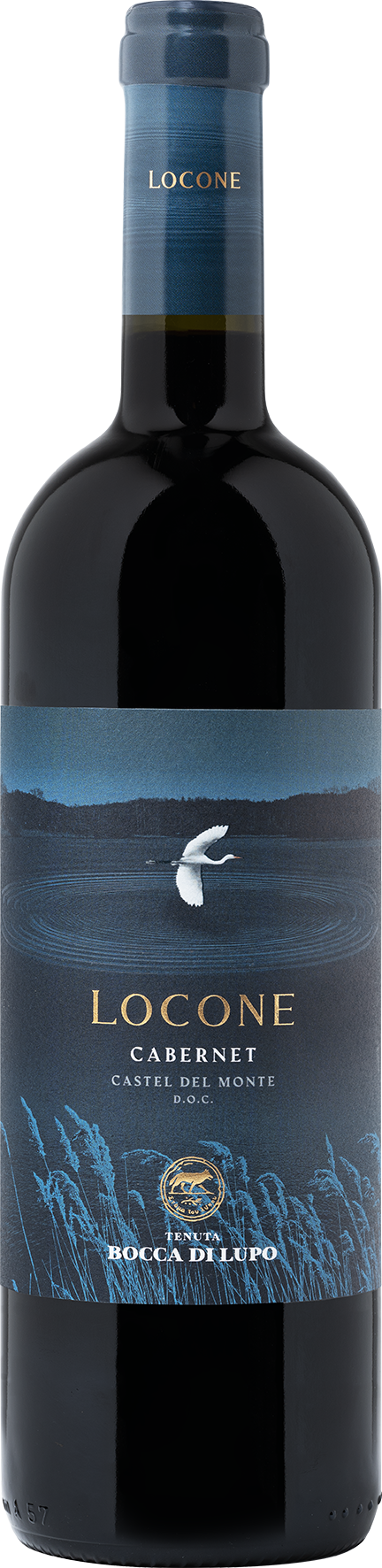
The focus is on Aglianico — one of the oldest red grape varieties in Southern Italy, which finds perhaps its most concentrated form of expression in the Castel del Monte DOC. In addition, there are Nero di Troia and Fiano Pugliese as further autochthonous varieties of the area. The range also includes wines from Cabernet Sauvignon as well as the Arso Puglia IGT, which is created on the characteristic limestone soil of the Tenuta. The wines from Minervino Murge show what the Murgia is capable of: dark fruit — black cherry, blackberry, plum — combined with spice, tobacco, and a hint of balsam, carried by finely structured, ripe tannins and a long finish. These are wines with weight and at the same time with contour — powerful, but never heavy. At the table, they go well with braised game, wild boar pieces with pappardelle, or strong hard cheese from the region.