Since 1542 in the heart of Cartizze
The Bisol family is not a new phenomenon in Valdobbiadene — since 1542 they have been growing Glera grapes on the steep slopes between the Dolomites and Venice, now for 15 generations in a row. Written sources from the 16th century document their presence on the hill, which was then still called "Chartice" and today, as Cartizze, marks the highest level of the Prosecco hierarchy. At the beginning of the 20th century, Eliseo Bisol transformed the inherited family business into a modern winery. After the First World War, the front line of which ran directly through the Valdobbiadene Valley, it was his son Desiderio who rebuilt the legacy — and in the decades after the Second World War, he rode his red Moto Guzzi motorcycle through the slopes of Valdobbiadene and Conegliano in search of the best plots. Today, Gianluca Bisol as President and CEO and his brother Desiderio as Chief Oenologist continue to lead the winery in this long tradition.
Heroic viticulture on UNESCO slopes
Bisol cultivates around 20 vineyards in the most recognized sites of the Valdobbiadene Prosecco Superiore DOCG — without exception on steep slopes that are classified as a UNESCO World Heritage site. Mechanization is not an option there: pruning, soil cultivation, and harvesting must be done entirely by hand, on some plots with up to 900 working hours per hectare and year. Green manure is used between the vine rows to regenerate the soil; non-vine areas are deliberately left to biodiversity. In the cellar, which is dug into the rock of the hills like a natural cave and maintains a constant temperature between 10 and 15 degrees all year round, only Bisol's own harvested grapes are vinified. Gianluca Bisol sums up the philosophy behind this: Prosecco should not be a status symbol, but a lifestyle.
The jewel of the estate is located on the Cartizze hill, a large site limited to around 106 hectares at an altitude of up to 300 meters above sea level. The rocky soil, characterized by limestone and marine sandstone, the even sunlight, and the constant ventilation by mountain winds slow down the ripening of the Glera grape — and give it time to develop a denser aroma and a more harmonious acidity.
Cuvées with an address: from Jeio to Cartizze
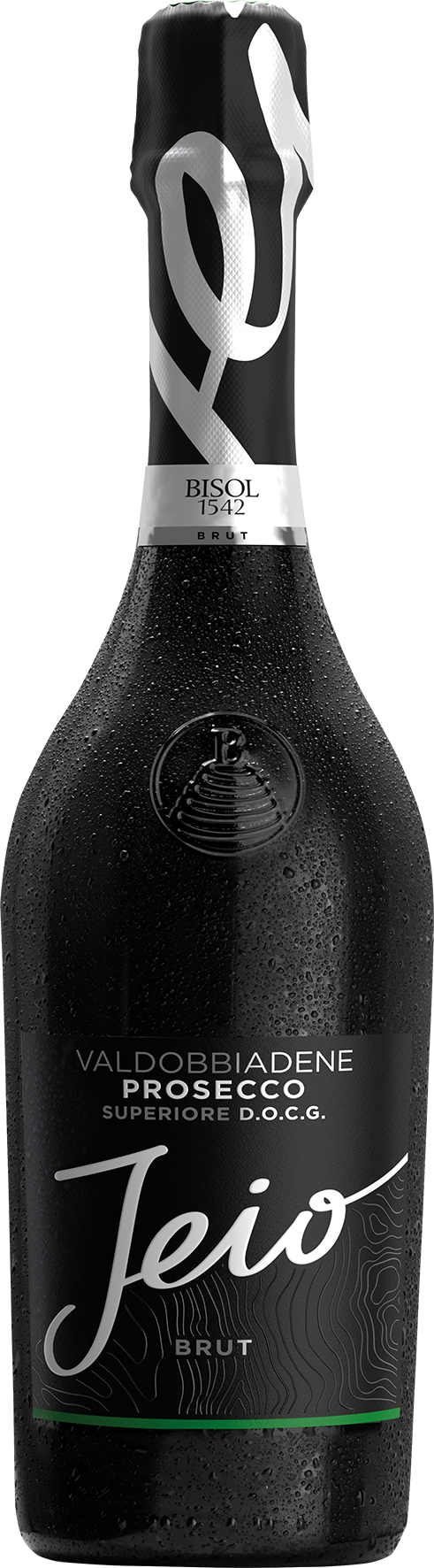
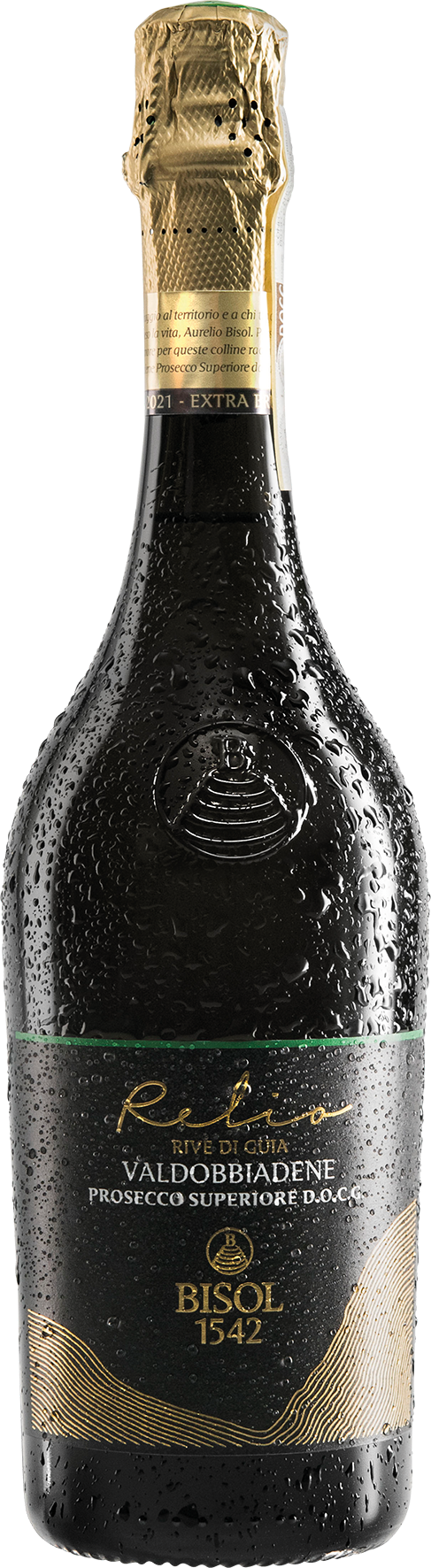
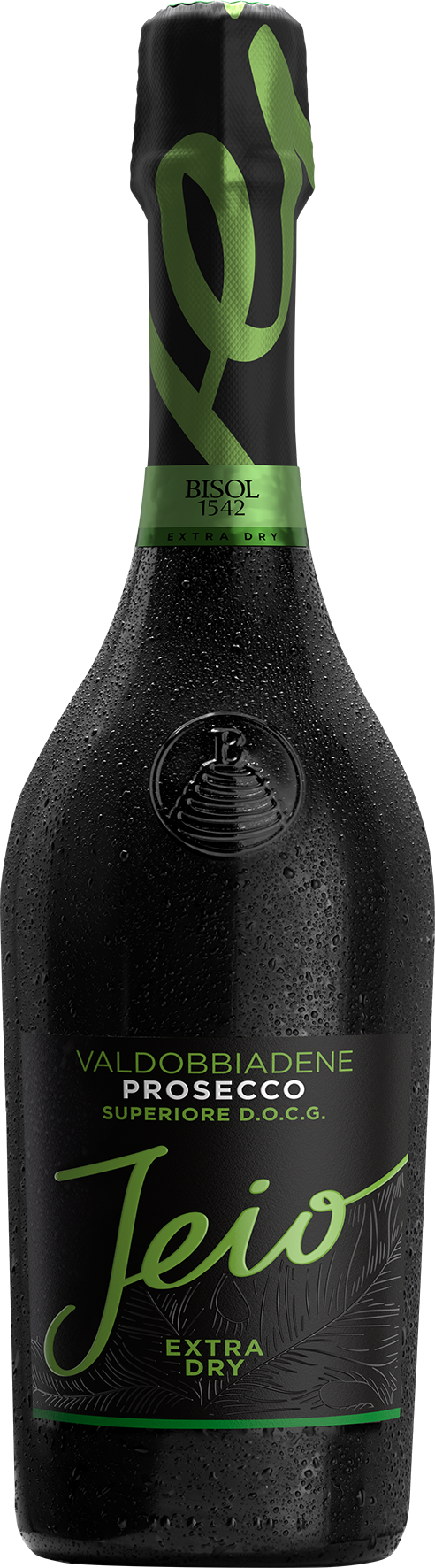
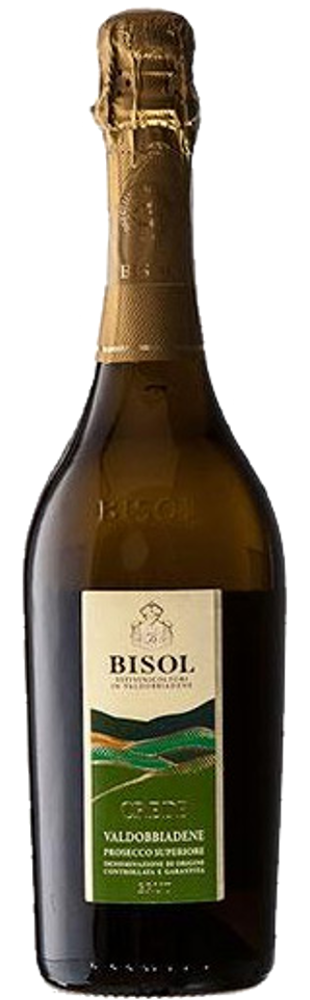
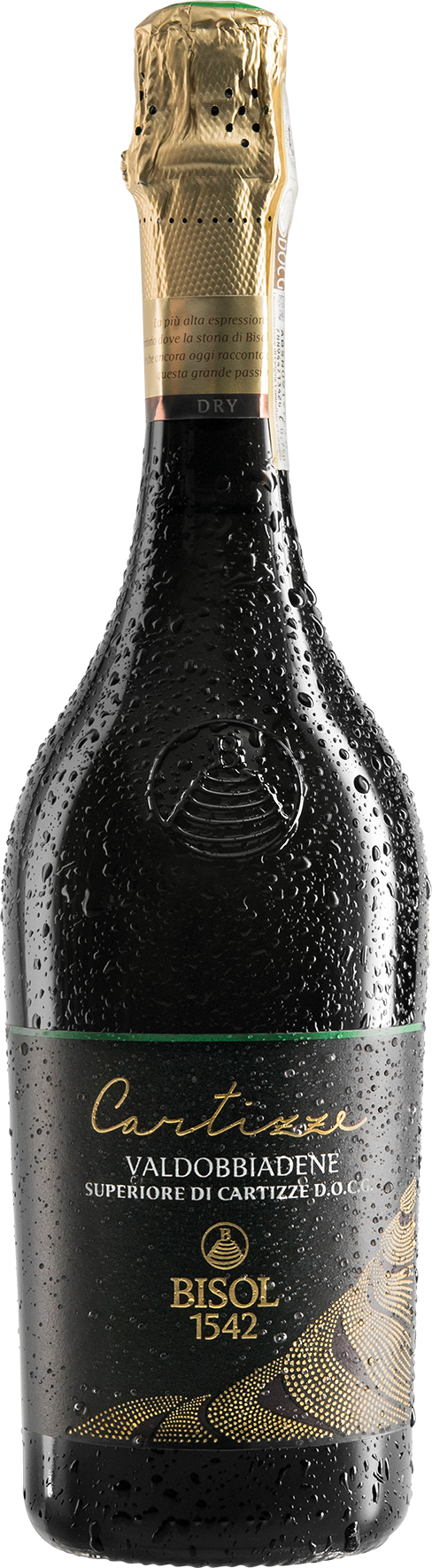
Bisol consistently differentiates its range according to origin. The Jeio line — named after the nickname Desiderio's wife gave her husband — comes from steep-slope plots of the appellation and stands for accessible, fruit-driven Prosecco Superiore in Brut and Extra Dry. Crede, the flagship of the standard line, reflects the soil diversity of the DOCG: calcareous clay soils that give the Glera a fresh citrus acidity and floral notes. Molera and Relio go one step further as single-vineyard bottlings and translate specific terroirs into the bottle. The pinnacle of the range is the Cartizze — a Dry bottling from their own plots on the hill of the same name, which was awarded the Grand Master title at the Prosecco Masters 2025. What all wines have in common: fine perlage, freshness through intact acidity, and an aroma that oscillates between white peach, citrus zest, and blossoms — clearly varietal-typical, never heavy.