From the legacy of Gigi Pira to his own winery
E. Pira & Figli is located in the heart of Barolo. The Pira family has been documented there as a winemaking family since the 17th century. Luigi 'Gigi' Pira died without heirs. At the beginning of the 1980s, the Boschis family, who also owned the historic Giacomo Borgogno house, took over the estate. Chiara Boschis was studying economics in Turin at the time. She convinced her parents to mortgage the house for the purchase.
The family continued production until 1990. Then Chiara took over the management. She is considered the first woman to own and run a winery in the Langhe. Among the Barolo Boys, she was the only woman. Her brother Giorgio has been working in the business since 2010.
Green harvest, barrique, and organic in Cannubi
With winemakers like Elio Altare and Domenico Clerico, Chiara Boschis broke with tradition. She green-harvested grapes to lower yields. Maceration times were shortened, and aging took place in French barriques instead of large wooden barrels. The wines were intended to be accessible earlier while remaining age-worthy.
Today, the estate manages around eleven hectares in Barolo, Monforte d'Alba, and Serralunga d'Alba. It was the first estate in Cannubi to switch to organic viticulture. Organic certification has been in place since 2014. The sites are vinified separately so that each shows its own character.
Cannubi, Mosconi, Via Nuova: three Barolos, three signatures
The Cannubi grows on only 0.7 hectares, which were planted in 1982 with Michet, Lampia, and Rosé. It stands on light limestone soils at an altitude of around 300 meters. The wine appears delicate and floral. Chiara Boschis compares it to a ballerina on tiptoes. The Mosconi from Monforte d'Alba grows on iron-rich, heavy clay. It is more structured and mineral. It is aged for 24 months in French oak.
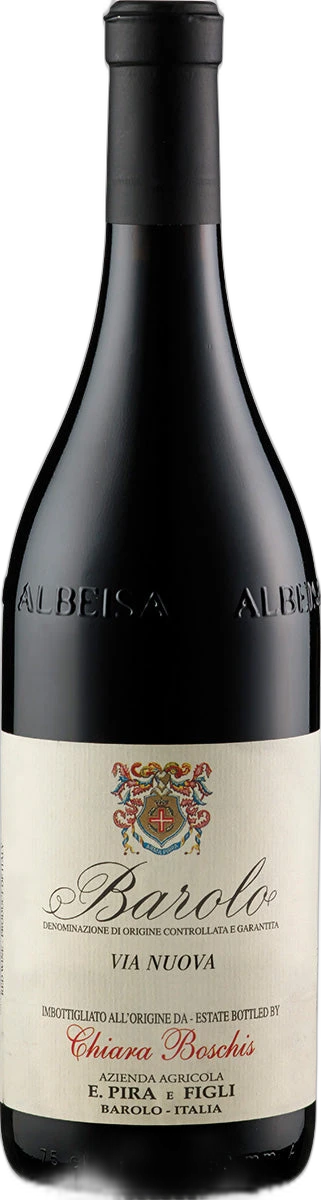
The Barolo 'Via Nuova', 100% Nebbiolo, combines grapes from several sites: Terlo and Liste in Barolo, Ravera and Mosconi in Monforte, as well as Gabutti and Baudana in Serralunga. It is fermented in steel and aged in oak. Critics describe it as the tightest Barolo in the range, with notes of rose blossom, sour cherry, and orange peel. It pairs well with truffle risotto or braised meat dishes. In addition, the estate bottles Dolcetto d'Alba, Barbera d'Alba, and Langhe Nebbiolo.