From Mezzadria estate to family cantina: 1858 in Toscanella di Dozza
When the Branchini family managed the Cardinala estate in Toscanella di Dozza in 1858, the land was initially farmland with the classic piantate — rows of vines trained up field maples. It was in that very year that the first harvest took place, which gives the business its name to this day. Branchini 1858 is therefore not a marketing invention, but the simple date of the beginning. The family originally moved from Tuscany to Romagna and stayed: for over 165 years, the same estate has been managed by the family without interruption. From 1936, the Branchinis successively bought additional plots until the total area had grown to around 100 hectares. Today, the management lies with brothers Marco and Angelo Branchini — the fourth generation, with Marco as winemaker.
Between three rivers: terroir, vineyard, and cellar
The location can be described with geographical precision: Toscanella di Dozza lies exactly on the border line between Emilia and Romagna, embedded in a triangle formed by the Rio Sabbioso, Sillaro, and Sellustra rivers. Over the centuries, these three rivers have shaped the soil — a mixture of sand, clay, and silt that becomes increasingly mineral on the hilltops and gives body and structure, especially to the Sangiovese. Of the 100 hectares, 26 are planted with vines: Albana (5 ha), Pignoletto (5 ha), Sangiovese (4 ha), as well as Trebbiano, Chardonnay, Sauvignon Blanc, Merlot, and Cabernet Sauvignon. The agronomic philosophy aims for the physiological balance of the vine — without forcing, with selective harvesting and continuous work on planting distances and clonal selection. In the cellar, the Branchinis rely on variety-specific vinification: steel tanks for the fresh white wine cuvées, barrique aging for the Albana Passito, and long yeast aging for the Metodo Classico line.
Albana, Sangiovese, and Lambrusco: wines on the border of two worlds
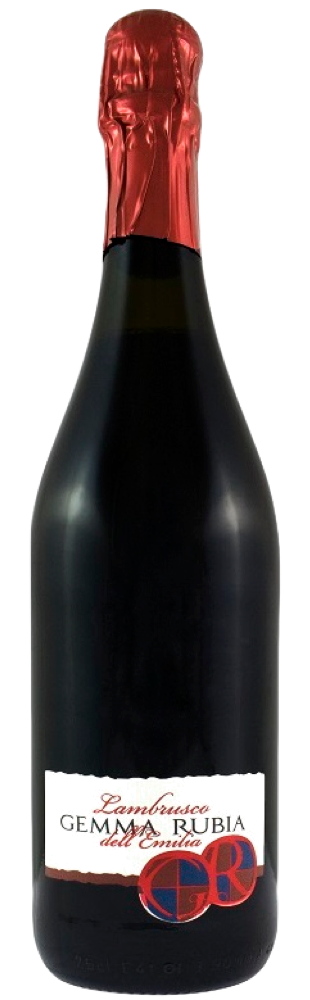
The heart of the range is the Albana di Romagna — the white grape variety that was the first in Italy to be classified as a white wine DOCG in 1987. Branchini is among the pioneers who have produced Albana using the Metodo Classico; the Spumante Brut matures on the lees for at least 36 months. Alongside this is the Passito D'Or Luce, for which the grapes are dried in crates for three months, then aged for one year in barriques and another twelve months in the bottle — a wine with aromas of dried fruits, walnut, and a long, sweet finish. In 2022, the trade publication I Migliori Vini Italiani by Luca Maroni named it the best Albana Passito in Italy. In addition to the Albana, the Sangiovese di Romagna — in several styles up to Riserva and Vendemmia Tardiva — shows how deep the connection to the red grapes of Romagna goes. With the Lambrusco dell'Emilia IGP, the range finally builds a bridge to the Emilian side: sparkling, dry, gastronomic. Around 60,000 bottles leave the cellar in Toscanella every year.