From nine cooperatives to a global Lambrusco brand
On February 10, 1950, nine cooperative wineries from the province of Reggio Emilia joined forces to form Cantine Cooperative Riunite — during a time of economic reconstruction when collective action counted for more than individual ownership. The goal was to organize regional viticulture together, promote the indigenous grape varieties of the Po Valley, and thereby create a marketing structure that no single business could have managed alone. The cooperative grew rapidly: by the 1960s, production potential had doubled, and a new winery was built in Reggio Emilia. In 1969, Riunite's Lambrusco reached the American market for the first time — with resounding success. By 1973, the brand was the best-selling imported wine in the USA; the peak followed in 1985 with 11.5 million cases, a record that still stands today.
Eleven years after the founding of Riunite, four wineries from the province of Modena had joined forces to form the Consorzio Interprovinciale Vini (CIV). In September 2008, both cooperatives merged to form the current Cantine Riunite & CIV — based in Campegine, in the province of Reggio Emilia. In 2002, Riunite had already acquired Cantine Maschio, expanding its position as a leading sparkling wine company.
Cooperative roots, modern cellar management
Today, over 1,700 member farms from the provinces of Modena and Reggio Emilia form the foundation of the cooperative. Together, they cultivate around 4,700 hectares of vineyards and supply the raw material for twelve wineries and three bottling plants — one of which is among the most modern in the world. The cooperative spirit is not a marketing promise here, but a lived structure: every member bears responsibility for quality and yield, from the harvest to the bottling. Cantine Riunite thus controls every step of production itself — from the vineyard to the bottle. Modern vinification techniques are part of their declared self-image. The Charmat method, in which the secondary fermentation takes place in a pressure tank, ensures the characteristic, fresh perlage of the Lambrusco.
Lambrusco in all its variety — fruity, sparkling, Emilian
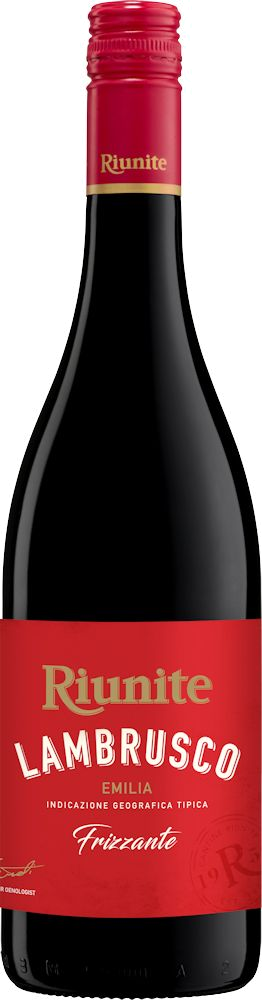
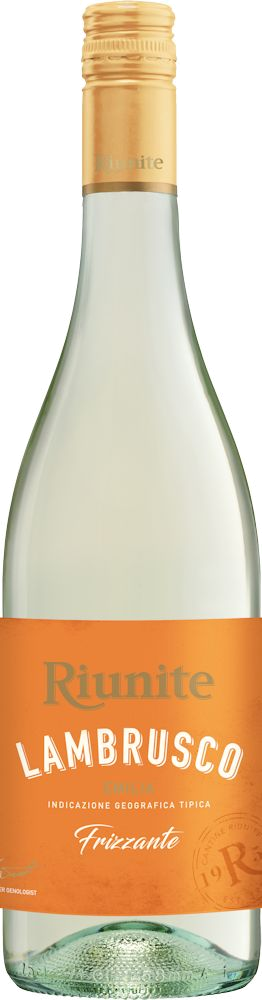
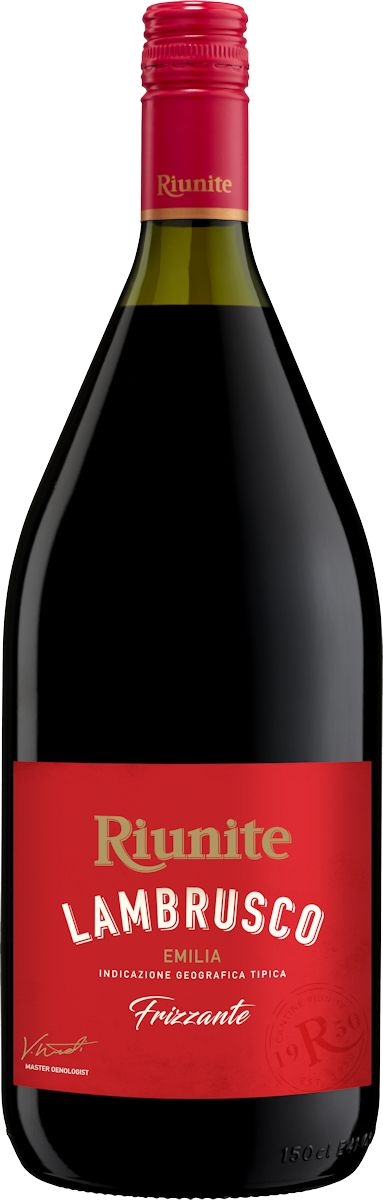
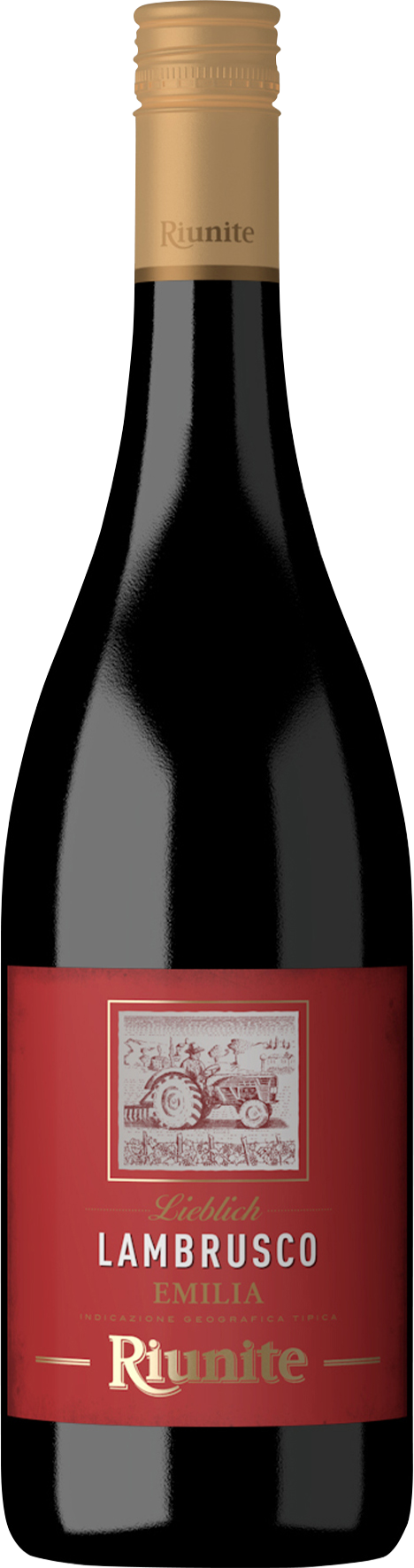
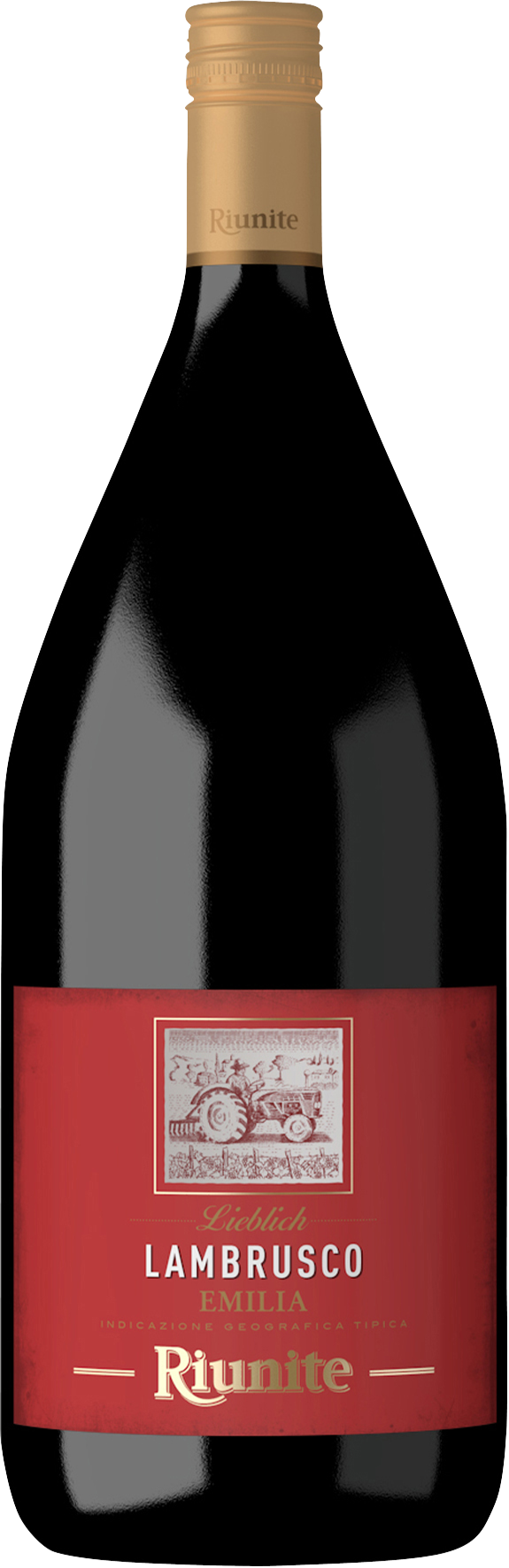
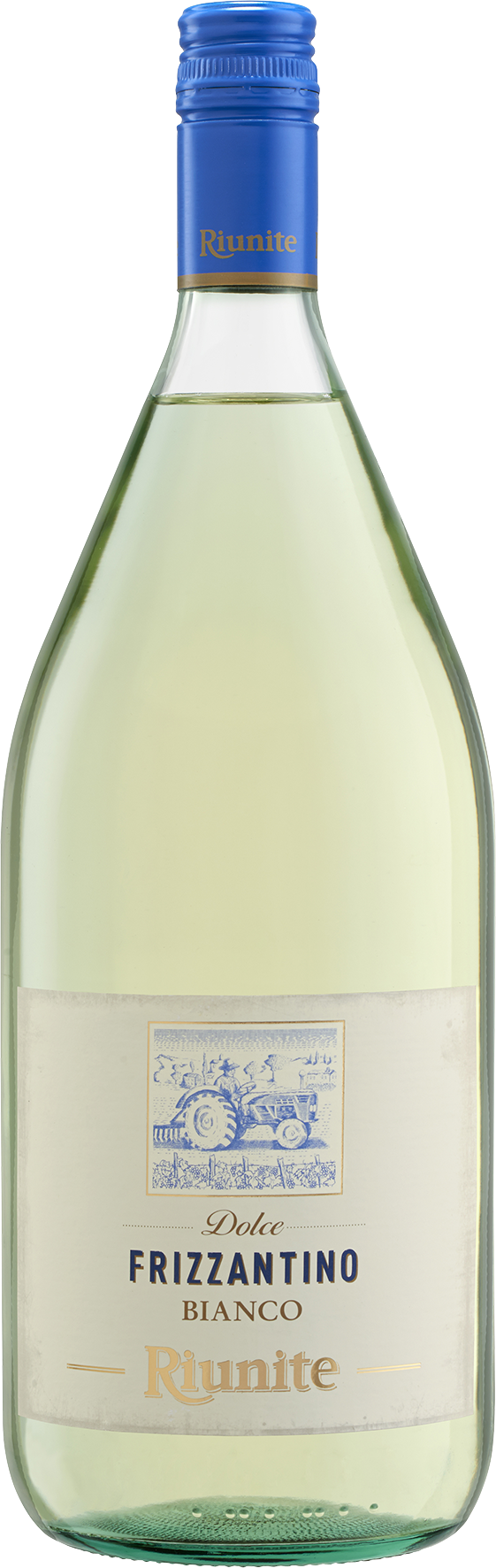
The heart of the range is the indigenous Lambrusco grape, which has its natural habitat in the Po Valley: deep, fertile soils, warm summers, and sufficient rainfall. Riunite vinifies Lambrusco in several styles — from the ruby-red Rosso with violet aromas and red berry fruit to the Bianco made from white-pressed grapes with floral notes and green apple fruit. In addition, there is a Frizzantino Dolce with a fine, sparkling sweetness. Common to all wines are a low alcohol content, lively carbonation, and an uncomplicated, sociable character — made for the table, not for the cellar. This goes just as well with mortadella and Parmigiano on an aperitivo board as it does with hearty pasta Bolognese or pizza with rich toppings. Riunite now exports its wines to over 80 countries, making it the best-selling Lambrusco in the world.