Two Rheingau winegrower families, one winery
The Corvers family cultivated vines in Rüdesheim, the Kauter family in Winkel. Both families have been working in viticulture for around 250 years. In 1996, Dr. Matthias Corvers and Brigitte Corvers-Kauter merged their two businesses in Rüdesheim and Oestrich-Winkel. Since then, the headquarters has been on Rheingaustraße in Oestrich-Winkel.
Later, 15 hectares of leased land from the traditional Langwerth von Simmern estate in Eltville were added. This includes sites such as Erbacher Marcobrunn, Hattenheimer Nussbrunnen, and Rauenthaler Baiken. This increased the vineyard area to a good 30 hectares. Son Philipp, who studied viticulture and oenology in Geisenheim, now works as an oenologist alongside his father in the business.
Bioland vines, basket press, and wooden barrel
The winery works according to Bioland guidelines, and the newly added sites have also been converted to organic. In the vineyard, the rhythm of nature determines the work: pruning, soil cultivation, and canopy management control the yield and health of the grapes. Philipp Corvers attaches great importance to biodiversity. He treats sites and plots individually to bring out their respective character. Because the estate is not in the VDP, he is allowed to bottle several dry wines of the same grape variety from one vineyard.
In the cellar, the team relies on long sedimentation and aging on the fine lees. Pressing is done in a basket press, and aging takes place in wooden barrels, among other things. The Pinot Noir is produced using the Burgundian method. The Bioland business and the estate tavern are also members of the Slow Food Germany network. In the estate tavern, Brigitte Corvers cooks regional dishes.
Riesling from slate and loess, Pinot Noir from the Höllenberg
About 80% of the area is planted with Riesling, around 15% with Pinot Noir, and the rest is distributed among other varieties. The soils differ significantly. In Oestrich, Mittelheim, and Winkel, there is deep loess loam and Taunus quartzite. On the Rüdesheimer Berg, for example in Berg Rottland and Berg Schlossberg, slate weathering soils dominate. Rieslings with finesse and minerality grow there. The Assmannshäuser Höllenberg provides spicy, multi-layered Pinot Noirs.
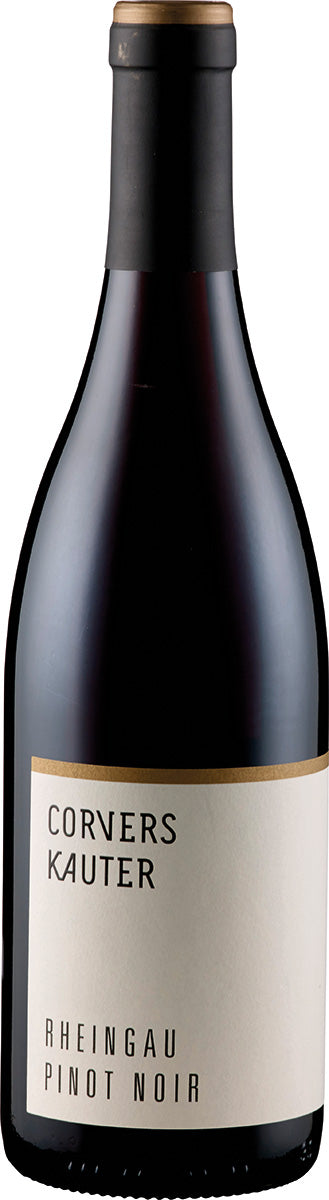
The range extends from the estate Riesling "R3" (Rheingau Riesling Remastered) to site-specific Rieslings like Oestricher Doosberg and the mountain wines from Rüdesheim. In addition, there are Pinot Noirs, including the Rheingau Pinot Noir in organic quality. A specialty is the Red Riesling, an old Rheingau variety that Slow Food promotes. The wines are intended to have substance and character and to pair well with food. The Vinum Wine Guide describes the estate as an address for some of the best Pinot Noirs and dry Rieslings in the Rheingau.