From a three-hectare farm to a benchmark estate in Southern Styria
The history of Tement began in 1959, when Josef Tement senior cultivated the first two hectares of vineyards in the Zieregg and Grassnitzberg sites. After his early death, his son Manfred took over the business in 1976 — just sixteen years old at the time, with only a few hectares around the house and no room for error. What began as a necessity became a driving force: Manfred recognized the potential of Sauvignon Blanc and Morillon in the lime-rich steep slopes of Southern Styria early on, consistently focused on quality over quantity, and made the Ried Zieregg the flagship of an entire region. In 1986, he was one of the founders of the STK — Steirische Terroir & Klassikweingüter —, a quality initiative that gave Southern Styrian white wine international visibility. Today, his sons Armin and Stefan, along with daughter-in-law Monika, continue to run the family winery, which has since grown to around 100 hectares, in the third generation.
Biodynamics on steep slopes: Manual labor as a fundamental principle
Armin Tement joined the business in 2005 and pushed the ecological transition forward: the conversion to organic viticulture began gradually, and by 2018, the entire area was certified organic. Since 2022, Tement has been cultivating all sites entirely biodynamically — as a member of the Demeter association and the respekt-BIODYN group, one of the strictest biodynamic certifications in European viticulture. In the humid climate of Southern Styria, this is anything but a matter of course. Harvesting is done exclusively by hand, which means enormous physical effort on the steep slopes of the Zieregg. In the cellar, the team works on a site-specific basis: spontaneous fermentation, gentle aging in barrels and tanks, and small-scale cellar storage according to grape variety and origin. The cellar building at Zieregg, integrated into the hillside in 1999, regulates temperature and humidity solely through its architecture — without technical air conditioning.
Minerality, lime, and the power of terroir
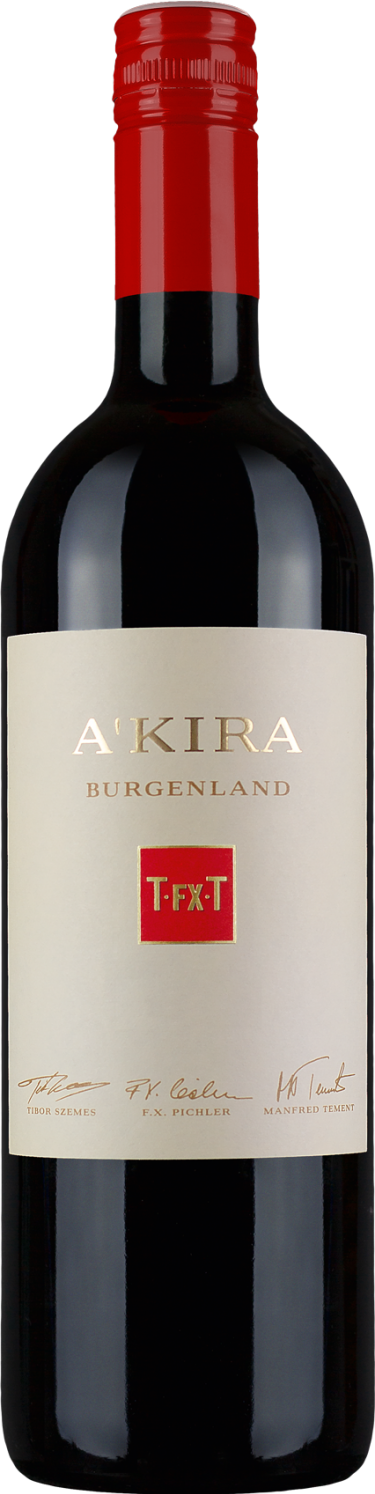
Sauvignon Blanc remains the guiding theme: around two-thirds of the total area is planted with it, distributed across sites with fundamentally different soils — coral limestone, shell limestone, marl, sand, and slate. The Southern Styria DAC classification system divides the wines into regional, village, and single-vineyard wines; the top sites Zieregg, Grassnitzberg Riff, and Sulz hold the status of Große or Erste STK Ried. In addition to Sauvignon Blanc, Tement demonstrates with Morillon (Chardonnay) and Pinot Blanc how independent these grape varieties appear on Southern Styrian limestone: mineral, structured, with depth without heaviness. The Blaufränkisch a´Kira complements the range with a characterful red from the wine country — edgy and substantial, far removed from the pleasing mainstream. At Vinoscout, you will find a selection that covers the entire spectrum of the Tement style, from the accessible Kalk & Kreide to the site-specific wines.