A thousand years of family history on one estate
Tenuta di Cusona lies on the hills around San Gimignano, at an altitude of about 300 meters, and its name first appears in a parchment from the year 994. This makes Guicciardini Strozzi one of the oldest documented wineries in Tuscany. The estate now covers over 530 hectares — classified by the Italian state as a historically and artistically significant national cultural asset.
Behind the double name stand two of the most influential families of the Florentine Renaissance: the Guicciardini, whose most famous representative, Francesco Guicciardini, went down in history books as governor of the Papal States and confidant of Machiavelli, and the Strozzi, powerful bankers and the fiercest rivals of the Medici. In the 17th century, both dynasties married into each other. In 1850, Francesco Guicciardini — then mayor of Florence and a minister — had a new cellar with underground galleries built and made Cusona a modern model estate. From the 1970s onwards, Prince Girolamo Strozzi, founder and first president of the Vernaccia di San Gimignano consortium, consistently opened the estate to the global market. Today, his daughters Natalia and Irina continue to run the business — in the 15th generation.
Handwork in the vineyard, history in the cellar
The grapes are harvested by hand and carefully sorted. Fermentation takes place in glass-lined concrete vats and steel tanks at controlled temperatures — a process that protects the aromatics of the grape varieties. Subsequent maturation takes place in the historic underground galleries that were laid out as early as the 19th century. Oak casks are used for the red wines and Riserva bottlings. The estate has gradually expanded its cultivation areas since 1998: in addition to the core area around San Gimignano, Guicciardini Strozzi now manages sites in the Maremma — in Bolgheri, Scansano, and Montemassi — as well as on Pantelleria.
Vernaccia, Sangiovese, and a look beyond the appellation
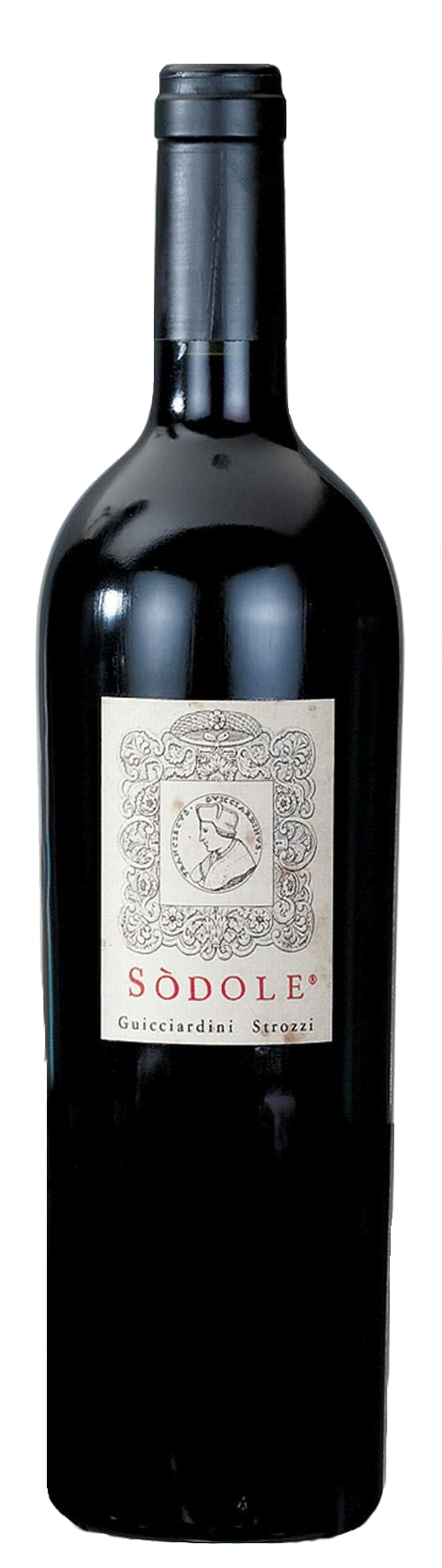
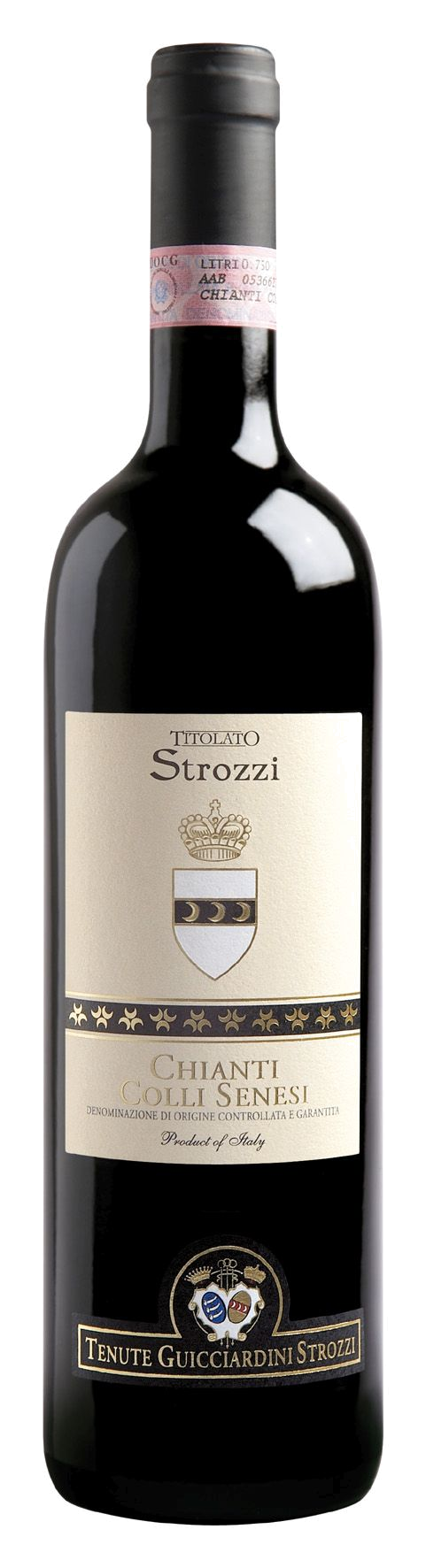
The heart of the range is the Vernaccia di San Gimignano, whose first documentary mention dates back to the year 1200 and which was immortalized in literature by Dante, Michelangelo, and Boccaccio. Even the Medici — bitter opponents of the Strozzi — ordered barrels of it for the Florentine court and sent them as a gift to the Pope in Rome. Those looking for red wine will find the Chianti Colli Senesi DOCG Titolato Strozzi from the Sienese hill landscape in the range, as well as the Sòdole Toscana IGT, a varietal Sangiovese from the Supertuscan segment. In total, the portfolio includes 22 wines that represent the entire Tuscan spectrum — from the mineral white wine tradition of San Gimignano to the powerful, internationally influenced red wines of the Maremma coast.