Pioneers since 1985 – Nautilus and the early years of Marlborough
When Nautilus Estate was founded in 1985, there were around 80 wineries in all of New Zealand. Marlborough was still in its infancy, and the first vintage of Nautilus comprised just 200 cases of Sauvignon Blanc, which were initially sold on the Australian market. Four decades later, the industry counts over 700 producers – Nautilus has remained what it was from the beginning: a consciously small, family-run winery. Owner Robert Hill Smith, as a fifth-generation winemaker, brings not only family heritage but also a long-term, patient perspective on the vineyards that withstands short-term fashion trends.
Two cellars, one ambition – craftsmanship and sustainability in the vineyard and barrel
The heart of the cellar work at Nautilus is two independent production facilities side by side: the Pinot Noir cellar, opened in 2000, was the first red wine operation in the Southern Hemisphere to work purely on the principle of gravity – the grapes are moved without pumps to disturb aromas and texture as little as possible. In 2006, a separate, energy-efficiently designed white wine cellar for Sauvignon Blanc, Chardonnay, and Pinot Gris followed. Winemaker Clive Jones, who has been with the house since 1998, helped plan both buildings and manages both today.
In the vineyard, Nautilus relies on specifically selected sites from the various sub-regions of Marlborough: the alluvial soils of the Wairau Valley, the harsher climate of the Awatere Valley further south, and the newer hillside sites in the Southern Valleys, which provide cooler nights and a more pronounced structure in the wines. All vineyards and partner grower blocks are fully certified according to the Sustainable Winegrowers New Zealand (SWNZ) program; all wines are vegan.
Texture instead of volume – what distinguishes the assortment
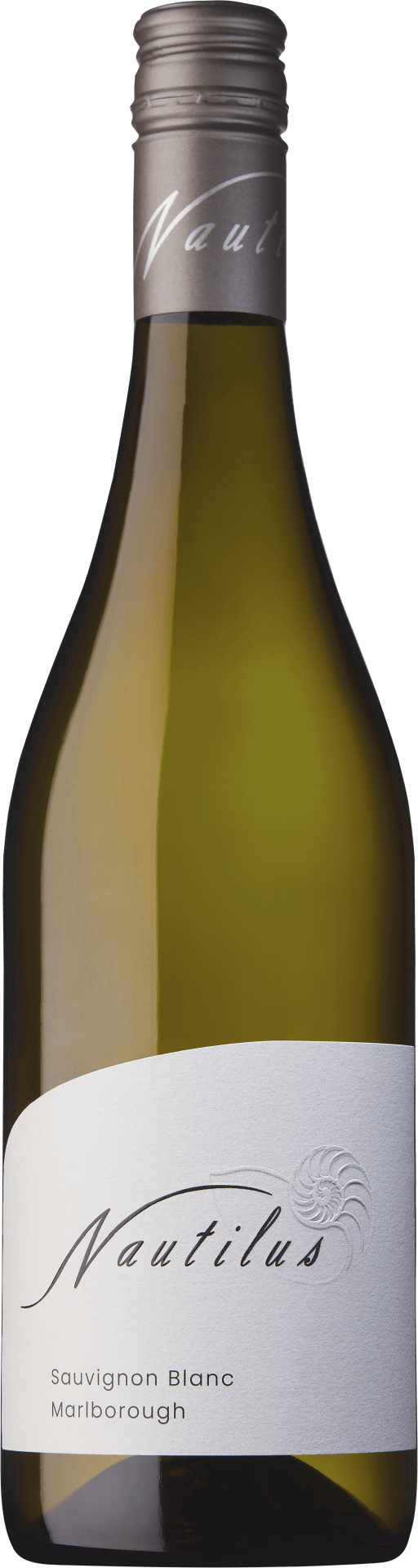
Nautilus understands its wines as table companions. Winemaker Clive Jones purposefully blends several fruit parcels to bring texture and mouthfeel to the fore – no single vineyard should dominate, but rather the interplay of Marlborough's sites should become audible. The Sauvignon Blanc bundles the cool sea breeze of the Pacific with the region's high solar radiation (over 2,400 hours a year): citrus, passion fruit, mineral finish. The Chardonnay – with fruit from the Renwick Vineyard – shows stone fruit and a nuttiness gained through restrained use of wood. The Pinot Noirs, especially those from the Southern Valleys and the Clay Hills block, benefit from the gravity cellar: silky tannin, cherries, and quiet spice, no wood that covers up the origin. In addition, Nautilus produces sparkling wines according to the traditional method as well as Pinot Gris – an assortment that shows that Marlborough can do more than just the great Sauvignon.