From Locorotondo to the world: the roots of Nardelli
Behind the name Nardelli is Michele Lorusso from Locorotondo — a small town in the province of Bari, located in the heart of the Apulian plateau. Nardelli is not a classic single winery, but the result of a partnership between two deeply rooted Apulian businesses: Masseria Tagaro and Agrolio. This union has created a winery that combines the artisanal tradition of both houses under a common brand name — with the clear ambition of bringing the character of the southern Italian south into the glass.
Locorotondo itself is a place that has always been shaped by viticulture. The surrounding hills feature sandy and calcareous soils, where Mediterranean heat meets breezes from the Adriatic Sea. This combination of geology and climate is the silent foundation of every bottle filled under the Nardelli label.
Tradition meets craftsmanship: how Nardelli works
What drives Nardelli is the conviction that good wine has its origins in every step of production. The vineyards are between 15 and 30 years old — old enough to strike deep roots and provide more concentrated grapes, but not yet so old that yields shrink to a minimum. The soils alternate between sandy and calcareous-clayey sites, which gives the wines a different mineral base structure depending on the plot.
The range plays with the entire spectrum of indigenous Apulian grape varieties: Negroamaro and Primitivo form the core, supplemented by Nero di Troia and — in the Appassimento cuvée — also Merlot. The latter method, in which grapes are allowed to dry before fermentation, stands for a specific style: more concentration, more depth, softer tannins, and at the same time a higher residual sugar content.
Powerful fruit, clear origin: the style of Nardelli wines
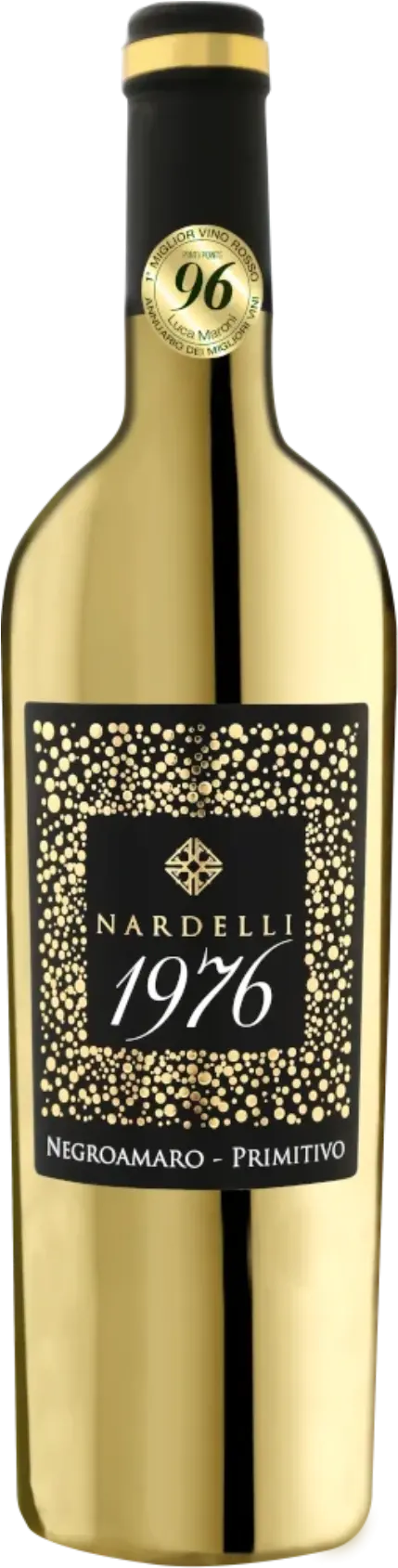
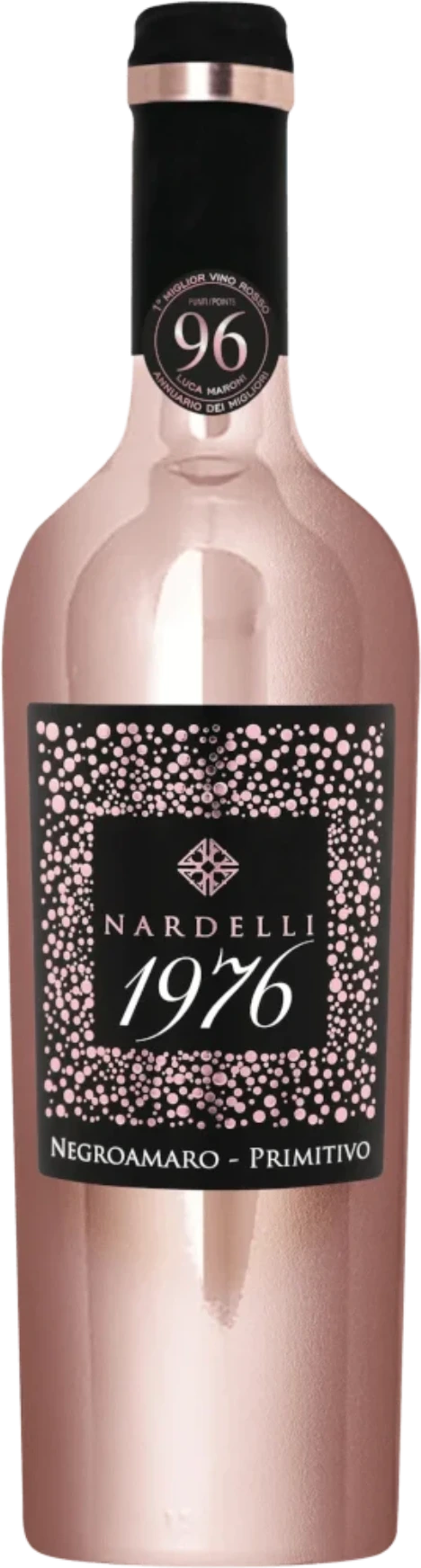
The wines from the Nardelli range follow a recognizable line: dark in color, fruit-forward in expression, with a warmth that directly reflects the southern Italian climate. The cuvées of Negroamaro and Primitivo — the centerpiece of the offering — bring aromas of pomegranate, raspberry, and dark berry fruit, supported by a lively fruit acidity and velvety tannin. The 1976 Gold Edition, with its slight residual sugar, lies beyond the strictly dry spectrum, which gives it an accessible, flattering texture. The Pink Edition, made from the same grape varieties, focuses on a fresh, fruit-forward rosé style with notes of strawberry and citrus fruit.
Anyone looking for an uncomplicated, expressive Apulian wine that goes well with grilled food, spicy sugo dishes, or strong cheese will find what they are looking for at Nardelli. The wines do not stand for intricate elegance, but for southern directness — with the warm red soil of Apulia as a reference point.