Oenologist, consultant, winery founder: the path of Ferruccio Deiana
Ferruccio Deiana grew up in a winemaking family in the south of Sardinia and decided early on to pursue a professional path: he studied oenology in Conegliano, Italy's most renowned training center for this craft, and subsequently worked for years as a consultant for various Sardinian wineries. This work provided him with broad knowledge of terroirs, grape varieties, and cellar technology across the entire island — and at the same time sharpened his desire to eventually vinify under his own name. In the early 1990s, the time had come: he planted the Su Leunaxi site near Settimo San Pietro in southern Sardinia with the first vines and thus laid the foundation for the Azienda Vitivinicola Ferruccio Deiana. From the beginning, his wife Mariagrazia stood by his side; son Dario, who also studied oenology, took over the technical and strategic vineyard management over time and continues the project today with comparable consistency.
Sand, marl, and Sardinian sun: viticulture in Basso Campidano
The winery is located in the heart of the landscape between Cagliari and the rocky ridges of Punta Serpeddì, in the Sarrabus-Gerrei area — a region where vines, grain, and olive trees have grown side by side since antiquity. The approximately 100 hectares of vineyards are distributed over two sites: the original core in Su Leunaxi and younger plots in Sibiola in the municipality of Serdiana. The soils are deep (up to 1.5 meters), well-drained, and characterized by a marl subsoil that regulates water supply during dry phases. Additionally, drip irrigation is used — in Sardinia's climate, not a concession to convenience, but a prerequisite for controlled ripening. The vines are trained using the Guyot system; the choice of varieties follows the pedological characteristics of each individual plot.
Ferruccio's declared goal from the beginning was to make the Basso Campidano and Parteolla wine region visible — a landscape of rolling hills and fertile valleys that stood in the shadow of better-known Sardinian appellations. This regional commitment runs through all decisions: the vineyard, cellar, and assortment are consistently oriented towards the island's autochthonous grape varieties. In the cellar, the team combines traditional craftsmanship with contemporary cellar technology — international experiences that Ferruccio brought as a consultant and Dario through his studies flow directly into the vinification there.
Cannonau, Vermentino, Monica: the Sardinian assortment
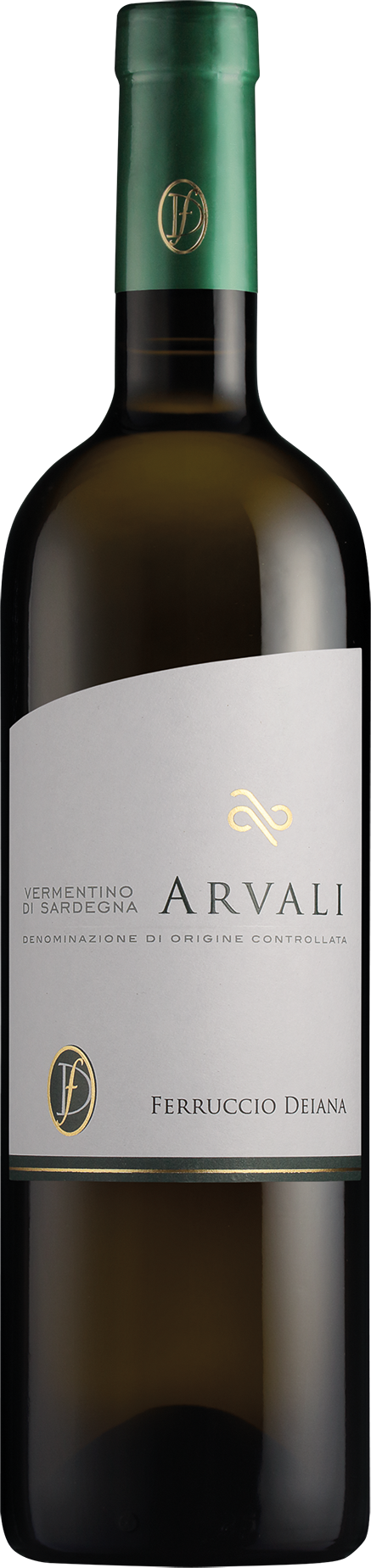
The spectrum of Azienda Deiana includes exclusively grape varieties that have been rooted in Sardinia for centuries: Cannonau, Vermentino, Monica, Carignano, Bovale, Barbera Sarda, Malvasia, Nasco, and Moscato. The winery's reputation was primarily established by the Sileno Cannonau di Sardegna — a red wine that combines the power and warmth of the south with structure and gains additional depth in its Riserva version through longer aging. Alongside this are fresh, floral Vermentini and powerful red wines from the rarer Bovale and Carignano. Those who drink the wines of Ferruccio Deiana are not served a smoothed-out image of Italy, but something specific: the character of a single region in the Sardinian south, translated into grapes that are named and taste like this nowhere else.