Where Sassicaia meets Sardinia: the founding story of Agricola Punica
In August 2002, four names joined forces that could hardly have been more different – and thus created one of Italy's most exciting winery projects. Tenuta San Guido (Sassicaia) from Bolgheri in Tuscany, the Cantina di Santadi with its president Antonello Pilloni, as well as oenologists Giacomo Tachis and Sebastiano Rosa founded Agricola Punica as a joint venture in the southwest of Sardinia. The connecting element was Tachis himself: the man to whom we owe Sassicaia and whom many describe as the father of modern Italian oenology had already been working as a consultant for the Cantina di Santadi since the mid-1980s – and was convinced that the grapes of Sulcis possessed world-class potential.
The joint venture acquired two estates in Basso Sulcis: the Barrua estate near Santadi, already planted with vines, and the larger Narcao – totaling around 170 hectares. The very first vintage confirmed the founders' conviction. When the Barrua was launched on the market in 2005, it was promptly named the discovery of the year.
Barren soil, constant wind: philosophy between vineyard and cellar
The location in Basso Sulcis fundamentally shapes every wine from Punica. The soils are sandy-loamy and calcareous; the constant sea wind regulates temperatures, reduces disease pressure, and ensures healthy, slowly ripening grapes with concentrated aromatics. The intense Sardinian sun and the extreme light intensity in the southwest of the island allow for ripening curves that would be hard to achieve elsewhere.
In the vineyard, Punica works with cordon training; the harvest is done by hand – for the white wine Samas, already in the first daylight to protect the varietal-typical aromas. In the cellar, the Samas is vinified cryogenically, i.e., under controlled low temperatures and the exclusion of oxygen. The red wines are matured as single varietals and only combined into the final cuvée after fermentation – an approach that preserves the origin of each individual variety.
Carignano as a guideline: Barrua, Montessu, and Samas
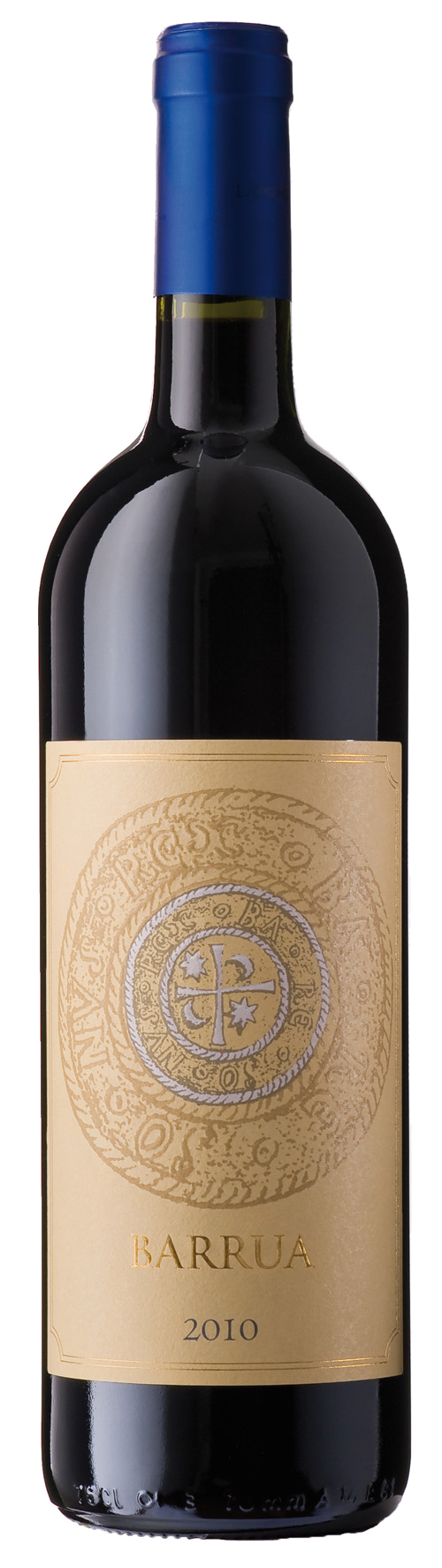
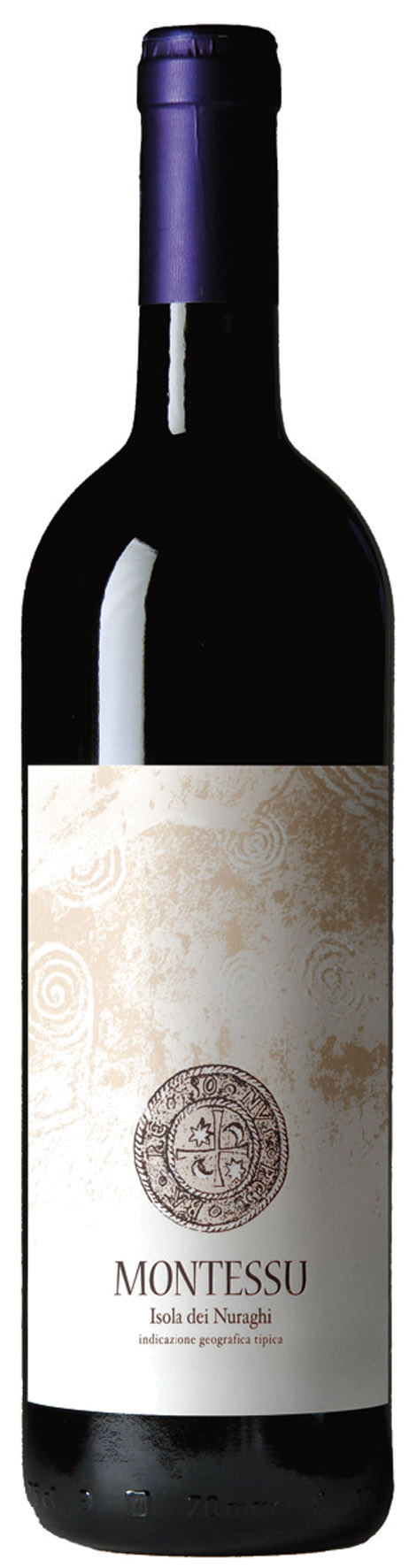
All three wines carry the designation IGT Isola dei Nuraghi and place the indigenous Carignano del Sulcis variety at the center. The Barrua is the flagship: a cuvée of Carignano, supplemented by small proportions of Cabernet Sauvignon and Merlot. In the glass, intense ruby red, aromas of black cherry, spices, licorice, and a hint of myrtle – the palate shows volume with soft tannins and a salty finish. The Montessu is based on 60% Carignano, supported by other Bordeaux varieties and Syrah; fruity, accessible, with the same characteristic licorice finish. Finally, the Samas brings the white face of Sulcis: Vermentino and Chardonnay, from the sandy and calcareous soils of both estates, with fresh acidity and an aromatic profile that makes the proximity to the sea palpable. Together, the three wines show what is possible when pioneering spirit, Sardinian grape variety history, and proven oenological craftsmanship meet in one place.