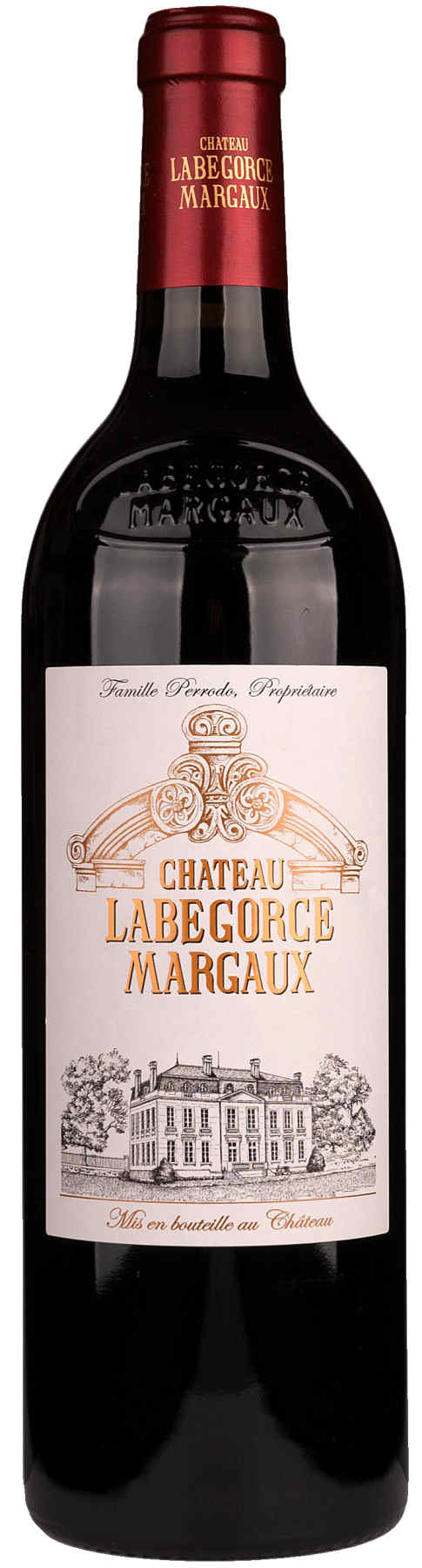
From the "Maison Noble de La Bégorce" to the reunited family domaine
The heritage of Château Labégorce dates back to 1332, when the "Maison Noble de La Bégorce" was first mentioned in the records of the Médoc. For centuries, the estate was one of the largest contiguous wineries in the appellation — until the French Revolution in 1789 forced the division into three separate estates: Labégorce Margaux, Labégorce Zédé, and L'Abbé Gorsse de Gorsse. This division was to last for a good two hundred years.
It was Hubert Perrodo who acquired Labégorce Margaux in 1989 and thus started the extraordinary project of bringing the three parts of the original back together. In 2002, L'Abbé Gorsse de Gorsse followed, and in 2005, finally Labégorce Zédé. After the early death of Hubert Perrodo in 2006, his daughter Nathalie Perrodo-Samani took over the strategic management of Vignobles Labégorce — including Château Marquis d'Alesme, a classified growth in Margaux. The neo-Gothic-classicist Château, designed by the architect Armand Corcelles, stands today directly next to Château Margaux and Château Lascombes — in the best of company, both geographically and qualitatively.
Lutte raisonnée in the vineyard, artisanal precision in the cellar
The 70 hectares of vineyard area are distributed over sandy-gravelly and sandy-loamy soils between Margaux and Soussans. The gravel soils, typical of the Médoc, store heat during the day and release it evenly at night — which favors even ripening and aroma concentration. The grape variety spectrum follows the classic Médoc principle: 50 % Cabernet Sauvignon, 45 % Merlot, 3 % Cabernet Franc and 2 % Petit Verdot. Cultivation is carried out according to the principles of lutte raisonnée — without herbicides and pesticides, with traditional vine work in the vineyard.
The harvest is done plot-by-plot and by hand. In the cellar, fermentation is traditionally carried out in concrete tanks; the subsequent aging lasts 12 to 15 months in barriques, of which about 40 % are new. With the 2019 vintage, a new cellar went into operation — another sign of the continuous investment in artisanal quality under Nathalie Perrodo-Samani and the technical team.
Finesse with substance — the style of Margaux bourgeois quality at the highest level
What distinguishes the wines of Château Labégorce is the balance between structural power and typical Margaux elegance. On the nose, dark cherries, cassis, and violets dominate, accompanied by fine wood and spice notes from the barrique aging. On the palate, polished tannins, a juicy texture, and a long, energetic finish are evident — Cabernet Sauvignon provides the framework, Merlot the fullness and roundness. As a Cru Bourgeois classé, Labégorce stands for Margaux without the premium price of the Grands Crus Classés, but with a terroir that directly borders that of Château Margaux. Good with lamb rack, duck breast, or aged hard cheese.