From the Libéral family to Cinquième Grand Cru Classé
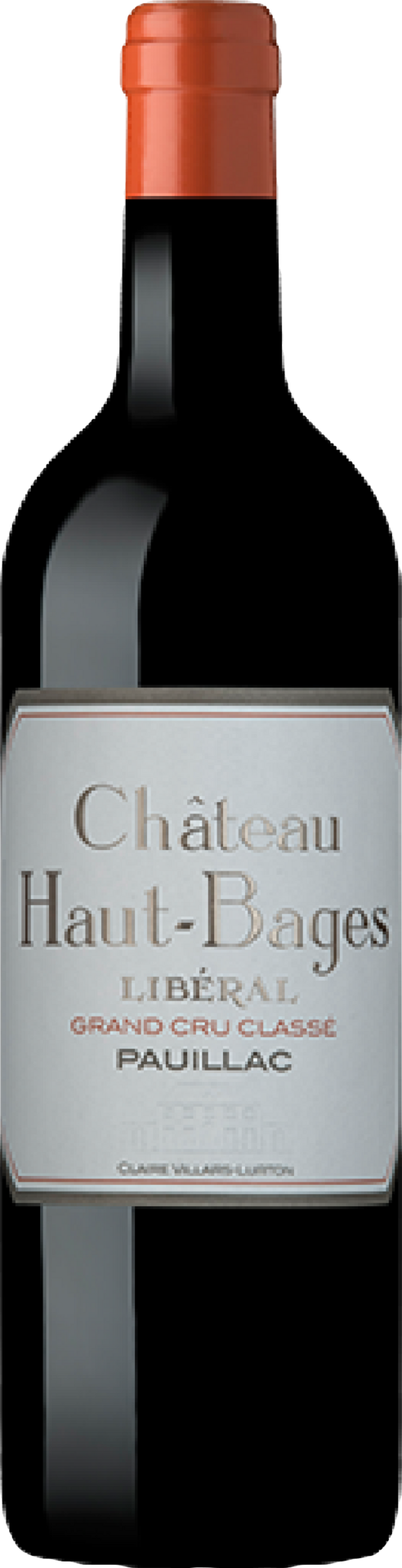
The name of the château already contains its history: Haut-Bages refers to the elevated locations of the hamlet of Bages in the south of the Pauillac appellation, Libéral to the family of the same name that built the estate in the early 18th century. As Bordeaux négociants assembling wines from father to son, they united the best plots of this plateau location over decades — with proximity to Château Latour on one side and Château Pichon Baron on the other. In 1855, the château was included in the famous Médoc classification as a Cinquième Grand Cru Classé, at a time when the Libéral family was still steering the fortunes of the estate.
After changing owners — including the Cruse family, who carried out a complete replanting from 1960 onwards — Jacques Merlaut acquired the château in 1982. He initially entrusted his daughter Bernadette with the management of all his estates. After her early death, he turned to Claire, Bernadette's eldest daughter. Under the wing of her grandfather, Claire Villars-Lurton learned the Bordeaux craft from the ground up; she has held overall responsibility for the château since 2000. In 2017, she had the cellar and historic buildings fundamentally renovated.
Biodynamics, agroforestry, and the commitment to living soil
What distinguishes Claire Villars-Lurton from many of her Pauillac colleagues is the consistency with which she has brought ecological management into the vineyard. From 2007, the conversion to organic-biodynamic management began; the estate has been officially organic-certified since 2019, and it has carried the Demeter label for biodynamics since 2022. Together with her husband Gonzague Lurton, they now manage the largest certified biodynamic vineyard area in all of Bordeaux.
In the vineyard, fruit trees, maples, elms, and dogwood grow between the vines; soils are greened with rye, mustard, clover, and lupines. Agroforestry and agroecology are not symbolic ends in themselves, but a means to soil health: the planting loosens the soil, retains moisture, and creates a habitat for birds, insects, and microorganisms that simply make chemical plant protection superfluous. Vinification takes place in concrete and stainless steel containers, the volume of which is adapted to the individual plots.
Minerality, tannin structure, and the signature of Pauillac
The 30 hectares of vineyards are divided into two main locations: half on the historic Bages plateau with deep gravel soil, the other on a limestone-dominated hill directly on the Gironde — a combination that is rare in Pauillac and gives the wine its characteristic minerality. Around 70% Cabernet Sauvignon and 30% Merlot are planted; the wine is aged for 16 months in French oak barrels, around 40% of which are new.
In the glass, firm yet finely woven tannins, a lively acid structure, and a long, voluminous finish appear — a classic Pauillac foundation that receives a cooler, salty note due to the limestone-dominated location. In addition to the great wine, La Chapelle de Haut-Bages Libéral appears as a second label, and since 2020 the cuvée Cérès: a sulfur-free natural wine from Merlot plots that are managed exclusively agroecologically and with agroforestry — and thus the consistent expression of a château that combines Pauillac tradition and contemporary wine thinking.