From Corrèze merchant to family estate in Lussac
The history of Château du Courlat begins long before the current family. In the Middle Ages, the estate belonged to the Seigneurs Barons de Montagne, who planted the first vines here. A tower on the ivy-covered facade still reminds us of them. The slopes of Lussac were already in demand back then because of their clay soils with limestone content.
In 1906, Jean-Baptiste Audy, who came from the Corrèze region, founded a wine trading house and subsequently invested in several estates in the Libournais. According to the Guide Hachette, he acquired the Château in the 1930s. His grandson Pierre Bourotte managed the house from 1991 to 2002. Since 2003, his son Jean-Baptiste Bourotte has been managing the business and the family wineries. These also include wines from Pomerol and Lalande-de-Pomerol.
17 hectares around a lake: manual labor on clay and limestone
The vines of Courlat stand on the slopes of Lussac, in the middle of which lies a large lake. They are on average about 25 years old and take root in clay-limestone soils. The grapes are harvested by hand and sorted by hand. Fermentation takes place in concrete and stainless steel.
For the Cuvée Jean-Baptiste, the must remains on the skins for about 30 days, according to the winemaker. This gives the wine its structure without making it heavy. It then matures in barrique barrels for over a year, part of it in new oak.
Merlot with backbone: the wines of Courlat
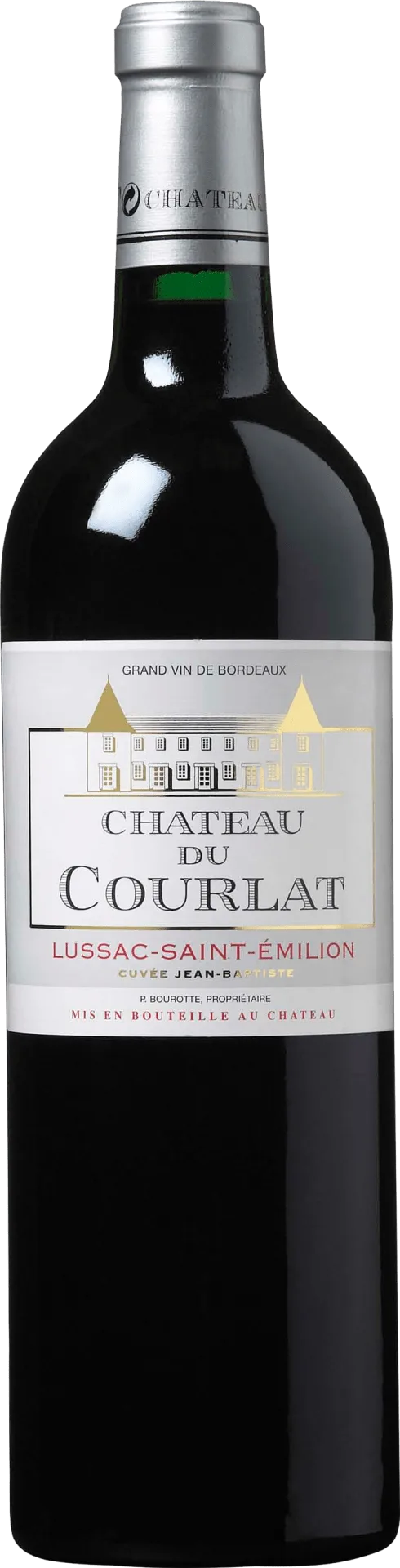
The estate's wine consists predominantly of Merlot, supplemented by Cabernet Franc and a little Cabernet Sauvignon. The Cuvée Jean-Baptiste goes one step further. It consists of 100% Merlot and comes from the best grapes of old vines. It is named after the company founder and is considered the flagship of the house.
In the glass, you will find dark fruits such as blackberry and cassis, plus plum, spices, and, depending on the vintage, a mocha note from the barrel aging. The tannins are spicy and grippy, the finish remains fresh and mineral. The alcohol content is around 14 to 14.5% vol, depending on the vintage. Serve it at 16 to 18 °C, for example with duck breast, beef, or game.