From medieval boat name to third growth of the Médoc
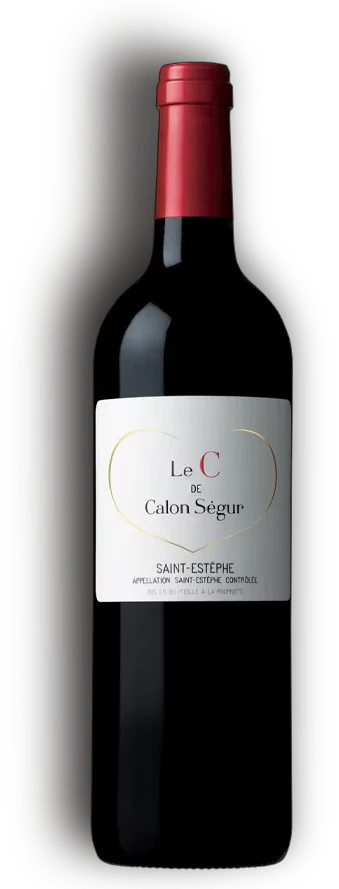
The name Calon dates back to the Middle Ages: "Calones" was the name given to the small transport boats that carried wood across the Gironde – and gave the present-day Château its first part of its name. Viticulture has been documented on the estate since the 12th century, making Calon-Ségur one of the oldest estates in all of Saint-Estèphe. In the 18th century, Nicolas-Alexandre de Ségur took over the estate, who went down in history as the "Prince of Vines": he simultaneously owned Lafite, Latour, and other significant Médoc estates – but declared that his heart beat for Calon alone. This confession became the heart on the label that every bottle bears today.
In the 1855 Bordeaux classification, Calon-Ségur was classified as a Troisième Grand Cru Classé – as the northernmost classified growth of the entire Médoc. From 1894 to 2012, the estate was in the hands of the Gasqueton family, who laid the foundation for today's quality with extensive restructuring in the vineyard. Since 2012, Calon-Ségur has belonged to Suravenir Assurances, a subsidiary of the Arkéa banking group, which has consistently continued the quality program that was initiated.
Parcel-specific work behind historic walls
The 55-hectare vineyard lies as a closed block directly at the village of Saint-Estèphe and is – unique in the Médoc – completely enclosed by a stone wall. Within this "enclos," Cabernet Sauvignon grows on gravelly hills over a clay-limestone subsoil; the proximity to the Gironde mitigates temperature fluctuations. Since the arrival of cellar master and general manager Vincent Millet in 2006, the planting has been systematically oriented towards Cabernet Sauvignon, which now forms the clear focus – supplemented by Merlot, Cabernet Franc, and Petit Verdot.
Between 2014 and 2016, the estate built a new vinification center with 75 vats of different sizes, so that every parcel and every intra-parcel zone can be fermented separately. The precise temperature control during vinification, fining with natural egg white, and aging for 18 to 20 months in new French oak barrels ensure a carefully crafted cuvée. The goal, as Millet puts it: elegance and radiance on the palate – not raw power.
Finesse instead of force – the style of Calon-Ségur and its wines
What distinguishes Calon-Ségur within Saint-Estèphe is its focus on finesse. While neighbors like Montrose or Cos d'Estournel rely on volume and density, the house consciously works towards texture, freshness, and precision of aromas. The Grand Vin shows dark fruit, mineral depth, and a fine tannin structure that gains suppleness over the years. In the assortment, alongside the Grand Vin, you will find the second wine Le Marquis de Calon Ségur as well as the more accessible Le Saint-Estèphe de Calon-Ségur – an introduction to the house's style that shows the typical freshness and structure of the appellation without requiring the patience of its big brother. All three wines reflect the same ambition: to bring the character of one of the oldest and most distinctive terroirs in the Médoc into the glass.