From the Landes heaths to a grand address of the Haut-Médoc
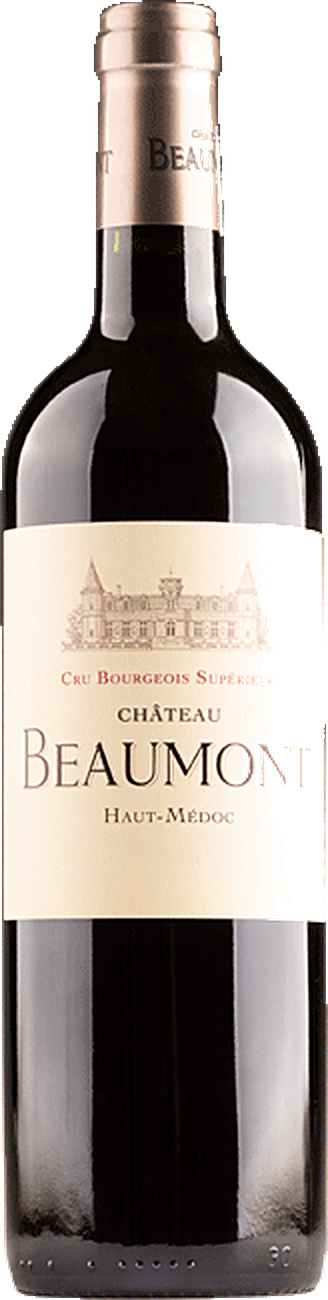
The history of Château Beaumont does not begin with vines, but with heath, fallow land, and a far-sighted landowner. 1772, Henri Labarthe had the land between the Gironde and the Atlantic cleared and prepared for viticulture. Vines were planted first in 1824, when the new owner, Monsieur Bonnin, laid the foundation for today's estate. His successor, the Marquis d'Aligre — one of the richest men in France at the time — tripled the vineyard area within less than two decades. In 1854, the Bonnin brothers built the château in the classic Mansard-Renaissance style, which still defines the face of the estate today. The list of owners reads like a chapter of world history: a Breton aristocrat, a Honduran diplomat, a Parisian industrialist, a Venezuelan senator — a total of twelve different owners contributed to making Beaumont's name known far beyond the Médoc. Since 1986, the château has belonged to Grands Millésimes de France, a group that also includes the Saint-Julien Grand Cru Classés Beychevelle and Lagrange.
Integrated viticulture as a pioneering achievement
Château Beaumont manages around 114 hectares of vineyards in the Haut-Médoc, between the Margaux and Saint-Julien appellations, on deep, well-draining gravel soils near the Gironde. The estate decided on a consistently environmentally oriented course early on: Since the 2004 harvest, Beaumont has been certified according to Terra Vitis guidelines, making it one of the Médoc's pioneer estates in integrated farming. This means: significant reduction of chemical treatments, complete traceability, and active biodiversity management. In 2014, an ISO 14001-certified environmental management system was added, documenting the continuous improvement process in both the cellar and the vineyard. In the cuvier, the grapes ferment in large, temperature-controlled stainless steel tanks. Malolactic fermentation takes place in the tank, after which the wine matures for twelve to fourteen months in French oak barrels, a third of which are renewed each year — classic Bordeaux maturation that provides structure without masking the fruit profile.
Cabernet structure, Médoc depth, accessible elegance
The typical blend of Château Beaumont consists of about 60 percent Cabernet Sauvignon and 35 percent Merlot, supplemented by small proportions of Cabernet Franc and Petit Verdot. The Cabernet, grown on the gravel ridges of the Haut-Médoc, provides the structural tannins and long-lasting structure; the Merlot nestles softly against it, and the Petit Verdot adds color and aromatic accents. In the glass, it shows dark cassis fruitiness, notes of black cherry, cedarwood, and a hint of toast from the barrel aging — the style is straightforward médocain, without fashionable opulence. The second wine, Les Tours de Beaumont, vinifies grapes from younger vines using the same approach. Beaumont is classified as a Cru Bourgeois Supérieur and is a member of the Union des Grands Crus de Bordeaux — a positioning that suits the estate well: classic Bordeaux character with a clear statement of origin, which pairs just as well with rack of lamb, game poultry, or aged hard cheese as it does with a simple steak from the grill.