From Dutch colonial heritage to German rebirth
Buitenverwachting is inextricably linked to the beginnings of South African viticulture. The land on which the estate is located today was originally part of the large Constantia Grant, established in the late 17th century by Simon van der Stel, the first governor of the Dutch colony at the Cape. The estate was separated from this original area as an independent farm in 1773 — Cornelis Brink is considered the first owner and the man who gave the property its name: Buitenverwachting, Dutch for "beyond all expectations." His son Arend Brink built the Cape Dutch manor house in 1796, which remains the heart of the estate to this day. During the early heyday of the 19th century, Ryk Arnoldus Cloete, brother of the legendary Groot Constantia owner Hendrik Cloete, planted 90,000 vines on the property — proof of how highly the region was valued in the international wine trade at that time.
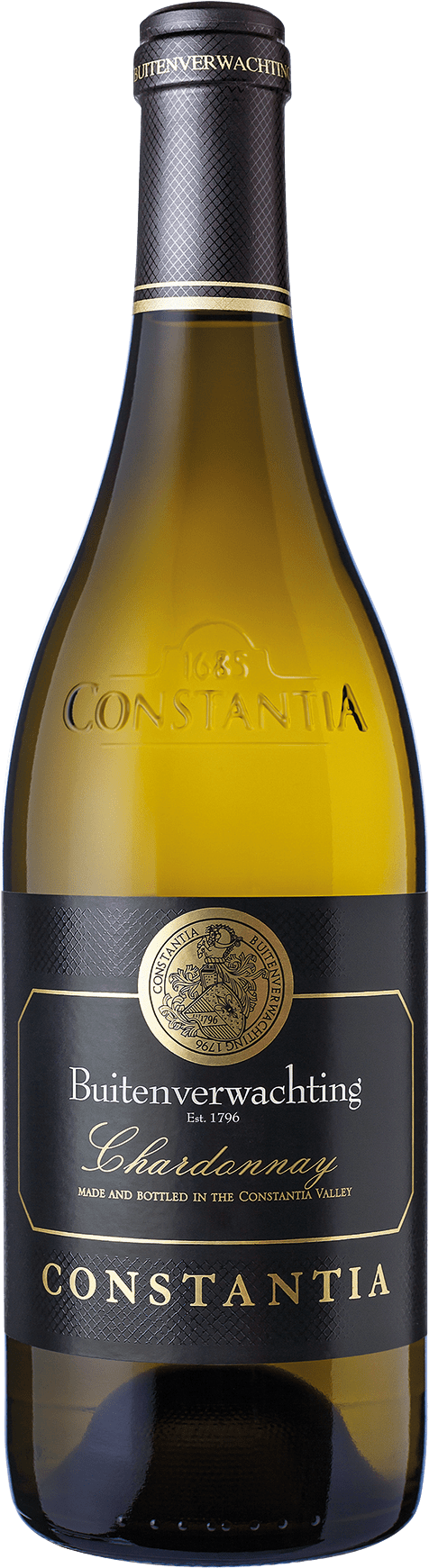
After decades of decay and changing ownership, Hamburg textile industrialist Richard Müller bought the estate in 1980 and started a comprehensive renewal: the Cape Dutch manor house was completely restored, a modern wine cellar was built, and the vineyards were replanted from scratch — primarily with Sauvignon Blanc, Chardonnay, Semillon, Cabernet Sauvignon, Merlot, Cabernet Franc, Petit Verdot, and Shiraz. The first vintage under the new name appeared in 1985. Since 1991, Lars Maack, Richard's stepson, has managed the estate as owner — a continuity reflected in low staff turnover and a clearly defined style.
Granite soils, sea breezes, and a cellar with ambition
Buitenverwachting is located on the eastern slopes of the Constantiaberg, about twelve kilometers from False Bay. The soils consist of deep, weathered granite — a defining factor for the mineral basic structure of the wines. Cooled by the sea breezes of both oceans, the Atlantic in the west and the Indian Ocean in the east, the grapes ripen slowly and develop an acidity structure and aromatic complexity that would be difficult to achieve in warmer locations. Winemaker Brad Paton, who returned to South Africa in December 2004 after graduating from the German winery Johanninger and the Geisenheim University, has been responsible for the cellar ever since. His approach combines classic craftsmanship with targeted terroir expression: the Sauvignon Blanc sites are vinified separately and only brought together in the blending step to create a coherent estate character.
Locally, Buitenverwachting is considered a pioneer of social projects for its staff. The 100-hectare farm is managed with a view to preserving the Cape flora and the water resources of the Constantia Valley — a concern that carries particular weight in one of South Africa's driest wine regions.
Sauvignon Blanc as a guiding star, Christine as a red exclamation mark
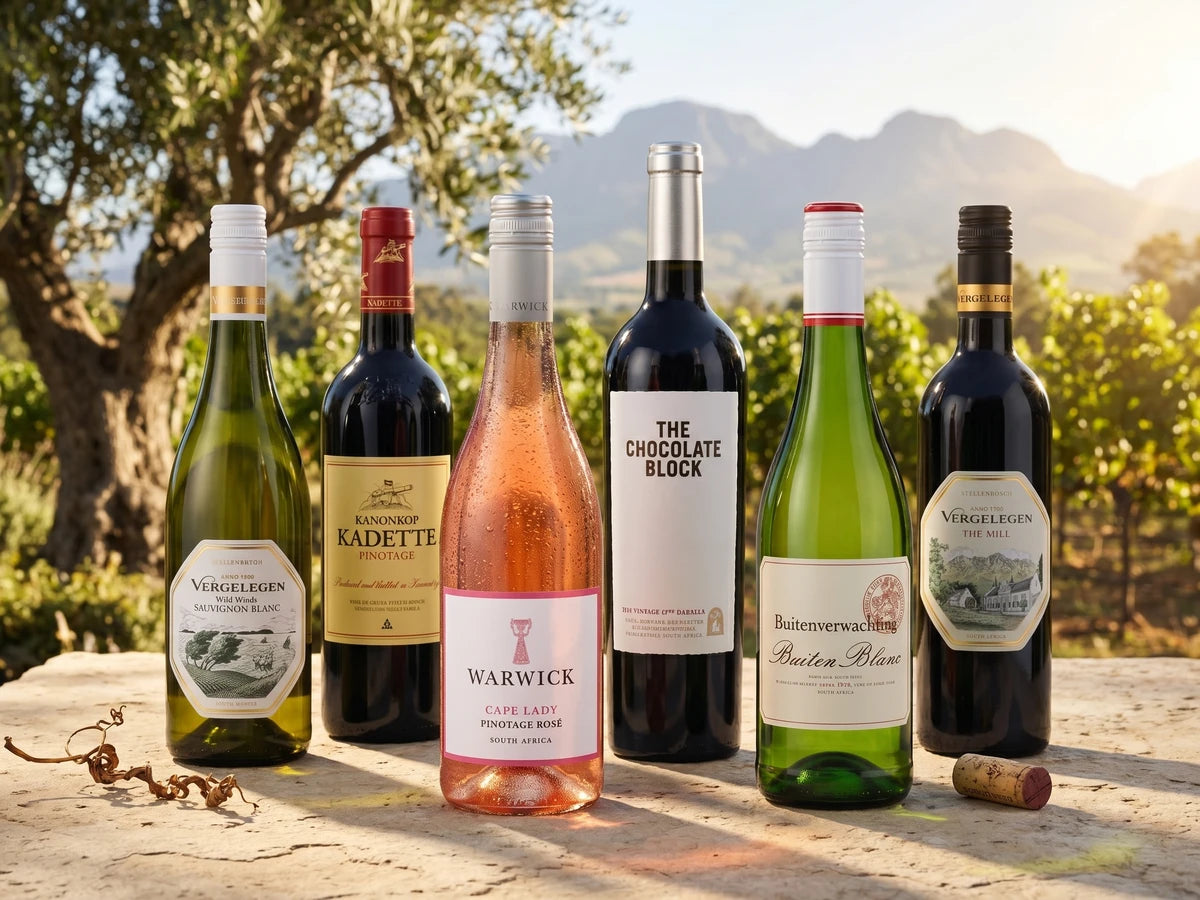
The range directly reflects the climatic strengths of the location. The Sauvignon Blanc Constantia has been considered one of South Africa's best white wines for years: a terroir-driven single-vineyard wine that weaves the estate's different granite plots into a multi-layered, long cuvée — citrus, green herbs, salty finish, clear acidity line. The Sauvignon Blanc Husseys Vlei focuses on a specific single plot and thus shows how precisely Buitenverwachting works with its terroir. The Buiten Blanc, an assemblage of Sauvignon Blanc and Chardonnay, strikes a more accessible tone: fruity, with citrus freshness and a palate softly rounded by the Chardonnay portion. The Blanc de Noir Rosé shows that the estate also works with stylistic confidence beyond its core white wine competence.
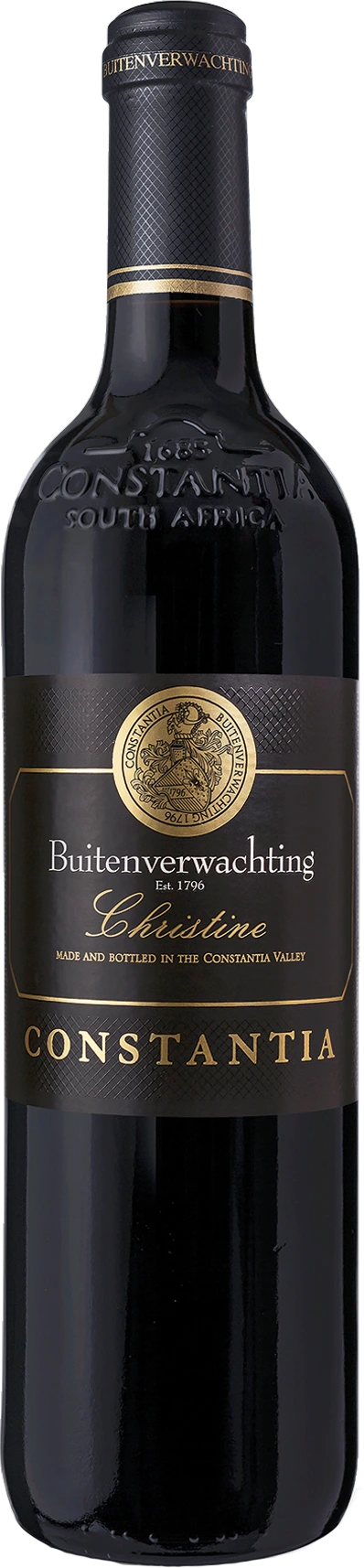
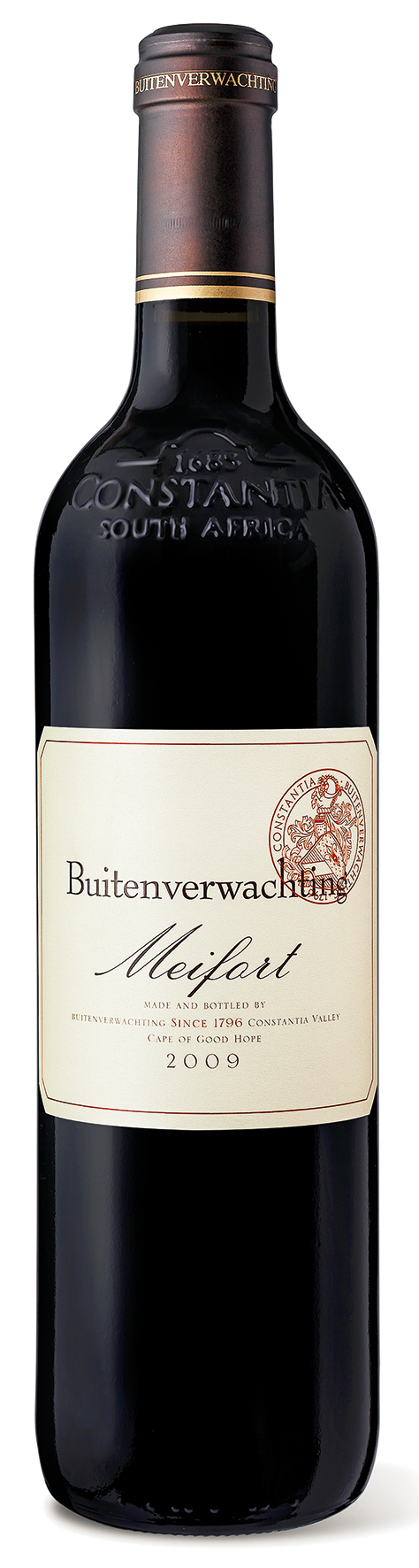
The red flagship Christine — named after Christine Müller, the founder's wife — is a Bordeaux-inspired assemblage of Cabernet Sauvignon, Merlot, Cabernet Franc, and Petit Verdot. With this wine, the estate has proven that Constantia is not just a white wine region. Meifort completes the red wine range as a more accessible Bordeaux-style cuvée. Overall, Buitenverwachting stands for an estate character that combines precision and readability: no over-extraction, no excess wood — instead, wines that make the limestone granite soil and the cool sea air tasteable. Serving temperature for the Sauvignon Blancs: 10–12 °C.