From port wine merchant to master of four Grands Crus
Bernard Magrez was born in Bordeaux in 1936 — and has never really left the city, even though his empire now extends far beyond it. He did not enter the wine business through inheritance, but through observation: as a young man, he learned the trade from the ground up, worked his way through the Bordeaux wine trade, and founded his first company in 1961 with the purchase of a port wine merchant named Pitters. What followed was not a straightforward rise, but a patient accumulation of knowledge and capital. With the Malesan brand, he created one of the best-selling Bordeaux brand wines in France — and used this commercial success as a springboard into the world of Classified Growths.
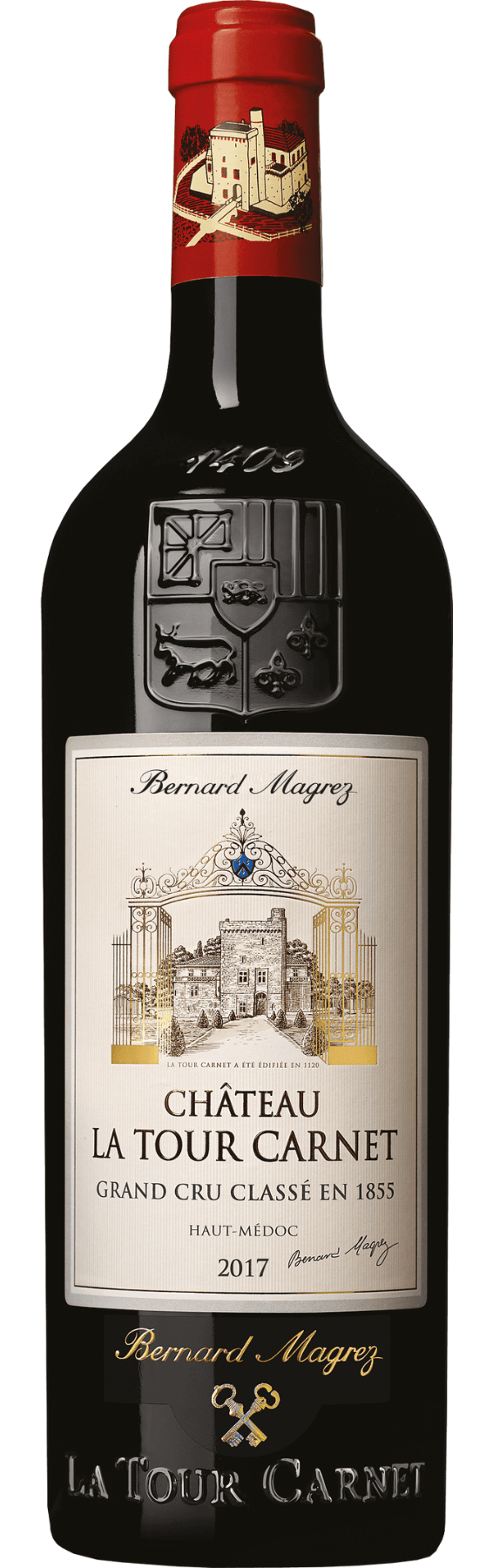
In the 1980s, Magrez acquired his first shares in Château Pape Clément in Pessac-Léognan, the château that still forms the heart of his portfolio today. In 1999, Château Fombrauge in Saint-Émilion was added, and in 2000, Château La Tour Carnet in the Haut-Médoc — one of the oldest estates in the Médoc, already classified in the legendary 1855 classification. With the acquisition of Clos Haut-Peyraguey in Sauternes, Magrez became the only winemaker to manage four classified Grands Crus from four different Bordeaux appellations himself. His son Philippe, who has been with the company for over 40 years, is designated as his successor.
Precision viticulture, research, and the claim to perfection
What distinguishes Magrez from many large landowners is his operational depth. Under his leadership, the vineyards were managed plot by plot, yields were specifically reduced, grape selection was tightened, and the barrique program was refined. Maison Bernard Magrez maintains its own scientific research center, which deals with sustainable precision viticulture, biodynamic farming methods, and the effects of climate change on the vine rows — not a marketing promise, but institutionalized research work.
For Magrez, terroir is not a decoration, but the starting point for every decision in the cellar. At Château Pape Clément, for example, a subsoil of gravel over clay and limestone significantly shapes the ripening behavior of the grapes: the soils store heat during the day and release it in a controlled manner at night — a natural balance that keeps ripeness and freshness in equilibrium. The research center works to make such relationships measurable and reproducible. In addition, there is a cultural commitment that goes beyond viticulture: in 2011, Magrez founded the Institut Culturel Bernard Magrez at Château Labottière, an 18th-century house that now serves as an exhibition and residency space for contemporary artists.
Bordeaux in its full breadth — from the classification to the Haut-Médoc
The range of the Maison Bernard Magrez reflects the diversity of Bordeaux: powerful, structured red wines from the Médoc, multi-layered Graves cuvées based on Cabernet Sauvignon and Merlot, complex white wines from Pessac-Léognan, and sweet wines from Sauternes. Château La Tour Carnet, the estate in the Haut-Médoc, stands for classic Médoc style: dark fruit, firm tannin structure, storage capacity due to the high Cabernet content. The wines are vinified as Grand Cru Classé 1855 — with the claim that every vintage fully exhausts the potential of the location. Beyond Bordeaux, the Maison holds estates in Spain, Portugal, Chile, Morocco, Japan, and California — but the Bordeaux Grands Crus remain the benchmark against which everything else is measured.