From construction project to Franciacorta pioneer
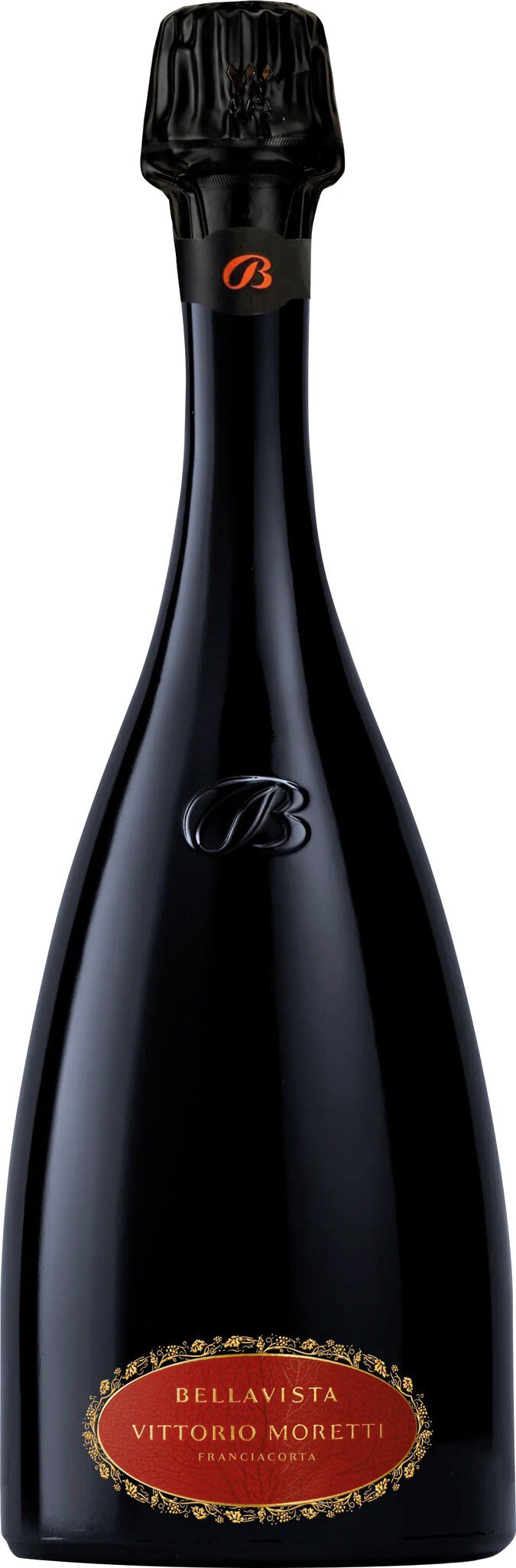
The history of the Moretti family is deeply rooted in Erbusco and Franciacorta — old correspondence confirms their presence in the region since the 15th century. When Vittorio Moretti acquired an estate in 1977 on the hill that would give the winery its name, his initial intention was modest: a few bottles of still wine for himself and his friends. By the second year, the first Metodo Classico sparkling wines were created, and in the third year, actual production began. Moretti, a construction entrepreneur by trade, recognized the potential of the morainic soils and the subalpine microclimate early on — and was convinced that Franciacorta had what it took to compete with the best sparkling wines of France. Today, Bellavista belongs to the Terra Moretti group, which Moretti built together with his daughter Francesca, and is one of the reference estates of the entire appellation.
One hundred parcels, one signature
The heart of Bellavista consists of approximately 200 hectares of estate-owned land, spread across eleven municipalities of the Franciacorta DOCG. The vineyards are divided into more than one hundred individual parcels, which are cultivated and vinified separately based on soil type, exposure, and grape variety — Chardonnay, Pinot Nero, and Pinot Bianco. This parcel-specific vinification is the prerequisite for the precision in blending that defines the house style. The grapes are harvested exclusively by hand. In the cellar, a portion of the base wines ferments in small oak barrels, the rest in steel tanks; for the non-vintage cuvées, reserve wines from several previous vintages flow into the blend. Since 1981, oenologist Mattia Vezzola has significantly shaped the house style; today, Francesca Moretti leads the winery as president, supported by Richard Geoffroy, the long-time cellar master of Dom Pérignon. The philosophy in the vineyard follows the pruning concept of Marco Simonit, which is intended to make the vines stronger and more independent in the long term — there is no irrigation. Loyalty to the terroir is not a marketing term here, but lived practice: every action in the vineyard and in the cellar is considered part of a chain that preserves the natural expression of the sites.
The art of assemblage and the legacy of monastery and stage
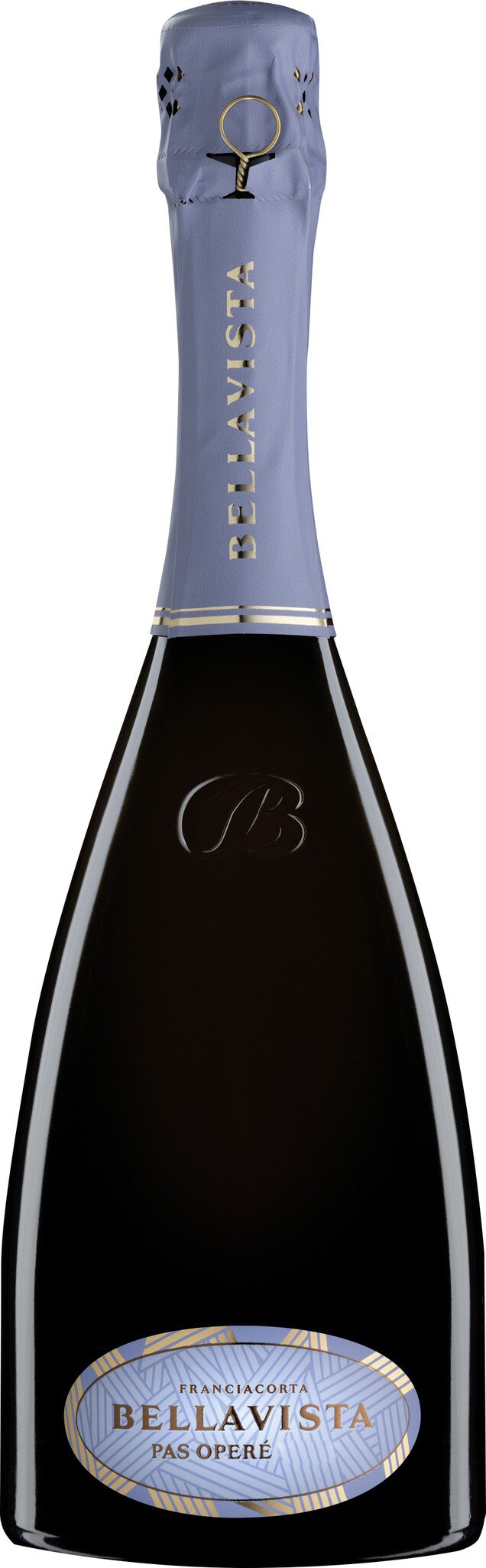
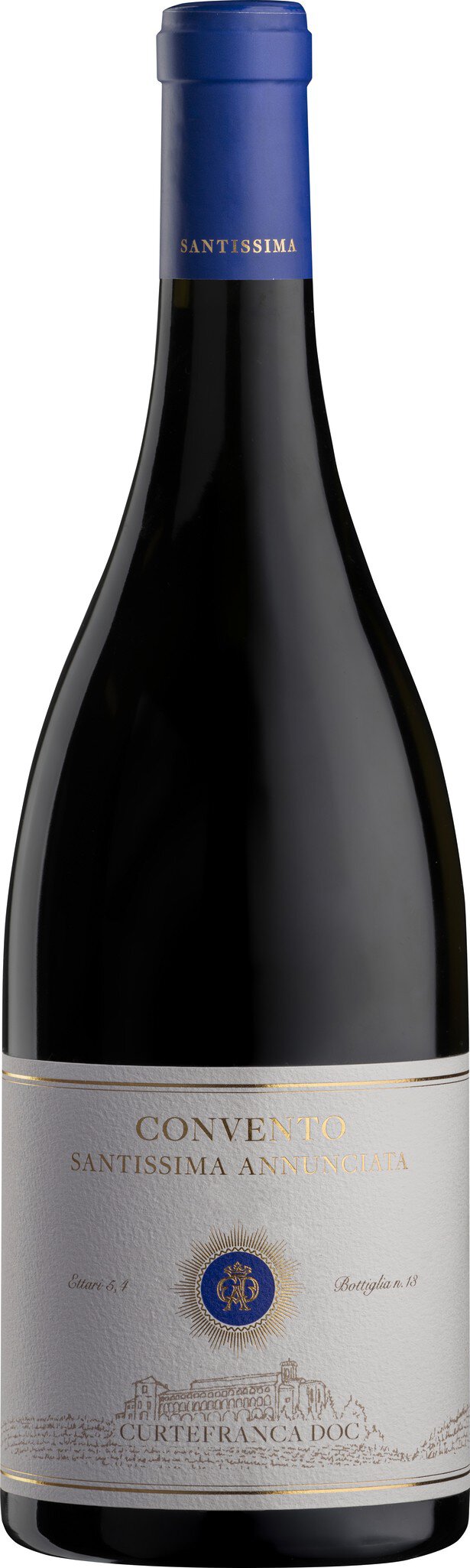
The style of Bellavista is geared towards finesse, tension, and depth — not fullness for the sake of fullness. The non-vintage cuvées of the Alma line draw from at least 20 different reserve wines, thus condensing the complexity of several vintages into a single glass. At the other end of the scale is the Riserva Vittorio Moretti, a vintage wine made from Chardonnay and Pinot Nero that matures on the lees for at least seven years and most clearly articulates the house's claim to longevity and depth of character. Alongside this stands the Pas Operé as a non-dosé expression: bottled without dosage, direct and mineral. A special role is played by the Convento Santissima Annunciata — a vineyard surrounding a medieval monastery between Franciacorta and Brescia, whose Chardonnay Bellavista vinifies and matures as Curtefranca Bianco DOC: a still wine that captures the morainic minerality of the region in its own way. And for decades, a partnership has connected the estate with the Teatro alla Scala in Milan — every year for the season opening, a Bellavista is on the tables of the house. This is no coincidence: Vittorio Moretti built his winery with the same attitude one uses to build an opera house — with the claim that the craftsmanship behind the scenes is what counts on stage.