From the Smuggler's Coast to the World Stage: The History of Ardbeg
On the south coast of Islay, where the Atlantic waves crash directly against the rocks, Ardbeg has stood since 1815. John MacDougall secured the official license that year — but the site had been used for illegal distillation even before that, at least since 1794. The family name MacDougall runs through the early decades of the distillery: son Alexander continued the business, and by the mid-19th century, the reins were held by sisters Margaret and Flora MacDougall, who were among the first women to manage a distillery in Scotland.
The 20th century brought world wars, economic downturns, and multiple changes of ownership. In 1981, Allied Breweries closed the gates — for many, the end. But in 1997, The Glenmorangie Company bought the distillery and invested in its revival. In 2004, LVMH (Moët Hennessy Louis Vuitton) took over Glenmorangie along with Ardbeg. Since then, distillation has been running without interruption. At the same time, the Ardbeg Committee was formed — a global community of fans founded in 2000 with the declared goal of never letting the distillery doors close again.
55 ppm phenols and a purifier like no other
Ardbeg sources its malted barley from the Port Ellen Maltings, the malting center of the village right next door. The decisive factor is the intensity with which this malt is kilned over burning peat: at least 55 ppm phenols — measured in phenol parts per million — are incorporated into the barley. This is one of the highest values in the entire industry. For comparison: most other Islay distilleries work with 20 to 40 ppm.
The fact that this extreme level of peat does not seem coarse or one-dimensional in the finished whisky is due to a technical detail that distinguishes Ardbeg from all other Islay distilleries: a so-called purifier between the wash still and the spirit still. This component directs heavy aromas back into the first distillation cycle before they pass into the final spirit. The result is a distillate that combines full smoke with an unexpected sweetness — known internally as the Peaty Paradox. Maturation takes place mainly in ex-bourbon casks made of American oak, supplemented by sherry casks depending on the expression.
Peat smoke, citrus, sea salt: the Ardbeg range at a glance
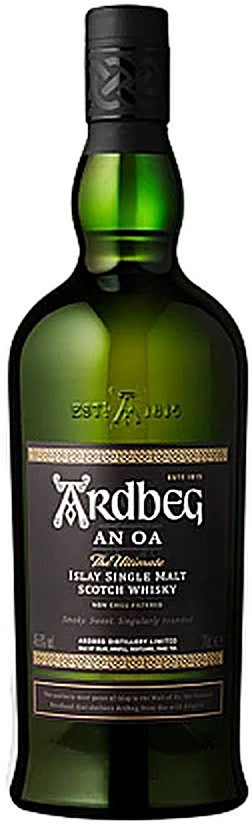
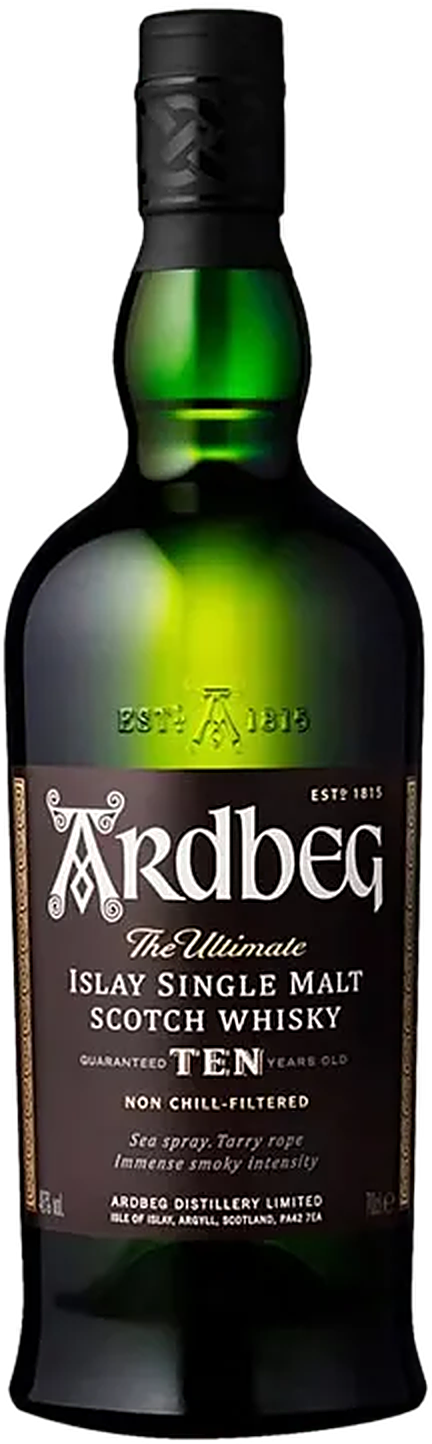
The Ten Years Old is the entry-level expression and the benchmark for the house: dense smoke, citrus peel, vanilla from the bourbon cask, long salty-dry finish. Those looking for a more accessible entry should reach for the An Oa — named after the peninsula in the south of Islay. For this whisky, casks from different stages of maturation are brought together in a round marrying vat, which results in a rounder mouthfeel and more chocolate and butterscotch notes without giving up the peat. In addition, limited editions are released regularly, often under unusual names and with extraordinary cask finishes — from heavily charred to Oloroso sherry to experimental wood types. Those who love smoke will find in Ardbeg a range that consistently rethinks this character, from accessible to uncompromising.