From Buñola to the world: 125 years of Mallorcan distillation art
The history of Antonio Nadal begins in 1898 in Buñola, a small village in the Tramuntana mountains in the northwest of Mallorca. Founder Antonio Nadal Muntaner produced the island's traditional liqueurs there by hand using an old copper kettle and initially sold them only in the immediate vicinity. Around 1920, the house opened up to export to South America — early proof that Mallorcan distillation culture was in demand far beyond the Balearic Islands. The Spanish Civil War interrupted this rise abruptly. In the post-war period, however, the company found its way back to its work, and with the takeover by the Morey-Garau family in the third generation, it gained momentum: investments, modernizations, and a growing product portfolio transformed the small island supplier into one of the best-known spirits manufacturers in the Balearic Islands. In 1998, the company moved to a new plant in the industrial area of Marratxí, where the distillery has been based ever since.
Craftsmanship, modernity, and an in-house mixology lab
Antonio Nadal sees itself as a family business that combines artisanal roots with industrial precision. In the plant in Marratxí, alongside modern multi-column distillation systems, there is still a copper pot still with 1,200 liters — the classic device for characterful distillates. Between 2009 and 2012, the entire facility was fundamentally renewed: energy efficiency was just as much a focus as the creation of an in-house bartender and mixology training kitchen, which develops new cocktail concepts around the house's own products. Today, around 6.5 million bottles leave the plant annually — a capacity that would be unthinkable without continuous reinvestment in facilities and personnel.
Another pillar is contract production under customer labels: hotels, restaurant chains, and retailers can have their own spirits developed — from the recipe to the distillation to the bottling under their brand. Distillery director Pep Natta, who has been with the company for over three decades, leads this development work.
Palo, Hierbas, and much more: the assortment of the island
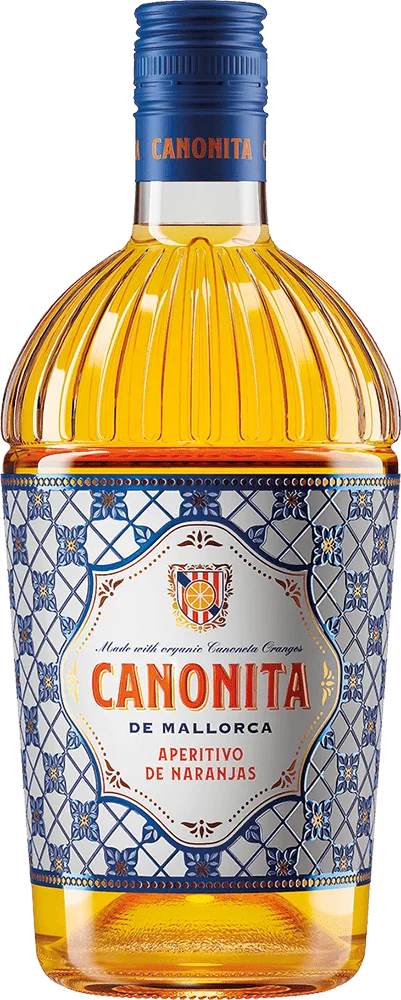
The fame of Antonio Nadal is inseparably linked to two products: Palo Túnel, a bittersweet Mallorcan herbal liqueur made from gentian, cinchona bark, and blackcurrant berries, and Hierbas Túnel de Mallorca, a Mediterranean herbal liqueur made from rosemary, chamomile, mint, fennel, and marjoram. Both carry a Denominación Geográfica — a protected designation of origin for Palo de Mallorca and Hierbas de Mallorca — which bindingly regulates the recipe and origin. In addition, the assortment includes around 180 different spirits and liqueurs, including rum, gin, vodka, absinthe, as well as liqueur creams such as the almond-based Metla Cream — a reference to the almond-tree-rich landscape of Mallorca. The Canonita de Mallorca fits into this picture as a Mallorcan specialty: a liqueur that captures the botanical diversity of the island in a bottle. The products are distributed in the Balearic Islands, along the Spanish Mediterranean coast, in the Canary Islands, as well as in numerous European and Latin American markets.