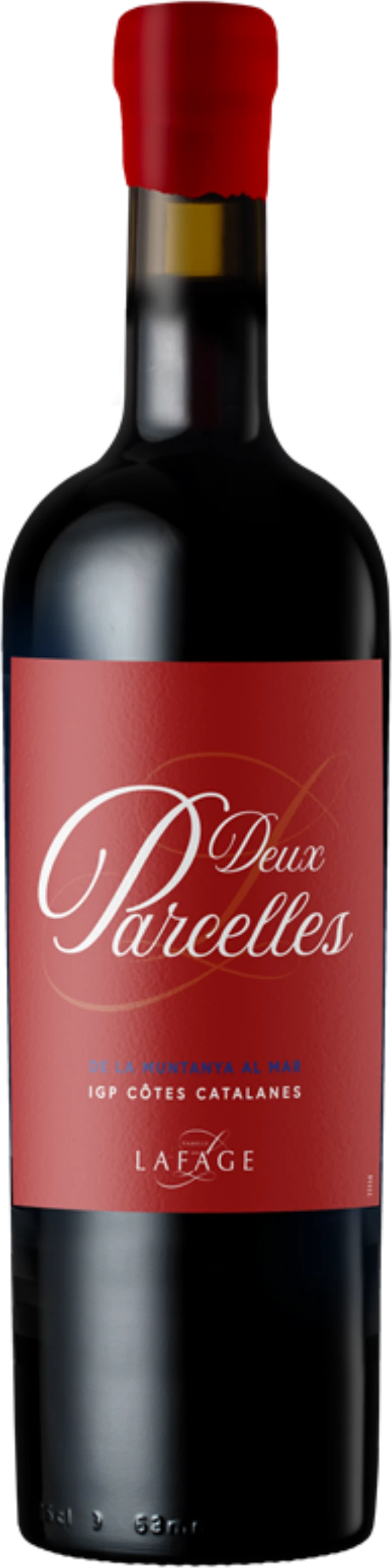
Deux Parcelles
A journey from the mountains to the sea – and deep into the glass
There are wines whose origin you read on the label. And there are wines whose origin you can taste. You lift the glass, let the wine swirl slowly, and suddenly you find more than fruit, spice, and wood. You find a landscape. You feel the warmth of a southern day, the coolness of a night in the mountains, the wind over stony slopes, and somewhere in the background, even the proximity of the sea.
Deux Parcelles is one such wine.
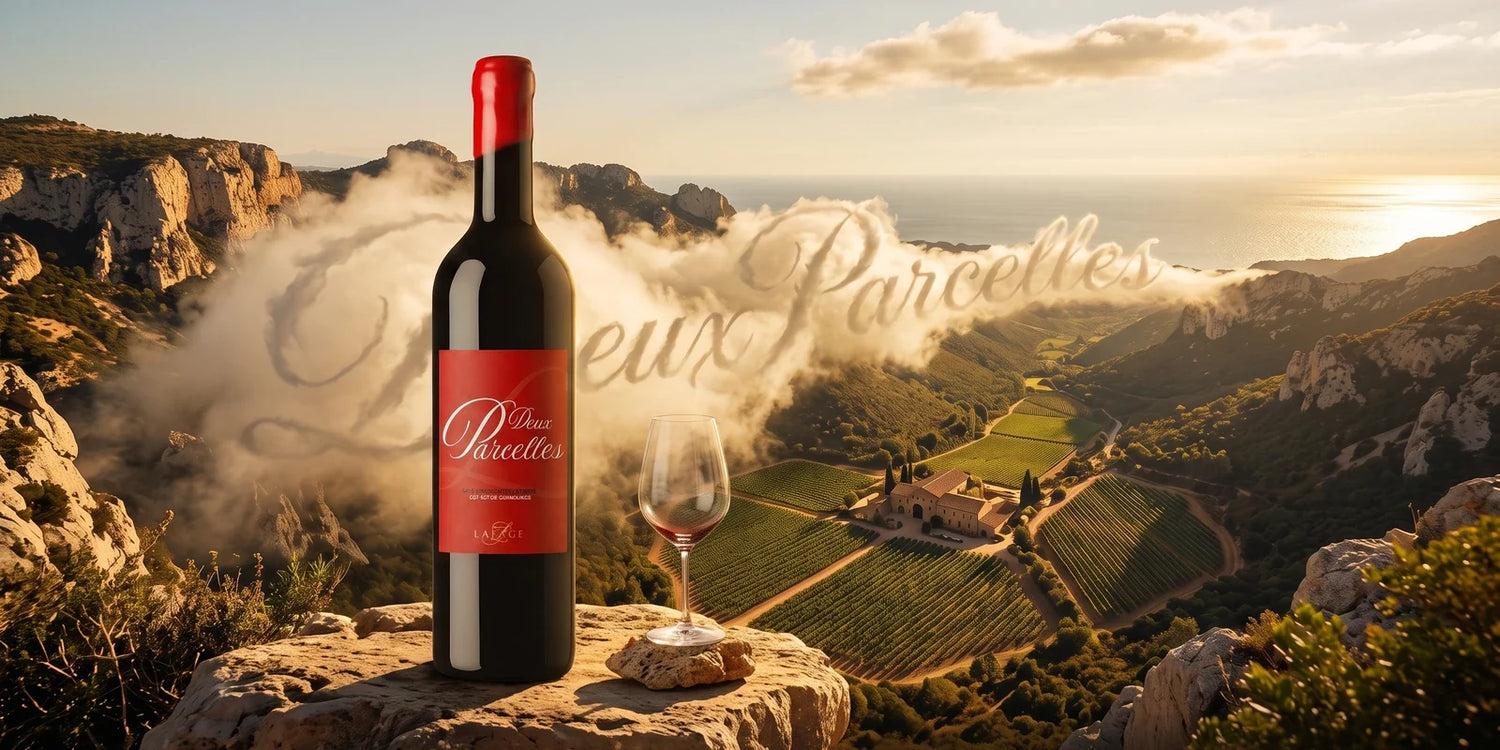
Its name means "two parcels." But behind these two words lies far more than a sober description of its origin. They stand for two landscapes that could hardly be more different. For two old vineyards, each possessing an unmistakable character of its own. For mountains and coast, stone and salt, warmth and freshness. And for the idea of not playing these opposites against each other, but reconciling them in a single wine.
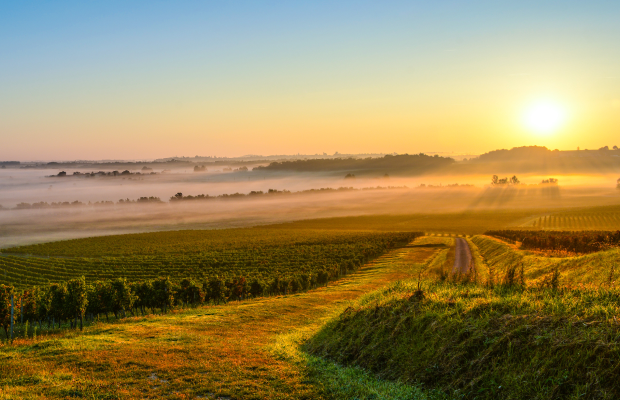
One part of its story begins where the Roussillon slowly rises to the foothills of the Pyrenees. The roads become narrower, the plains give way to rugged slopes, and the vines no longer stand in gently curved rows, but look as if they have laboriously fought for their place in the rock over decades. Some of these vines are sixty, seventy, or even eighty years old. Their trunks are thick, gnarled, and marked by the weather. They bear the traces of countless summers, dry years, cold nights, and those winds that sweep over the plateaus up here without finding much to stop them on their way.
Beneath the surface, their roots reach deep into barren, stony soils of gneiss and granite. There, they search for moisture and nutrients, penetrating through cracks in the rock and tapping into layers that would be barely accessible to young vines. These old vines no longer produce large harvests. Their strength is not distributed over countless grapes. It is concentrated in a few, small berries whose taste seems condensed.
In them lies the dark, silent power of the mountains.
They give the Deux Parcelles its depth, its structure, and that intense dark fruit that rises from the glass at the very first scent. Yet it is not a superficial, sweet fruit. It is more reminiscent of blackberries that have become almost overripe at the edge of a forest, of black cherries, dark plums, and cassis. Behind this lie notes of warm stone, dried herbs, black pepper, and the tart spice of the garrigue, that Mediterranean scrubland whose scent of thyme, rosemary, and wild herbs lies over the Roussillon on hot days.
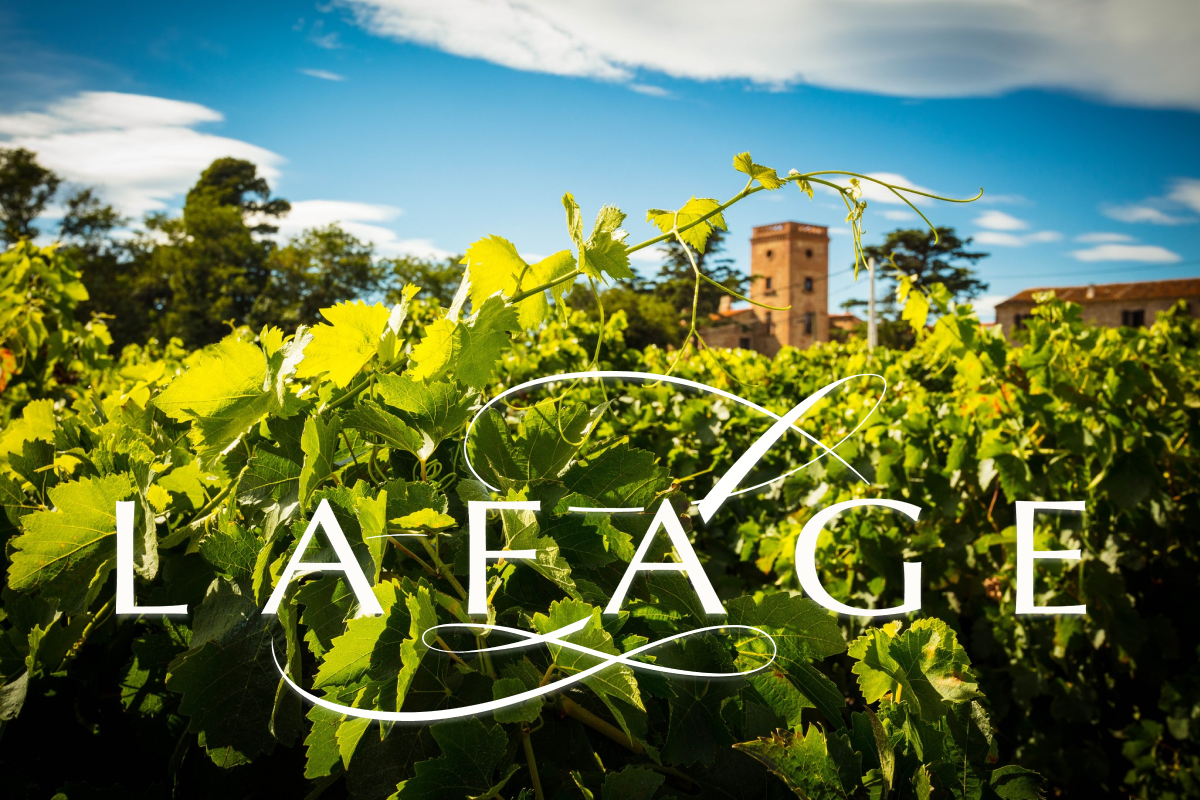
This mountain parcel is a piece of lived family history. Generations before Jean-Marc Lafage, they tended the vines and preserved them through decades in which many old vineyards elsewhere were long since cleared. That they are still standing today is not a matter of course. It is the result of an attitude that judges vineyards not only by their yield, but by what they can tell. Lafage describes the Roussillon as a mosaic of different terroirs; the estate's vineyards reach from the shores of the Mediterranean to the foothills of the Pyrenees.
But if Deux Parcelles came only from the mountains, it would be a different wine. Perhaps more powerful. Perhaps darker. Perhaps more serious. Its true tension only arises through the second parcel – where the land becomes flatter, the air seems softer, and the Mediterranean is so close that you can feel its presence even when you cannot yet see it.
These vineyards lie directly under the influence of the coast. Some of the vines are even older than those in the mountains and look back on many decades of Mediterranean summers. They have experienced heat, drought, and strong winds. Their roots are firmly set in the barren soils, while above them the air remains in constant motion. Cooling moisture drifts in from the sea, while at the same time dry winds sweep through the vine rows, ventilating the grapes and preserving their health.
The sea is not a romantic backdrop here. It is a participant.
It mitigates the heat, brings movement to the air, and ensures that the grapes retain their freshness despite the southern sun. The days can be warm and bathed in light, but the proximity of the coast and the cooler air currents prevent the wine from being dominated solely by ripeness and fullness. They give it tension, a lively contour, and that inner freshness that makes the Deux Parcelles appear so astonishingly agile despite its power.
Perhaps there is even something of the sea itself in its character. Not as an obvious salty taste, but as a sensation. As a fine, mineral trace. As a cool pull beneath the dark fruit. As that barely tangible feeling that makes a wine juicy and animating and makes the next sip seem almost inevitable.
The old coastal vines yield only small quantities. But what they produce possesses a remarkable concentration. Sun, wind, stone, drought, and time seem to be stored in every berry. While the mountain parcel gives the wine depth and power, the proximity of the sea gives it elegance, freshness, and length. One gives it its dark voice, the other the breath between the notes.
Only together do they become Deux Parcelles.
The 2024 vintage – a year of patience
Every wine carries within it not only the place of its origin, but also the year in which its grapes grew. The 2024 vintage in the Roussillon was not a year that made things easy for the winemakers. After the years of great drought that preceded it, a different form of tension returned to the vineyards. Yields remained low, conditions varied greatly by region, and more than ever, it was essential to observe every single parcel closely and recognize the right moment for the harvest.
It was precisely these challenges, however, that gave the vintage its special character. Ripening proceeded more slowly, the harvest moved back closer to more traditional times, and in many places, a freshness was preserved that is invaluable in southern wine regions. Where the grapes were able to ripen healthily and completely, wines with intense aromatics, good tension, and remarkable balance were created. Reports from the Roussillon describe 2024 as a vintage with low yields but good to very good quality; at the same time, dry weather, cooler summer nights, and maritime moisture near the coast ensured healthy grapes, aromatic freshness, and preserved acidity.
For the old vines of the Deux Parcelles, this year meant another test, but old vines possess a special form of serenity. Their deep roots make them more independent of short-term weather changes. They do not react frantically to every hot day and every dry week. They draw from the depths, distribute their strength with care, and carry fewer, but all the more concentrated, grapes.
Thus, 2024 produced a wine whose warmth is unmistakably southern, yet which never surrenders to this warmth. Its fruit is ripe, dark, and generous, but not cooked. Its power has contour. Its fullness is carried by freshness. It seems as if the vintage gave it time not only to develop its character, but to organize it.
The silent work of the wood
After the harvest, the second transformation begins. The fruit leaves the vineyard and reaches the cellar, where grapes slowly become wine. Here, it is decided whether what the parcels have created over months is preserved or covered up.
With Deux Parcelles, the wood should never take the lead role. It should not dress up the wine, not coat it with superficial vanilla, and not try to replace origin with aging. Its task was rather to connect the individual elements, to give the tannins time, and to provide a quiet frame for the dark fruit.
The various barrel samples revealed very different sides of the wine. Some batches showed more power and roasted spice, others appeared finer, juicier, or more strongly characterized by the original fruit. Only in their assemblage did that balance emerge in which the wood remains perceptible without pushing itself into the foreground.
It shows itself in a hint of cocoa, in roasted coffee, fine vanilla, and a dark, almost smoky spice. But it does not lie over the wine like a layer. It has grown into it. Barrel aging rounds the edges, deepens the structure, and connects the power of the old mountain vines with the freshness of the coastal parcel.
The wood is not the voice of the wine here.
It is the room in which this voice can resonate.
A journey into the glass
Even when pouring, Deux Parcelles possesses an almost ceremonial presence. The wine flows dark into the glass, deep ruby red and almost impenetrable at the core. Purple reflections flash at the edges, as if the last light of a southern French evening were reflecting on a dark water surface.
One should give it a moment.
Not because it is hiding, but because it opens up more and more with time. At first, the fruit emerges: ripe blackberries, black cherries, cassis, and dark plums. These are aromas of fruits that have seen long sun without losing their freshness. Nothing seems jammy, nothing heavy or broad. The fruit possesses clarity and depth, as if one could smell into it layer by layer.
With a little air, the picture changes. The dark berries take a step back and make room for spices. Black pepper appears, then cocoa, roasted coffee, and a fine hint of vanilla. One discovers dried herbs, some licorice, and perhaps even the memory of juniper, warm forest floor, and a stone that has lain in the sun all day and still radiates warmth in the evening.
Then there is this Mediterranean note that is difficult to translate into a single aroma. It is reminiscent of the air over the garrigue, of dry herbs, resin, and dusty paths between the vineyards. It is the scent of a landscape in which sun does not only mean brightness, but is a formative element.
On the palate, Deux Parcelles initially appears powerful, yet almost at the same moment it shows its elegance. The dark fruit lies dense and velvety on the tongue. Black cherry and blackberry return, now juicier and deeper, accompanied by plum, spices, and a fine chocolate note. The wine possesses volume, but it does not spread out heavily. It moves.
Its tannins are present, yet finely polished and closely interwoven with the fruit. They are not reminiscent of rough wood, but of the soft resistance of velvet. They provide support without holding the wine back. Beneath this lies a lively freshness that repeatedly lifts the palate and prevents the southern ripeness from ever becoming tiring.
This is exactly where the two parcels meet.
The mountains give the wine its foundation: depth, concentration, dark spice, and the almost majestic calm of old vines. The sea brings light into it: freshness, tension, juiciness, and that fine salty hint that lengthens the wine and gives it an astonishing lightness.
In the middle, Deux Parcelles becomes increasingly complex. The fruit becomes darker, the spice more distinct, and between cocoa, coffee, and herbs, a mineral trace appears. For a moment, the wine is reminiscent of warm granite after a short summer rain. Of dark earth. Of the shade under old vines while the heat shimmers over the leaves.
The finish is long and quiet. It does not come with loud force, but slowly retreats. Blackberries, cocoa, pepper, and Mediterranean herbs remain on the palate, accompanied by a fine freshness that is still perceptible long after the last sip. One does not have the feeling that the wine ends. Rather, that it is moving away – like a landscape that slowly becomes smaller in the rearview mirror and yet remains in the memory.
Deux Parcelles has 15 percent alcohol, but its true greatness lies in the fact that this power does not emerge in isolation. It is integrated into fruit, tannin, and freshness. With a residual sugar of only two grams per liter, the wine remains dry and precise, despite all its fullness.
A wine for all seasons
Deux Parcelles is not a wine that waits for a single occasion. It possesses the depth and warmth for a winter evening, for braised beef, lamb, game, and hearty sauces. It accompanies a festive roast, aged cheese, and long meals at Christmas, where the conversations eventually become more important than the time.
But it can also do otherwise.
Slightly chilled, not cold, but brought to about fourteen to sixteen degrees, it shows a surprisingly lively side in summer. The fruit appears juicier, the Mediterranean herbs emerge more clearly, and the influence of the coastal parcel suddenly seems to pull even more strongly through the wine. Then it goes well with grilled meat, eggplant, bell peppers, strongly seasoned vegetables, and those long evenings outdoors when the warmth of the day slowly fades from the stones.
It is festive enough for Christmas, connecting enough for Easter, and carefree enough for an evening on the terrace. Perhaps this versatility is one of its greatest talents. Deux Parcelles does not just want to be admired. It wants to be drunk. It wants to stand on the table, be poured, shared, and passed around.
Because a great wine does not have to be complicated.
It has to trigger something.
Two parcels, one landscape
In the end, the question remains as to what makes a wine truly great. Is it the age of the vines? The barrenness of the soils? The climate? The aging in the barrel? The experience of the winemaker?
It is probably never just one of these.
It is the interplay.
Deux Parcelles lives from the opposites that come together in it. From old vines in the mountains whose roots reach deep into gneiss and granite. From ancient vineyards near the Mediterranean that have been exposed to the wind and salty air for decades. From a vintage that demanded patience and gave freshness, concentration, and tension in return. From wood that gives the wine structure without drowning out its origin. And from an assemblage that does not simply mix all these elements together, but allows them to tell something new together.
One can describe Deux Parcelles as a red wine. One can talk about blackberries, black cherries, cocoa, herbs, and silky tannins. One can analyze its power, its elegance, and its long finish.
But all of that only touches a part of its essence.
Because actually, Deux Parcelles is a journey.
It begins high up in the barren slopes of the Roussillon, leads over sun-warmed rocks and old vines down to the coast, follows the wind through the vineyards, and finally ends where all these impressions come together: in the glass.
A wine from the mountains to the sea.
A wine of stone, wind, sun, and time.
A wine that not only tastes of the Roussillon, but makes it appear very close for a long moment.
Deux Parcelles is our Red Wine of the Year – created together with Jean-Marc Lafage for the 15th anniversary of Vinoscout.