From Luigi Zanasi to Marco: four generations between hill and plain
The history of the Zanasi family begins around 1900 in Castelnuovo Rangone, a small town south of Modena at the foothills of the Apennines. Luigi Zanasi, a farmer by conviction, began making wine alongside his field work at that time — initially in a few wooden barrels in a simple farmhouse. His son Bruno studied agriculture, pushed the business forward decisively after the Second World War, and acquired 1978 eleven hectares of land from Count Ranuzzi dei Bianchi from Bologna. That was the foundation of today's Zanasi Società Agricola. Bruno, who passed on the craft until a ripe old age, remains the living reference for the family to this day. Today, his granddaughter Marinella, with her son Marco, his wife Mara, and brother Matteo, continues to run the business in the fourth generation.
Vineyard and cellar: little intervention, much patience
The Zanasi vineyards are distributed across the hilly and flat sites around Castelnuovo Rangone and Castelvetro di Modena — exactly those terroirs where Lambrusco Grasparossa expresses itself most convincingly. The clay-rich soils give the berries structure and color depth; the sites on the Apennines ensure natural temperature fluctuations between day and night. Part of the vineyards is organically certified, the rest is managed according to integrated pest management; yields remain deliberately low. In the cellar, the principle of minimal intervention applies: fermentation in stainless steel under temperature control, no unnecessary additives, in order to preserve the color and fruit character of the grapes. In addition, the family has maintained its own acetaia for generations — the wooden barrels for the Aceto Balsamico di Modena mature according to traditional methods.
Lambrusco as it should be: dry, sparkling, with a berry bite
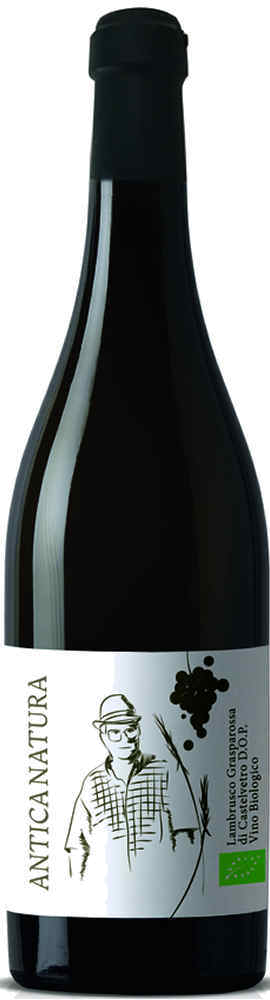
The focus of the range is the Lambrusco Grasparossa di Castelvetro DOP — in various styles, from dry Frizzante to organic cuvées like the Antica Natura. The wines show an intense ruby red with violet foam, aromas of sour cherry, red forest berries, and a hint of violet, plus a lively acidity and soft tannins that keep the finish fresh. In addition, there is Lambrusco di Sorbara as well as Pignoletto and Trebbiano — the latter also provides the must for the traditional Aceto Balsamico di Modena DOP, which matures in wood for at least twelve, and 25 years in the top version. Zanasi wines are a classic match for the cuisine of Emilia: tigelle, salumi, Parmigiano Reggiano, or a simple mortadella — the Emilian table as a natural setting.