Over 100 years of family history in Birkweiler
The Dr. Wehrheim winery has been family-owned since its founding after the First World War and is based in Birkweiler on the Southern Wine Route in the Palatinate. What began as an agricultural business developed over generations into one of the most influential wineries in the Southern Palatinate. The foundation was laid by Karl Wehrheim, who focused on estate bottling early on and built a cellar that still meets all requirements today. His son Heinz Wehrheim — a doctor of agricultural science and the namesake for the "Dr." in the company name — consistently followed this line, resisted fashionable trends, and thus laid the foundation for the winery's reputation. For 25 years, he was also the mayor of Birkweiler, thus shaping both the village and the region. Karl-Heinz Wehrheim, the third generation, studied agricultural sciences in Hohenheim with a focus on viticulture and led the winery into the Association of German Prädikat Wine Estates (VDP) in 1991. Today, he works together with his son Franz Wehrheim — the fourth generation — on the further development of the business.
Biodynamics as an attitude, not a marketing promise
From 2007, the winery converted to biodynamic viticulture. Since 2017, it has been certified by the respekt-BIODYN association and also carries the EU organic certification. For Franz Wehrheim, the vineyard is an independent ecosystem: hand-picking, natural cover cropping, and the avoidance of herbicides are a matter of course. Biodynamic preparations and orientation to the lunar calendar are part of the fixed work rhythm. The goal behind this is long-term in nature — to preserve soil health for future generations, not to optimize short-term harvest volumes.
In the cellar, the principle of minimal intervention applies: "Cellar work is a matter of the head with the heart in your hand" — that is how Heinz Wehrheim formulated it, and the sentence still holds true today. The musts are processed gently; for white wines, skin contact is used to release aroma components from the skins. Red wines mature in barriques. Any intervention that could mask the origin is avoided.
Riesling and Burgundy varieties from the most geologically diverse vineyard in the Palatinate
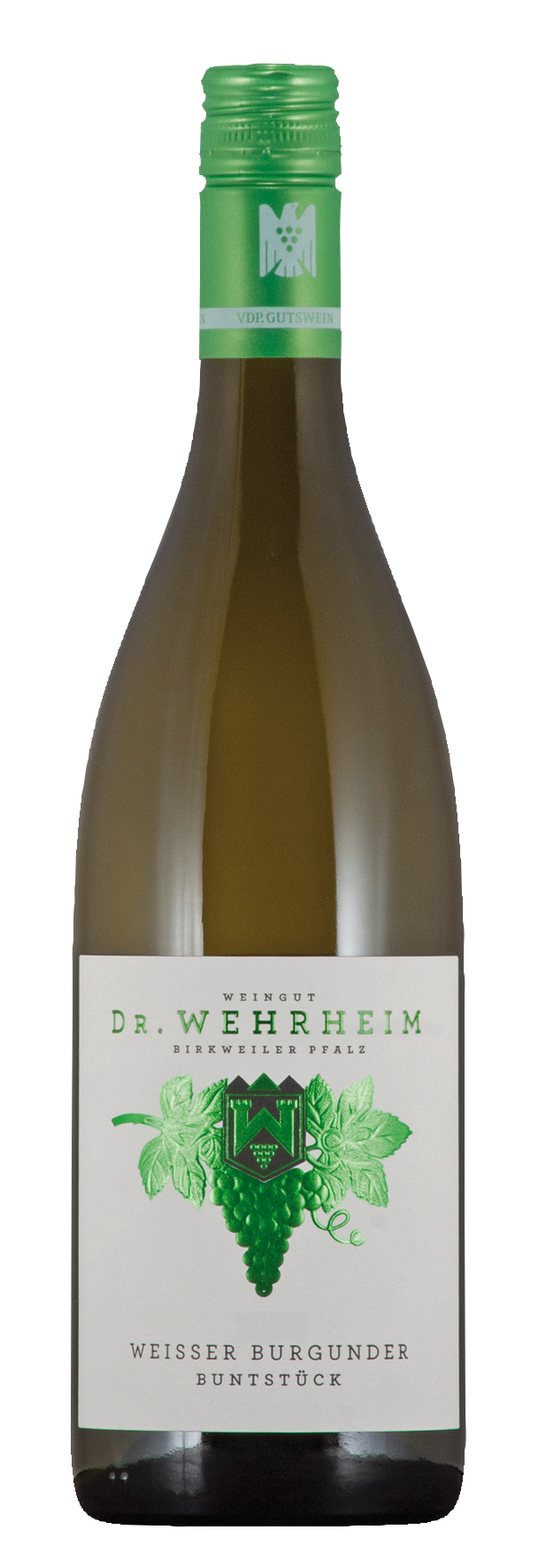
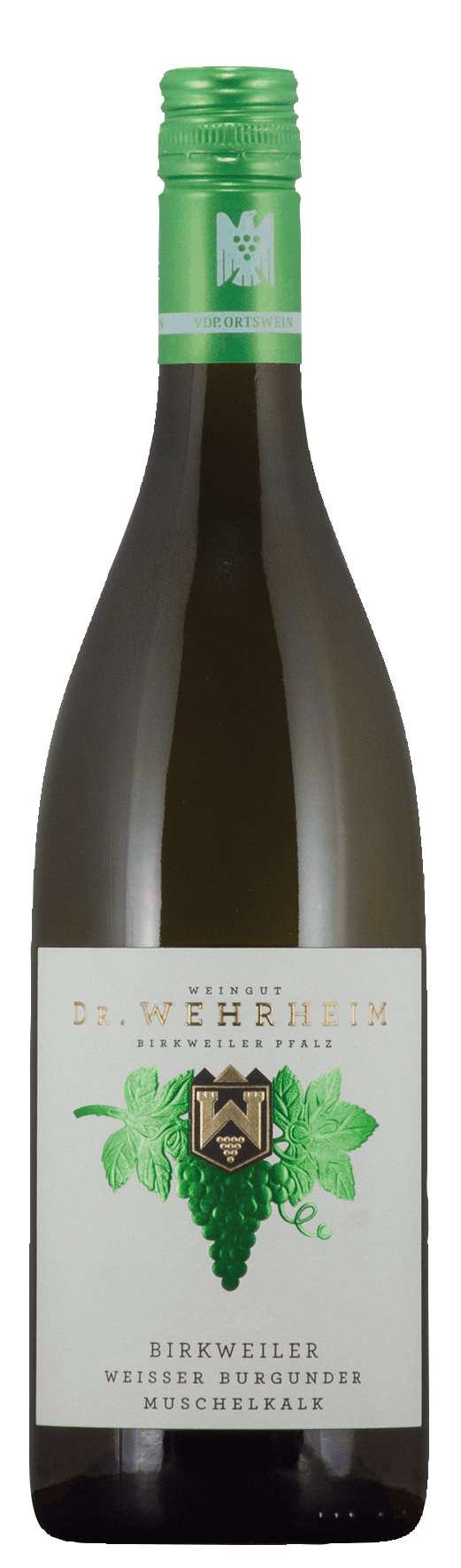
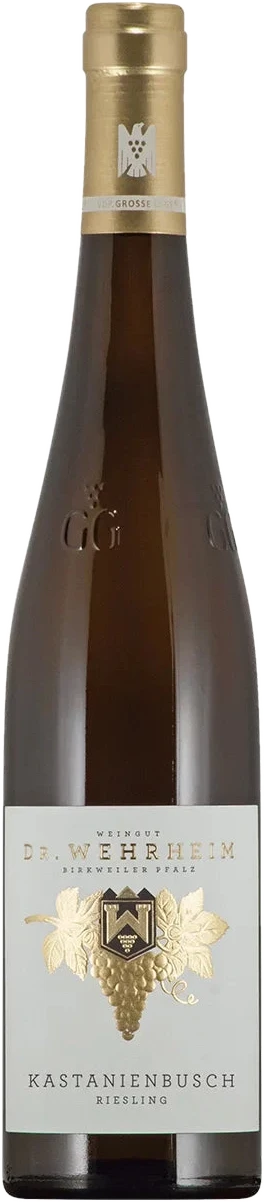
On around 17 hectares — a third of which are steep slopes — the Wehrheim family manages a geologically exceptionally versatile vineyard mosaic by German standards: variegated sandstone, shell limestone, Keuper, and Rotliegend are sometimes located close together. The Kastanienbusch is the only site in the Palatinate on Rotliegend soil and is considered the home of the house's most striking Rieslings. The Mandelberg on shell limestone soils is one of the best-known Burgundy variety plots in Germany; the Pinot Blanc from the VDP.Grosse Lage there has been awarded multiple times as the best Pinot Blanc in Germany in leading wine guides. In addition, there are Erste Lagen at the Rosenberg and the Dachsberg.
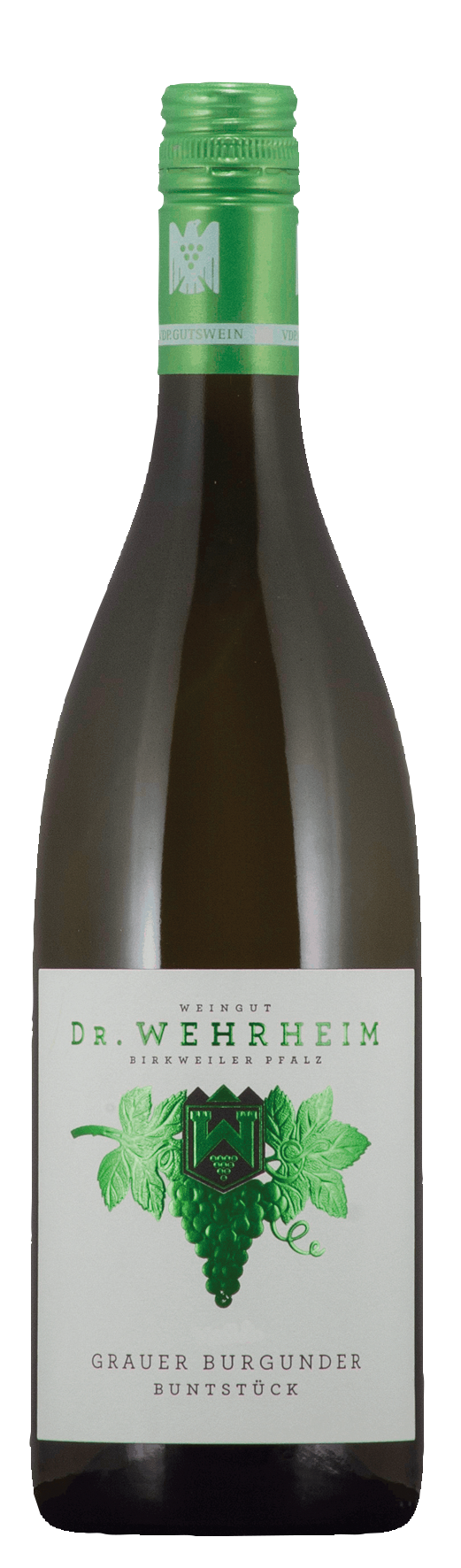
The focus of the varieties is on Riesling, Pinot Blanc, Pinot Gris, and Chardonnay — the same grape varieties as 100 years ago. Added to this is Pinot Noir as the main red representative. All wines are vinified dry and are clearly focused on origin: fruity acidity structure, mineral character depending on the soil, and subtle use of wood only where it complements rather than masks the natural aromas. In the VDP classification system, the range extends from the Gutswein as an entry level to the Grosses Gewächs from Kastanienbusch and Mandelberg.