From Conegliano to the hills of Tarzo: 130 years of the Da Ponte family
The history of the Distilleria Andrea Da Ponte begins in 1892 in Conegliano, a small town in the Veneto, about 70 kilometers north of Venice, in the midst of the hills from which Prosecco Superiore DOCG would later draw its world renown. Founder Andrea Da Ponte was a trained distiller himself — but it was his brother Matteo who was decisive for the early reputation of the house. In 1896, Matteo Da Ponte published the first scientifically documented manual of distillation in Italy, in which he described his own method — the later Metodo Da Ponte — and thus gave a lasting impulse to the entire distilling industry of the country. In 1940, a marriage connected the Da Ponte family with the Fabris family from the Cadore, and with Pier Liberale Fabris, Andrea's grandson, the next defining generation entered the distillery. In the early 1960s, he created the first monovitigno (single-varietal) grappa from Prosecco grapes ever — a previously unknown distillate, which he also aged in Limousin oak barriques. In 1979, the business moved to its current home: the so-called Conca of Corbanese di Tarzo, at the foot of the hills of Tarzo, in the heart of the wine-growing area of Conegliano Valdobbiadene, which has been recognized as a UNESCO World Heritage site since 2019.
The Metodo Da Ponte: Vacuum distillation as a craft philosophy
At the center of the working method is the process developed by Matteo Da Ponte and consistently refined ever since: a discontinuous vacuum distillation, in which pomace from Glera grapes — the grape variety of Prosecco Superiore DOCG — is distilled under negative pressure. The lower temperatures of this process protect the easily volatile primary aromas of the grape and preserve those floral and fruity nuances that distinguish Prosecco grappa from other pomace brandies. The delivered pomace is stored in steel tanks under controlled temperature conditions after separation from the must so that it reaches the still fresh. For the aged cuvées, the distillation process is followed by storage in ovals or barriques made of French Limousin oak. Parallel to the artisanal core, the distillery relies on resource-saving technologies: biomass, photovoltaics, and heat recovery are part of everyday production in Corbanese.
Grappa di Prosecco as a core competence — and the "5 Eccellenze"
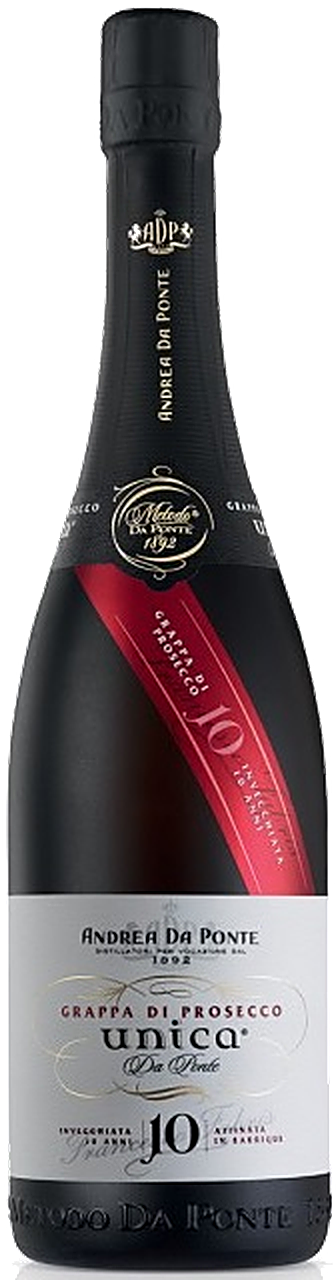
The range of the Distilleria Da Ponte revolves consistently around Prosecco pomace. The flagship line is the so-called Cinque Eccellenze — five reference distillates that the house understands as the benchmark of its skill. The Vecchia Grappa di Prosecco is a cuvée of eight selected vintages, aged in Limousin oak; in the glass, it shows floral notes, apricot, and a soft, long finish — a classic digestif, neat or with an ice cube. The Grappa di Prosecco Unica 10 Anni bears the vintage of distillation on the label, matures for ten years in Limousin oak ovals, and develops aromas of honey, vanilla, and dried fruit, which are best brought out with a piece of dark chocolate (at least 80% cocoa content). In addition to grappa, the program includes white brandy distillates from other varieties (Malvasia, Chardonnay), amari, and Prosecco Superiore under the Don Giovanni label. All distillates are produced exclusively from pomace from the Conegliano Valdobbiadene growing area — a regional focus that has been part of the brand's core since Matteo Da Ponte's time.