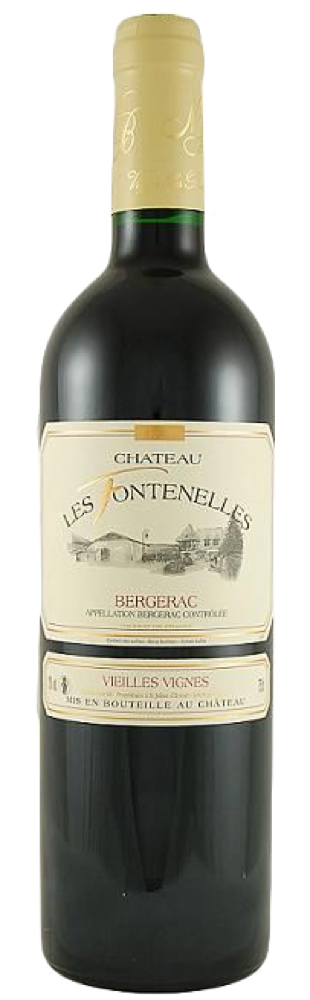
Three generations of Bourdil on the southern slope of the Bergeracois
Château les Fontenelles is located in Saint Julien d'Eymet, south of Bergerac and Monbazillac, in the heart of the Dordogne. Nicolas Bourdil's father and grandfather were already farming the slopes here before Nicolas took the helm as the third generation. In 1999, after completing his winemaking training and with the support of his parents, he invested in his own cellar — a step that noticeably changed the estate. From the 2000 vintage onwards, Nicolas began to specifically bring out the character of his terroir. Since then, the wines of Château les Fontenelles have been regularly featured in the Guide Hachette, most recently in the 2025 and 2026 editions.
28 hectares of Coteaux, two exposures, one clear approach
The 28-hectare winery is located on the southern slopes of Saint Julien, oriented for maximum sunlight from July to September. The terroir is divided into two clearly distinct plots: an east-facing slope with limestone soil and stony subsoil bears the white grape varieties — primarily Sauvignon blanc and Sémillon. The west-facing slope, where the ruins of an old windmill still stand, consists of clay and gravel and gives the red varieties — Merlot, Cabernet franc, Cabernet sauvignon, and Malbec — optimal conditions for slow, complete ripening. The planting density varies between 3,300 and 5,000 vines per hectare; parts of the areas are grassed to reduce erosion and control the vitality of the vines — a measure that directly benefits the phenolic ripeness, color, and tannin structure of the grapes.
Vinification takes place in one of the oldest buildings on the estate: under exposed wooden beams and white stone walls are thermoregulated stainless steel tanks with a total capacity of 270,000 liters. Technology in the service of the terroir — not the other way around.
Bergerac blanc and rouge: varietal clarity instead of Bordeaux imitation
The wines of the Bourdil family follow a motto that runs through all vintages: authenticity and quality. The Bergerac Blanc Sec shows what Sauvignon can do on a calcareous slope — a distinct nose with boxwood and citrus fruits, volume on the palate, aromas of white fruits and spices, carried by a lively fresh acidity in the finish. The Bergerac Rouge is based on Merlot as the main grape variety, supplemented by Cabernet sauvignon and Malbec; it brings ripe red fruits, substance, and freshness — aged in steel tanks to preserve the fruit profile. Both wines have been awarded multiple gold, silver, and bronze medals at competitions in Paris, Mâcon, and Bergerac. They are best served slightly chilled: the Blanc at 10–12 °C, the Rouge at 14–16 °C — with poultry in herb sauce, goat cheese, or a classic Périgord plate with confit and walnuts.