From Abbé Gruaud to the Merlaut family
In 1725, Abbé Joseph-Stanislas Gruaud founded the winery in Saint-Julien. In 1781, it passed to his nephew, the Chevalier de Larose, who gave the Château its current double name. In the 1855 classification, Gruaud Larose was classified as a Deuxième Cru Classé. It is one of only five second growths of the appellation.
In the early 19th century, the property was divided. In 1935, Désiré Cordier brought both halves back together. Since 1997, the Château has belonged to the Merlaut family, currently led by Jean Merlaut.
A block on Garonne gravel: work in the vineyard and cellar
The 82 hectares of vines lie in one piece on a hill of Garonne gravel, which was deposited more than 600,000 years ago. There is more clay in the subsoil than is usual in Saint-Julien. The area has remained unchanged since the 1855 classification. After the takeover in 1997, the Merlaut family fundamentally restructured the planting and gave Cabernet Sauvignon more space again. This was especially necessary where Merlot stood on the best Cabernet soils of the plateau.
Since the 2019 vintage, the conversion to organic farming has been underway. The winery has been organic-certified since August 2022 and works according to biodynamic principles. Biodiversity and a stable balance in the vineyard are the priority. The harvest is done by hand, and in the cellar, grape varieties and plots are vinified separately. The wine then matures for 18 months in oak barrels. Eric Boissenot works with the team as a consulting oenologist.
Cabernet structure with finesse: the range
Cabernet Sauvignon forms the backbone of the wines, supplemented by Merlot, Cabernet Franc, and, depending on the vintage, Petit Verdot. The Grand Vin is considered a wine of finesse and elegance. In recent vintages, it shows dark fruit such as cassis, plus chocolate and lavender, fine tannins, and fresh acidity. This pairs well with rack of lamb, entrecôte, or aged hard cheese.
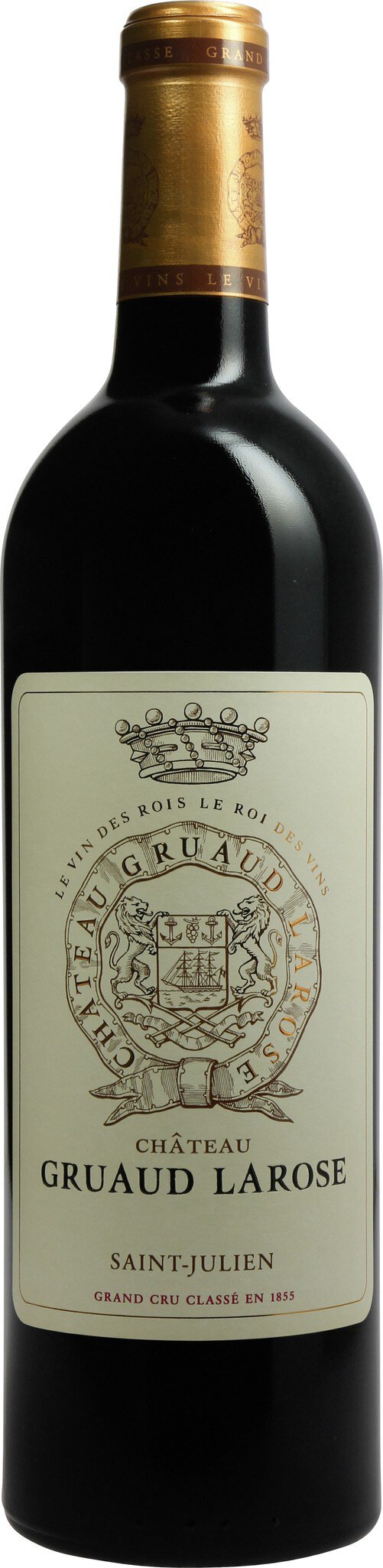
In addition to the Grand Vin, the Château produces the second wine Sarget de Gruaud Larose, named after Baron Sarget, who was one of the owners in 1867. The label bears the house motto: "Le Roi des Vins, Le Vin des Rois." If you are looking for classic Saint-Julien with a Cabernet profile, you will get a wine with origin and history here.