From parliamentary councilor to classification winery: three centuries of family history
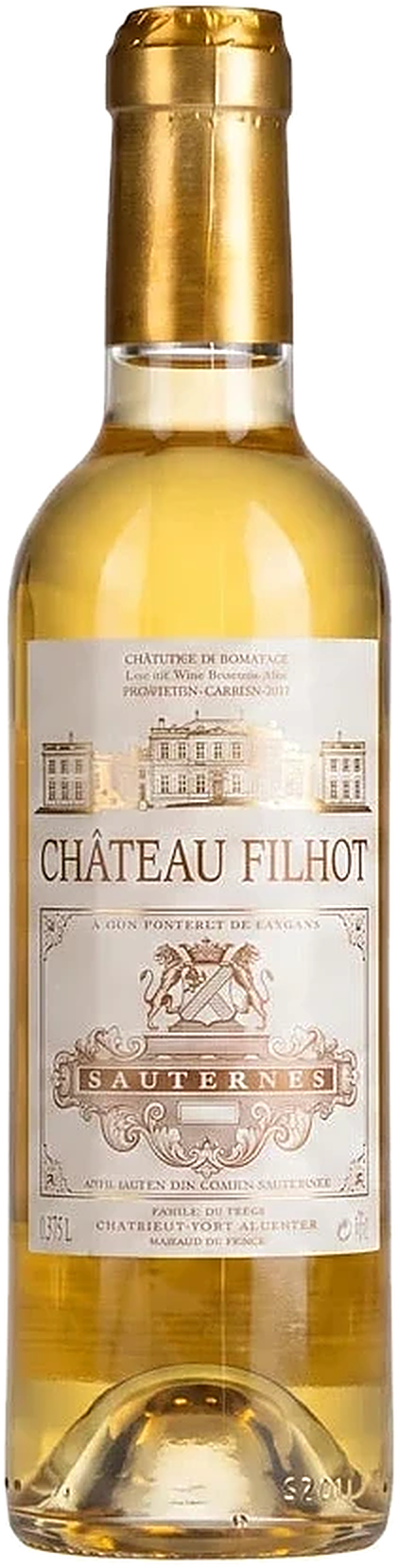
The roots of Château Filhot date back to the years 1630 to 1650, when the current vineyard land in the south of the Sauternes appellation was first cultivated. Romain de Filhot, a parliamentary councilor in Bordeaux, took the decisive step: in 1709, he had the Château built and at the same time ensured that the region's wines would henceforth be marketed under the name "Sauternes" and no longer as "Vin de Langon" — a conceptual course-setting that still has an impact today. After the French Revolution, the estate came into the possession of the Lur-Saluces family, who also managed Château d'Yquem, via Joséphine de Filhot. In 1840, Romain-Bertrand de Lur-Saluces united the vineyards of Filhot with the neighboring Pineau du Rey and in 1845 had the castle rebuilt in the neoclassical style — the extensive English landscape park laid out by garden architect Louis-Bernard Fischer has been preserved to this day. In the 1855 classification, Filhot was classified as a Deuxième Cru Classé; somewhat bizarrely, the estate then sold its wine for decades simply as "Château Sauternes" — it was not until 1901 that the original name returned. In 1935, Comtesse Durieu de Lacarelle, née Lur-Saluces, bought the winery back and rebuilt the vine stock. Since 1974, management has been in the hands of the de Vaucelles family; today, Count Gabriel de Vaucelles runs the estate together with his wife Amicie, who joined in 2017.
Terroir on the south slope, hand-picking after botrytis selection, careful aging
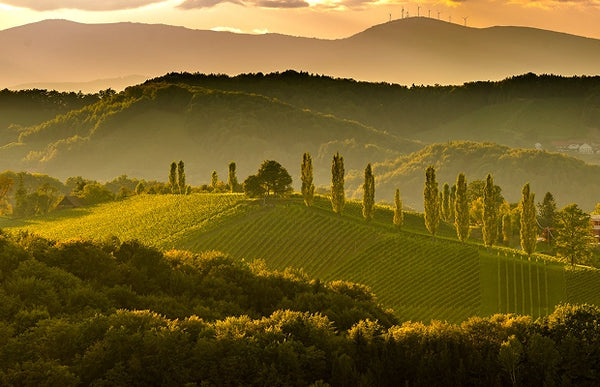
Château Filhot is located on the southwestern slope of the Sauternes hill, where the Ciron — the cool tributary of the Garonne, whose mist favors the botrytis fungus — crosses the estate. The 350-hectare total property includes 62 hectares of vineyards; the rest consists of pine trees, acacias, and pasture land. The soils consist of Riss gravel, clay, sand, and a limestone subsoil — a combination that favors the alternating humidity necessary for Botrytis cinerea. 60% Sémillon, 36% Sauvignon Blanc, and 4% Muscadelle are planted.
Harvesting is done exclusively by hand, in several passes (tries successives), which only capture fully botrytized berries. Fermentation takes place in thermoregulated stainless steel tanks of 50 hectoliters, for ten to thirty days depending on the grape variety and concentration. About five months after fermentation, the first assemblage is carried out; subsequently, the wine matures in barriques made of Allier oak as well as in tanks — about 30% of the barrels are renewed annually. The total aging process takes about two years. Château Filhot holds the Haute Valeur Environnementale Level 3 (HVE3) certification.
Fresh liqueur, mineral pull: what the Filhot glass promises
What makes Filhot distinguishable among the Sauternes-classified wines is less opulence than precision: the wine is characterized by freshness, a mineral base note, and the finesse of its sweetness — honey, candied citrus peel, ripe quince, and a hint of exotic fruit, embedded in an acid structure that retains lightness despite all the concentration. In addition to the main wine, Filhot produces Château Pineau du Rey, a second wine from younger vines, as well as a dry white Bordeaux. Classically, Filhot is served at 8–10 °C — with foie gras, Roquefort, caramelized desserts, or simply as a standalone conclusion to an evening.