A Belgian adventure in the heart of the Beaujolais Crus
Château de Durette is not a grown generational winery in the classic sense — it is a conscious departure. Since 2006, Belgian winemakers have been running the Château in the village of Régnié-Durette, exactly where the Régnié has its name and the Cru landscape of the Beaujolais begins. The initiative came from genuine passion for a region that was long underestimated outside of France: instead of simple origin, the owners chose the epicenter of the ten Beaujolais Crus — with the declared goal of seriously exhausting their potential. The Château itself, a carefully restored estate with a view of the Monts du Beaujolais and the Mont Brouilly, is today both a winery, cellar, and meeting point for all who want to understand what Beaujolais can really mean.
Reasoned viticulture, consistent hand-picking, cellar with modern equipment
The drive behind Durette has been Viticulture raisonnée from the beginning: the controlled, needs-based use of plant protection and fertilization. Since 2018, part of the approximately 30 hectares of vineyard area has been converted to organic farming, which consistently continues the path taken. The harvest is carried out exclusively by hand — this allows grapes to be harvested selectively and gently, which already does half the work in the cellar. All wines are vinified and aged in their own cuvage in Régnié-Durette, equipped with modern technology that enables precise work without taking away the terroir's expression. Behind every cuvée are Anna, André, and Marc, a team that combines its craft with the ambition to press wines that honestly reflect their origin.
The Guide Hachette has awarded the winery several times — a sign that the ambition and the result match.
Seven Crus, two ranges, a common style
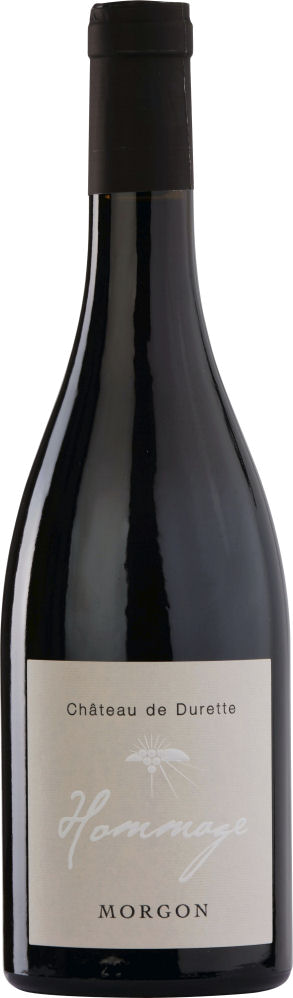
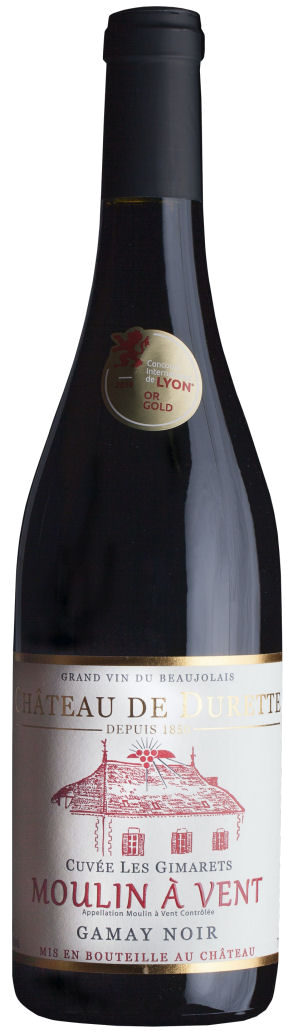
The assortment of Château de Durette is broad, but not arbitrary: seven of the ten Beaujolais Crus are represented — Régnié, Morgon, Chiroubles, Côte de Brouilly, Juliénas, Chénas, and Moulin-à-Vent. In addition, there are Beaujolais Villages Blanc, a rosé, and a sparkling wine according to the Méthode Traditionnelle. The wines are divided into two lines: the Gamme Tradition focuses on fruity drinking flow and accessible structure — Gamay in its direct, lively form. The Gamme Prestige goes deeper: longer aging, partial wood aging, more texture and weight. The Morgon Hommage is exemplary for this ambition, the Moulin-à-Vent Gimarets for the power and elegance that this Cru can develop with good work. What all wines have in common is a clear credo: perfumed, structured, fruit-driven — and close to the character of their respective terroir. Drinking temperature for the lighter Crus: 14–16 °C, the Prestige cuvées can gladly be chambréed to 16–18 °C.