From monastery abbey to the meeting of two wine lovers
Château Camparnaud is located in Carcès, in the green heart of the Var, a good hour's drive north of the Côte d'Azur. The roots of the estate date back to the 16th century, when monks from a nearby abbey were already producing wine here for the sale of the monasteries. When the phylloxera epidemic destroyed almost all of France's vineyards in the 1860s, it was Victor Ganzin who planted the first new vines at Camparnaud in 1879 – a fresh start that is still considered the estate's official founding year.
The decisive turning point in recent history came in the year 2000: Dutch wine expert Marnix Engels, active in the wine trade for over 40 years and formerly a representative of houses such as Romanée-Conti and Petrus, took over the estate and converted it into a modern winery. Ten years later, he entered into a partnership with Guillaume de Chevron Villette, whose noble family has been growing wine in Provence since 1189. Today, Engels, together with his son Alexander and de Chevron Villette, continues to run the winery.
Terraced vineyards, manual labor, and certified sustainability
Around 20 hectares of vineyards are cultivated in terraces, embedded in a typically Mediterranean landscape of dry-stone walls and olive trees. The varieties characteristic of Provence – Tibouren, Grenache, Rolle, Cinsault, and Syrah – are grown. The harvest takes place in September in the early morning hours, when the grapes are still cool after the summer heat – about half is harvested by hand, the other half with modern harvesting technology to avoid oxidation and bring freshness into the glass.
The winery works according to the HEV Level 3 (Haute Valeur Environnementale) environmental certificate, the highest level of a state-monitored French program for biodiversity, plant protection, fertilizer, and water management. This consistent focus on gentle cultivation shapes both the vineyards and the technically modern cellar.
Rosé with salty minerality and Provençal fruit
Camparnaud stands for the classic rosé of the AOP Côtes de Provence: light to garnet-colored tones, red fruits and flowers on the nose, citrus and a mineral, partly salty-stony pull on the palate, which reflects the limestone and pebble soils of the site. For the cuvées from older plots – partly vines 20 to 40 years old – optical grape selection is also used, which gives structure and depth.
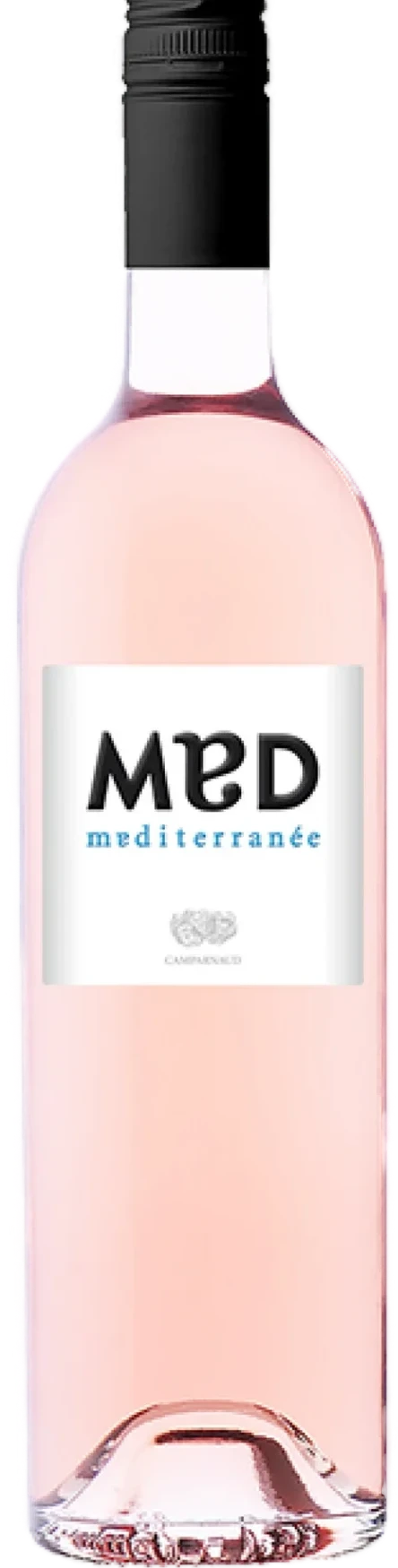
The MED - MAD Rosé Méditerranée, which you can find with us, is dry and fruit-forward with notes of strawberry, raspberry, cherry, and passion fruit – an uncomplicated summer wine that is perfect for light dishes, salads, or grilled vegetables. Serving temperature: 8 to 10 °C.