Since 1251 in the hills of the Kraichgau
Burg Ravensburg winery in Sulzfeld has been documented since 1251 — making it one of the oldest wineries in Germany and the oldest in Baden. The castle, visible from afar above the Kraichgau, was once the ancestral seat of the Barons Göler von Ravensburg, and what defines the operation still grows around the castle hill today: Riesling and Lemberger on mineral-rich gypsum keuper. Until 2009, the community of heirs of the Barons von Göler managed the estate; afterwards, entrepreneur Heinz Heiler took over and merged it with the nearby Heitlinger winery. Managing Director Claus Burmeister, who grew up on the winery and whose father Hubertus managed the estate until 1995, has been at the helm of the operation ever since. The HENRIS Weinguide 2026 named him "Winery Manager of the Year" — both estates received the top rating of five black grapes.
Biodynamics as an attitude, not a certificate
Under Claus Burmeister's leadership, the entire operation was consistently converted to biodynamic viticulture and certified according to Demeter. What this means in practice: pruning, soil care, and the exclusively manual harvest are based on lunar phases, organic compost from the estate replaces synthetic fertilizers, and sheep take care of the greening between the vine rows. At the same time, the team relies on targeted technical additions — such as drones for weather-independent plant protection even on wet soils. In the cellar newly built in 2012 in Tiefenbach, ten kilometers from the castle, cellar master Daniel Rupp is responsible for the aging process; Jürgen Kern complements the oenological team. Burg Ravensburg has been a member of the VDP since 2012.
The gypsum keuper — rock over 230 million years old — shapes the three monopoly sites Husarenkappe, Dicker Franz, and Löchle, all of which are entirely owned by the winery and lie directly around the castle hill. The climate of the Kraichgau, between the Odenwald and the Black Forest, is comparatively cool and continental for Baden — a decisive factor for the freshness and acid structure of the wines.
Riesling in the foreground, Lemberger with emphasis
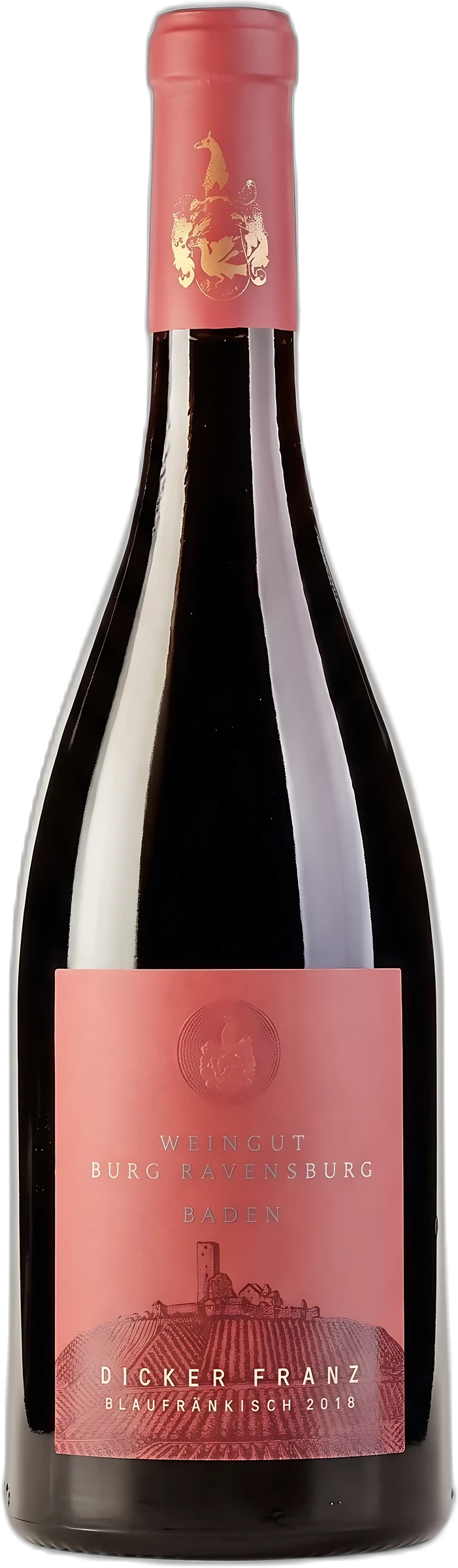
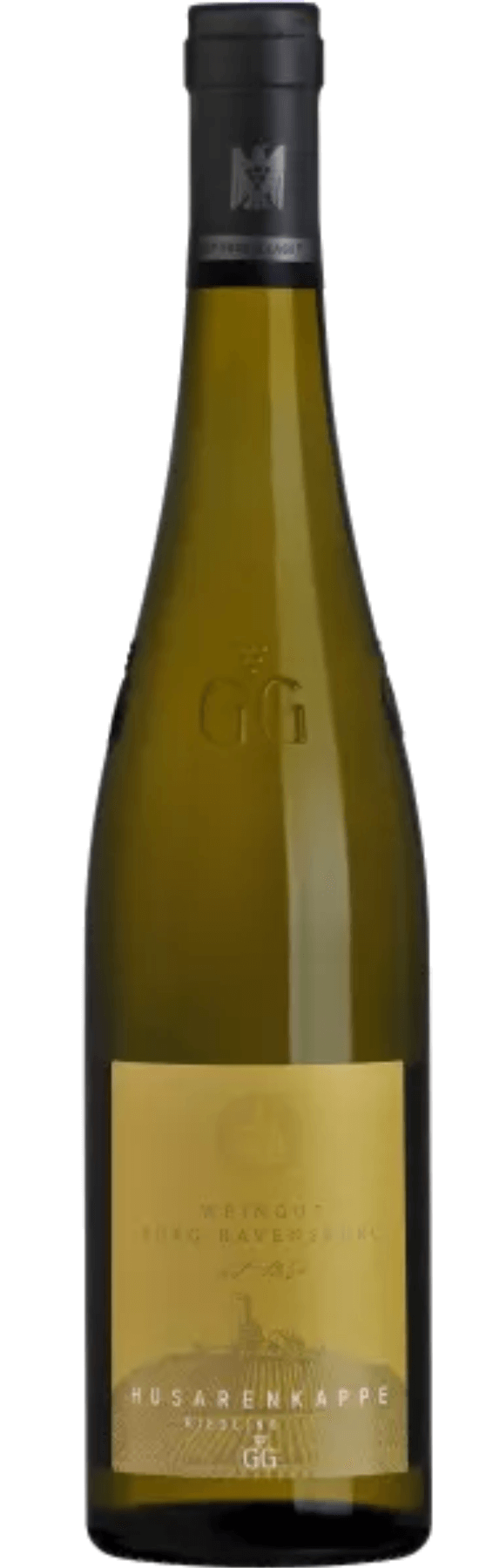
Baden is considered Burgundy country — Burg Ravensburg is the exception. Riesling dominates the range, supplemented by Lemberger (Blaufränkisch), Pinot Gris, Pinot Blanc, and Pinot Noir. All wines are vinified dry; site-specific wines from the three Grand Cru sites form the heart of the offering, classified according to the multi-level VDP system. The Husarenkappe Riesling GG shows what gypsum keuper and cool Kraichgau nights can achieve: clear acid structure, mineral density, long finish. The Dicker Franz Blaufränkisch GG — listed multiple times among the 30 best red wines in Germany — brings the dark fruit and spice of the Lemberger into the glass with depth and development potential. Serving temperature: Riesling 10–12 °C, Lemberger 16–18 °C.