From hunting estate to Finca Reserva de Biodiversidad
The history of Dehesa de Luna does not begin with wine, but with a decision: in 1996, the Gómez-Torres family bought a vast hunting estate in the Campo de Montiel, near La Roda in the province of Albacete. Alfredo Gómez-Torres, an agronomist by profession, and his wife Silvia Mora-Figueroa Domecq – from a family with deep-rooted traditions in the agricultural and food sector – asked themselves a simple question: if a wine is shaped by the land on which it grows, what would vines yield in the middle of 3,000 hectares of untouched nature? The answer took a few years to arrive. It was not until 2001 that the first vines were planted, Merlot and Tempranillo on the El Viñazo plot, followed in 2003 by Syrah and Cabernet Sauvignon at La Mata de la Culebra. The first vinified harvest came from 2005; since 2012, the estate has had its own winery on the finca.
Viticulture in tune with nature: ecology as a fundamental principle
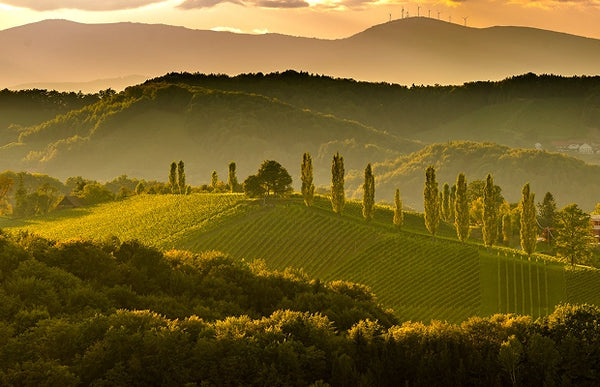
What distinguishes Dehesa de Luna from most wineries is the relationship between vineyard and wilderness. Of the approximately 3,000 hectares of total area, almost two-thirds remain permanent Mediterranean forest – holm oaks, juniper, broom, rosemary – and habitat for Spanish imperial eagles, great bustards, and red-legged partridges. Only 64 hectares are reserved for organic viticulture, embedded between the old oaks around which the vine rows were laid out. The winery holds certifications according to IFS, ISO 14001, and the Wineries for Climate Protection program and is a member of the Spanish Association of Organic Wineries (SOW). In the vineyard, green cover protects the soil from erosion and maintains natural fertility; solar energy covers part of the winery's energy requirements, and irrigation from the estate's own wells is strictly rationed. Even the harvest time is determined by nature: to protect the breeding season of the partridge, which nests under the crops, the harvest is deliberately brought forward to the summer.
In addition to viticulture, organically farmed olives, almonds, pistachios, and grain grow on the finca – a conscious commitment to diversity that extends far beyond the wine glass.
Wines with Dehesa character: powerful, aromatic, true to place
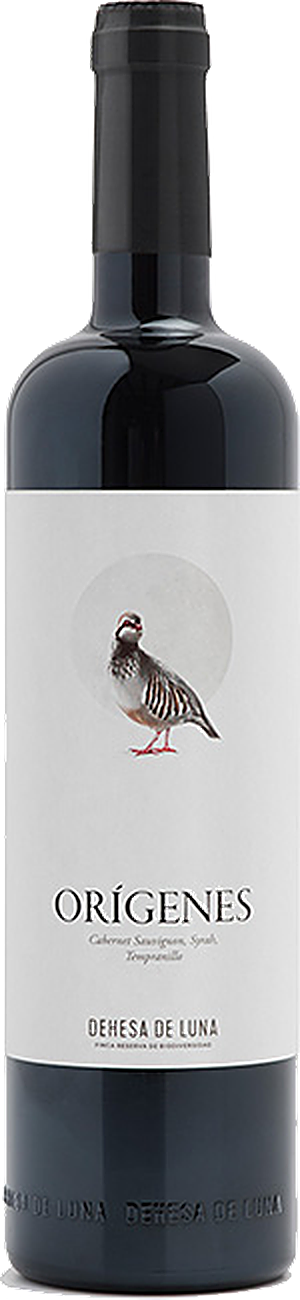
The range directly reflects the landscape. Orígenes – the entry-level wine and at the same time the house's oldest cuvée – combines Tempranillo, Cabernet Sauvignon, and Syrah from the estate's two original sites. The Purgapecados relies on 100% Cabernet Sauvignon, aged for 14 months in French oak barrels: full-bodied, with dark fruit aromas and a long finish. The counterpart is the Garnacha Blanca, a white wine with citrus and tropical aromas as well as spicy herbal notes. The flagship Gran Luna undergoes a precise maceration time of 14 to 17 days per variety, malolactic fermentation takes place in new French barriques (225 liters), and aging lasts 15 to 18 months in the same barrels – the result: deep ruby red, ripe black fruits with pepper spice and hints of garrigue, silky body, very long finish. All wines are 100% organic and vegan. The labels bear illustrations of the birds that roam over the finca – Spanish imperial eagle, red kite, peregrine falcon – and thus make the idea of biodiversity visible on every bottle. Serving temperature: red wines at 16–18 °C, the white and the rosé at 8–10 °C.