From a brewery with special rights to a German distillery legend
The history of the Ziegler distillery began in 1865 in Freudenberg am Main – as both a brewery and an inn. Founder Gustav Joseph Ziegler had learned his trade as a beer brewer and cooper, but brewing alone was not enough for him. He used an old special right that allowed the family farm to distill brandy and eventually acquired a third master's title: as a distiller. This triple heritage of brewing, coopering, and distilling still characterizes the company today. Over generations, through highs and crises, through two world wars and economic upheavals, Ziegler remained rooted at its founding location in Freudenberg am Main. Since 2021, Andreas Rock has been running the distillery; at his side is Paul Maier, one of Germany's youngest and most experienced master distillers.
Freudenberg is located in the Franconian-influenced north of Baden-Württemberg, enclosed by the Main river loop near Miltenberg. The mild microclimate of this river landscape and the region's dense meadow orchards have always provided the raw material for the distillates – apples, plums, mirabelles, cherries, hazelnuts, and apricots.
Craftsmanship without shortcuts: double distillation, wooden barrel, patience
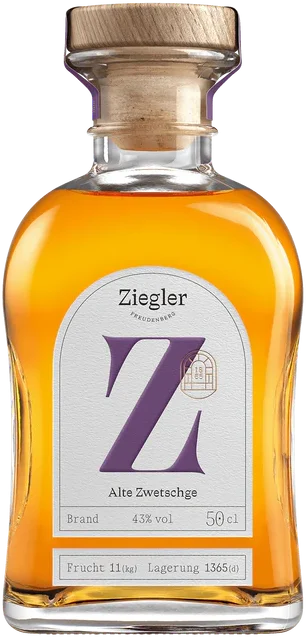
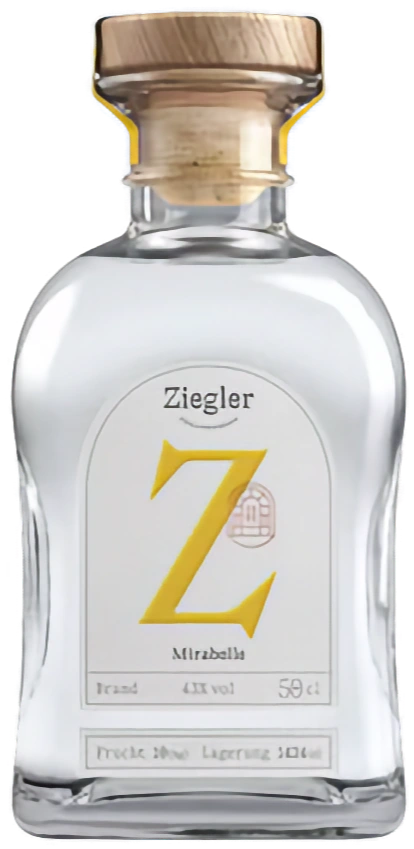
Ziegler works exclusively according to the traditional double distillation process – a slow, precise process in which the intuition and experience of the distillers make the difference. Only the so-called middle cut, the aromatically cleanest heart of the brandy, finds its way into the bottle. The fruits are harvested fully ripe and processed immediately so that no aromas evaporate – for a bottle of mirabelle brandy, for example, about ten kilograms of fruit are needed. After distillation, the brandies mature for three to five years depending on the variety, either in stainless steel tanks or in wooden barrels made of oak and chestnut. The barrel-aged variants – including the Alte Zwetschge, which spends up to five years in chestnut barrels – develop mild, spicy notes and a depth that gives the brandy its own category. From the fruit harvest to the labeling of the characteristically shaped bottles, production is done by hand.
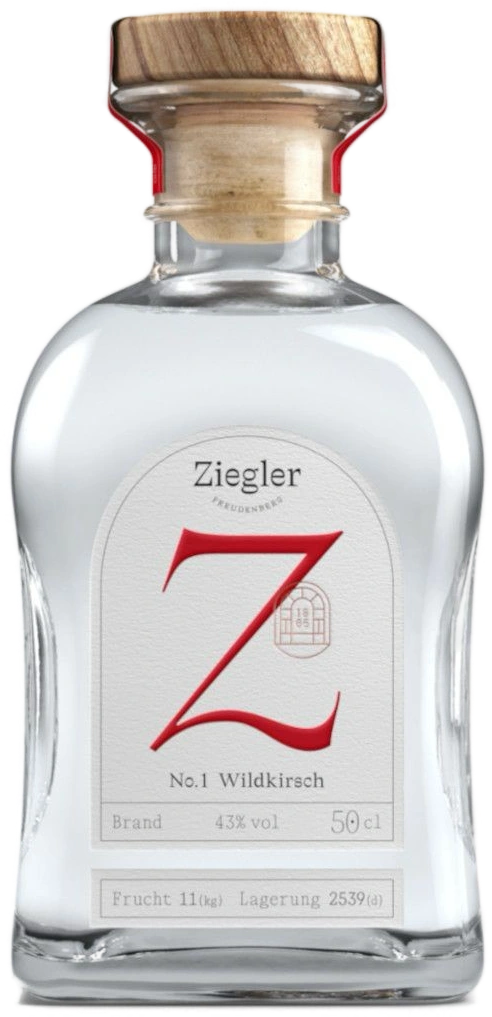
Anyone who relies on extraordinary fruit has a fundamental interest in intact meadow orchards and reliable origins. The wild cherries for the house's best-known product are collected by hand by cone pickers in southern Germany – in a cooperation that benefits both sides: the pickers receive the cherry pits, the distillery the fruits.
Fruit brandy as the heart, whisky and aperitif as signs of the times
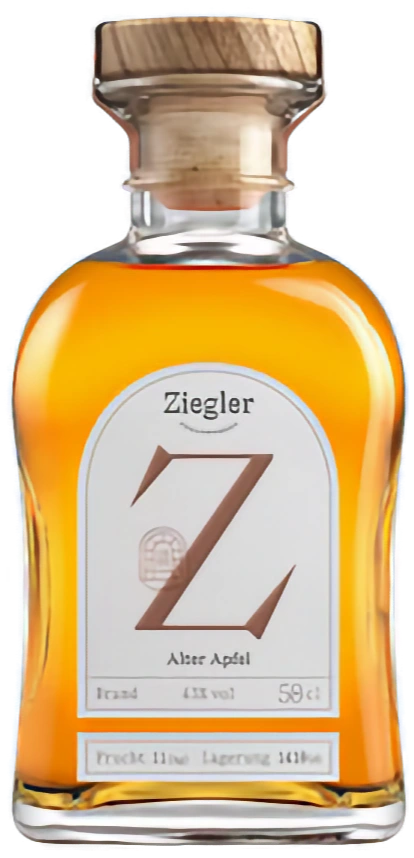
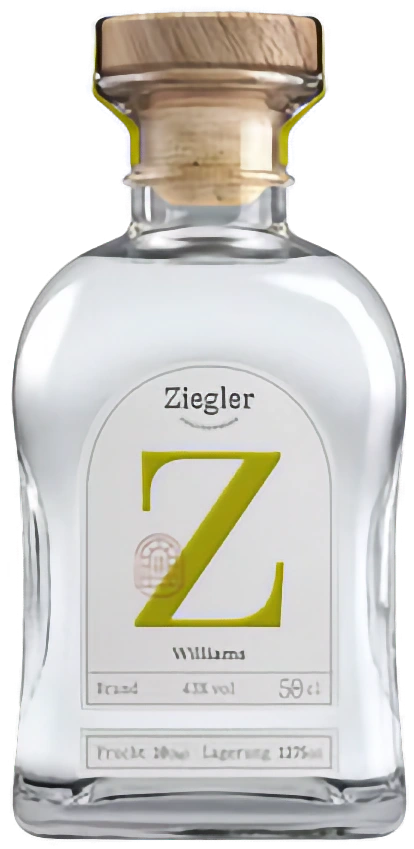
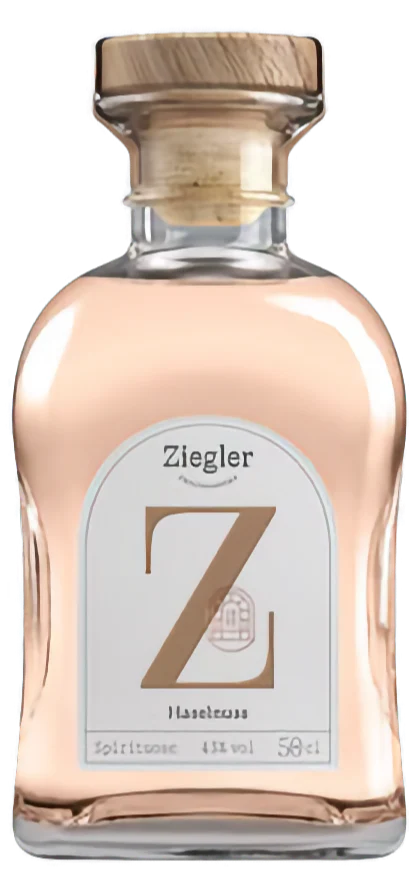
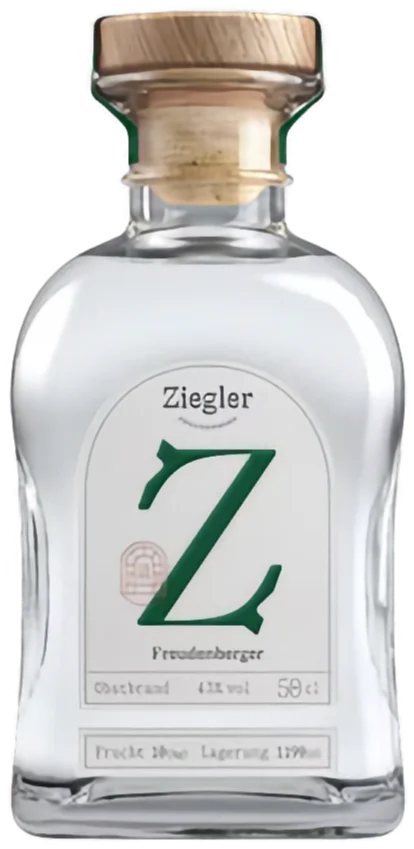
The flagship of the distillery is and remains the Wildkirsche Nr. 1 – produced since the 1980s and the brandy that opened the door to top-class gastronomy for Ziegler. Today, the range stands for the entire breadth of artisanal distilling: plum, apple, mirabelle, apricot (from Styria and the Wachau), hazelnut, and the Freudenberger Obstbrand as a regional classic. Those looking for barrel aging will find it in the Alte line; those who prefer clear, fruit-precise distillates reach for the unaged variants from the stainless steel tank. Since 2008, Ziegler has also been distilling single malt whisky – a direct reminiscence of the brewery roots, because summer barley malt from Franconia forms the basis. The Freud Whisky matures in chestnut and ex-bourbon barrels before receiving a finish in barrels of the Alte Zwetschge. The latest chapter is the co-creation with Lufthansa: the Ziegler Avionic Aperitif has been served at 30,000 feet since 2024 – and now also on the ground.