From Napa to Mendoza: How Paul Hobbs reinvented Argentine Malbec
Paul Hobbs came to Argentina by chance in 1988 — on his way to Chile, he crossed the Andes and found in Mendoza what he had not been looking for: old Malbec vines with untapped potential. The New York-raised winemaker had previously worked in Napa Valley at Opus One and Simi Winery and knew world-class viticulture firsthand. What he saw in Mendoza would not let him go. He began as a consultant for the Catena family and spent years observing soils, sites, and microclimates. In 1999, he finally founded Viña Cobos in the heart of Luján de Cuyo — with local partners, little capital, and the clear goal of establishing Malbec as an international grape variety. The first vintage of the Cobos Malbec was an immediate hit and set a new standard for Argentine wine.
Terroir first: high altitudes, primary rock, and natural cellar management
Viña Cobos cultivates vineyards in two of Mendoza's most important sub-regions: Luján de Cuyo and Valle de Uco. The sites in Luján de Cuyo lie at an altitude of 945 to 1,100 meters, fed by snowmelt water from the Andes; the soils are alluvial with a subsoil of clay, sand, and rock. In the Valle de Uco, the vineyards rise to up to 1,400 meters — cooler climate, stony-sandy soils, limestone in places. Key sites include the Zingaretti Estate at 1,150 meters with vines from 1914 as well as the Chañares Estate in the Los Árboles district. For the winery's 25th anniversary, the vineyards around the winery were renamed Hobbs Estate in honor of the founder.
In the vineyard, Viña Cobos relies on organic fertilizers, cover crops in the rows for nitrogen fixation, and solar power for operations. In the cellar, the team works with indigenous yeasts and avoids filtration and fining to preserve body and a long finish. Must and mash are moved exclusively by gravity to protect the phenolic structure. Head Winemaker Andrés Vignoni is responsible for cellar work together with Hobbs.
Three lines, one standard: terroir expression from entry-level to top-tier
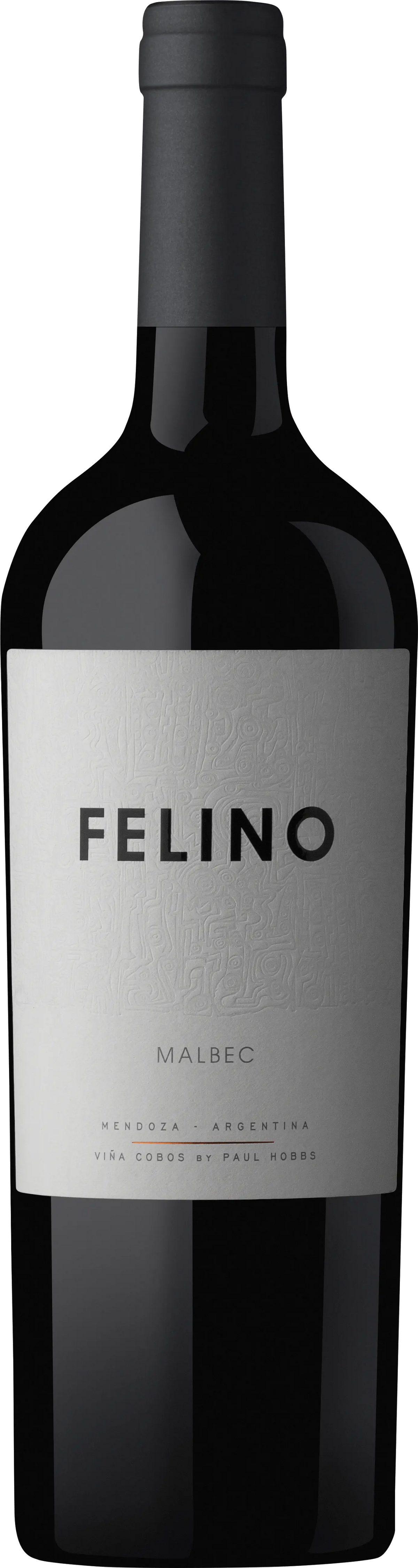
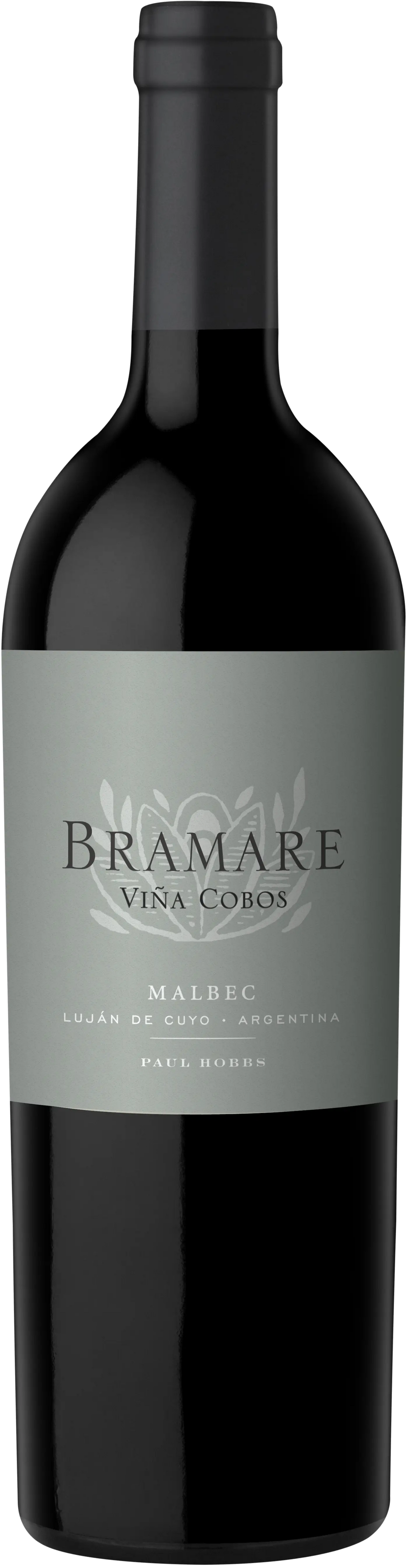
The Viña Cobos range is clearly divided into three levels. The Felino line — including the Felino Malbec and the Felino Cabernet Sauvignon — shows Mendoza in its most accessible form: fruit-forward, with clear varietal characteristics, sourced from carefully selected vineyards in Luján de Cuyo and Valle de Uco. One level higher, the Bramare line works with defined single sites: the Bramare Malbec Luján de Cuyo brings fullness and texture, while the Valle de Uco version shows more tension and minerality — a direct imprint of the different altitudes and soils. At the top is the Cobos line with parcel-pure vineyard-designate wines that consistently implement the winery's Grand Cru thinking. Malbec remains the house's leading grape, supplemented by Cabernet Sauvignon, Cabernet Franc, and Chardonnay — all with the same claim: to make the character of the soil, the altitude, and the vintage readable without smoothing it out through interventions.