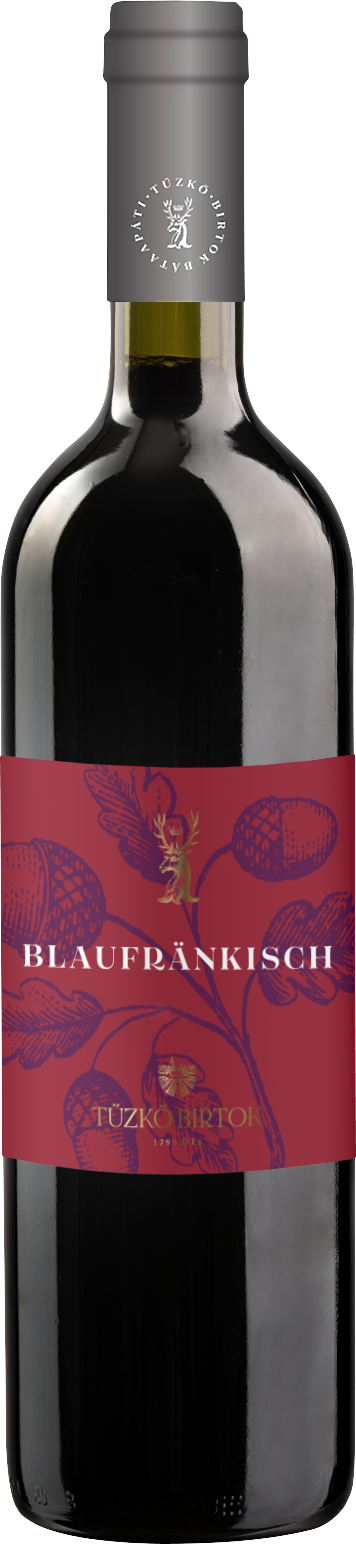
From the Counts Apponyi to Antinori: one of Hungary's oldest wineries
Tűzkő — in German "flint", named after the flint deposits in the soil — was founded in 1799 and is thus one of the oldest wineries in Hungary. For decades, the estate was owned by the French-descended Count family Apponyi; in the communist era, it passed into state administration. The decisive turning point was brought about by the political upheavals of the early 1990s: Hungary opened up to foreign investors, and two of the most famous names in the Italian wine world — Marchese Piero Antinori and Marchese Jacopo Mazzei — recognized the potential of the estate in the hills of Tolna. In 2000, the Antinori family, together with the Mazzeis, took over the management of Tűzkő and began to combine the historical heritage with modern viticultural know-how.
The estate is located near the village of Bátaapáti in the Völgység Valley, one of the quiet, little-known wine regions of southern Hungary — not far from Szekszárd, one of the oldest wine-growing areas in the country, where Romans and later Hungarian kings regulated viticulture. This silence is not a flaw, but a program: more than 60 percent of production goes to export, the name Tűzkő is internationally more present than domestically.
Loess, flint, and controlled coolness: viticulture between hills and forest
The approximately 170 hectares of vineyards — embedded in a 250-hectare total estate — are located at about 200 meters above sea level. Forests, hills, and lakes surround the vineyards and create a slightly cooler microclimate than the surrounding Pannonian Plain. The continental climate with mild winters, warm summers, and sufficient rainfall benefits a wide range of varieties; the south-facing slopes ensure good ripeness while maintaining freshness. The soil alternates between loess slopes and mineral flint layers — the type of rock that gave the estate its name and gives the wines a characteristic mineral contour.
In the cellar, Tűzkő relies on technical precision without over-processing: the modern vinification plant, already expanded in 1991 with facilities for gentle pressing and temperature-controlled fermentation, works hand in hand with the historic brick vaulted cellar inside a loess hill — built in the early 18th century, with an annual fluctuation in cellar temperature of barely one degree Celsius. This continuity of climate makes it as valuable for the aging of red wines as it was 300 years ago. The philosophy is: vinify every grape variety varietally and let the terroir speak, instead of following a uniform house style.
Kékfrankos in focus — and a wide range of varieties around it
The red heart of Tűzkő revolves around Kékfrankos — known in Germany as Blaufränkisch. With over 50 hectares, it is the most widely grown red grape variety on the estate and shows an independent signature in Tolna: dark berry aromas, cinnamon and cocoa notes, a fruit-driven start on the palate, medium body with fine structure. It is supplemented by Cabernet Franc, Merlot, Pinot Noir, and the autochthonous Bíborkadarka. On the white side, an equally broad assortment stands: Pinot Grigio, Grüner Veltliner, Traminer, Rhine Riesling, Chardonnay, Sauvignon Blanc, and the local Cserszegi Fűszeres reflect the ambition to show Tolna as a versatile region that cannot be reduced to one variety. The flagship wine Tűzkő Domb is only produced in exceptional vintages from the best plots of the estate and stands for the highest quality standards of the house. Anyone who has the Blaufränkisch from Tűzkő in their glass holds a piece of Pannonian wine history in their hand — calm, precise, with a mineral depth that tells of the flint soil of the hills.