Rheingau · Germany
Robert Weil
Read more Read less
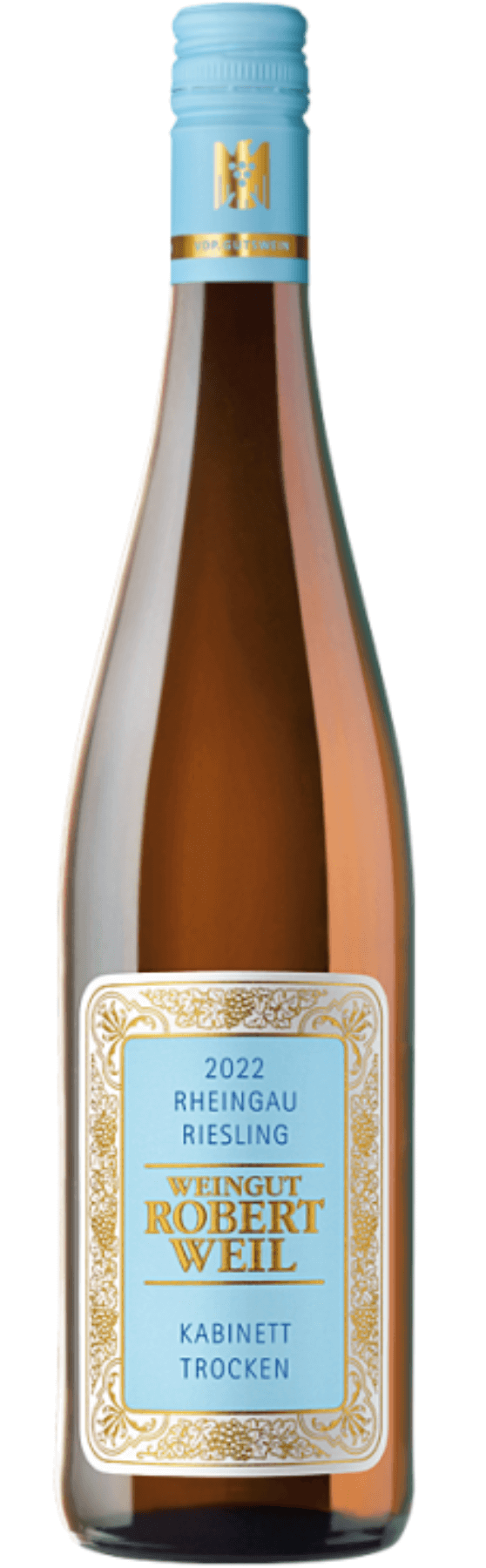
Robert Weil – a name that stands for Rheingau excellence. Wilhelm Weil, great-grandson of the founder, runs the estate today in Kiedrich. 89.80 hectares of vineyards, 100 percent Riesling. His best sites, above all the Gräfenberg, lie high above the Rhine – the harvest begins about two weeks later. Historic manor house, modern winery, a garden landscape: tradition and modernity in harmony. This is exactly what you find in the wines. Rheingau as it should be.
Filters
7 products


Falstaff Wineguide Deutschland 2024 - 97 Punkte
Awarded by Falstaff
Sakura Awards 2023
Awarded by Sakura Japan Women's Wine Awards


About Robert Weil
From the Sorbonne to the steep slope: the founding of a Riesling dynasty
Dr. Robert Weil was a professor of German at the Sorbonne in Paris when he acquired his first vineyards on the Kiedricher Berg in 1867. Eight years later, he bought the estate of the English patron Sir John Sutton and built the manor house on it, which still defines the Tudor-influenced character of the winery today. His drive was uncompromising quality from the very beginning: the young estate's Auslese Rieslings were soon served at European royal and imperial courts, and a Gräfenberg vintage from 1893 established the house's international reputation.
The family ran the winery for four generations. In 1920, his son Wilhelm Weil took over, followed by his grandson Robert Weil in 1959, and in 1987, his great-grandson Wilhelm Weil (*1963) succeeded him. In 1988, the Japanese beverage group Suntory acquired a majority stake in the winery and invested specifically in expanding vineyard areas and cellar technology—the area grew from 18 to 89.80 hectares today. The wine family remained operationally responsible: Wilhelm Weil still manages the estate as director today and gives the house its stylistic signature.
Phyllite, hand-picking and ecological consistency
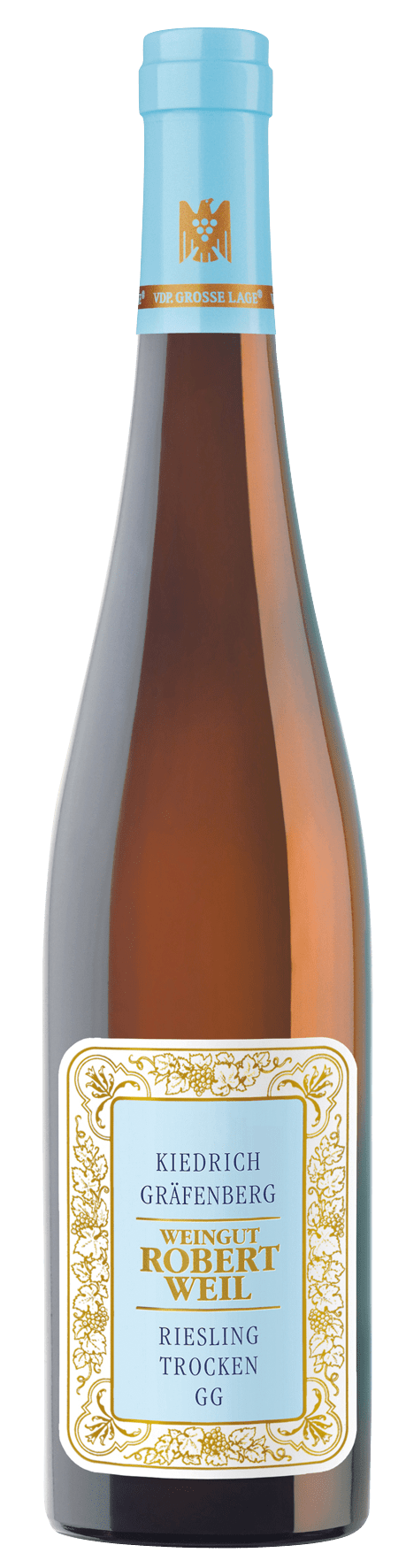
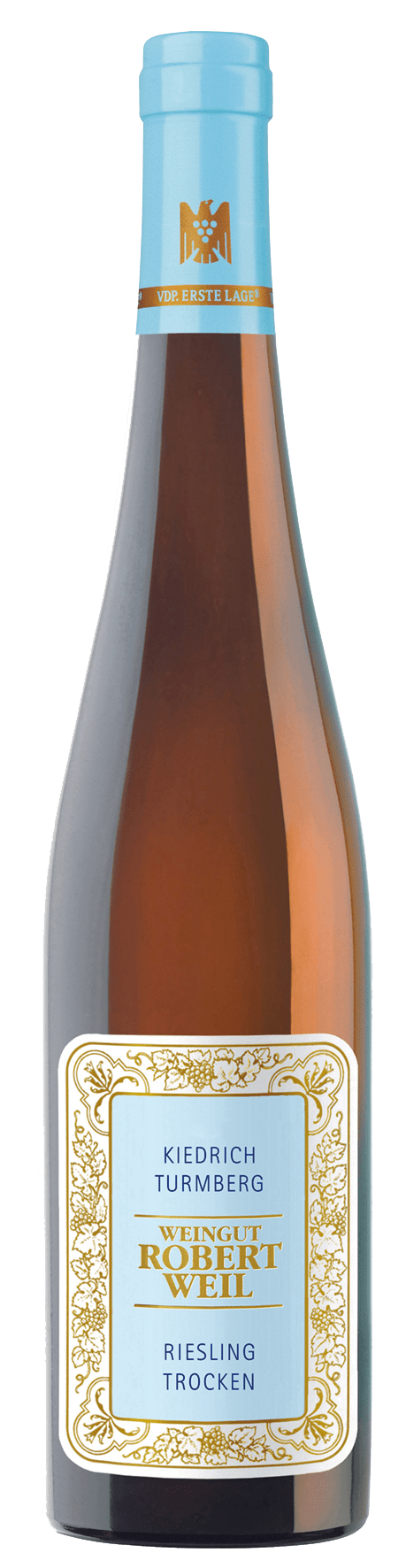
The winery's three sites are all located in the Kiedrich district: the Kiedricher Gräfenberg as a VDP.Grosse Lage, plus Turmberg and Klosterberg as VDP.Erste Lagen. The slopes drop to up to 60 percent inclination in places; the soil consists of weathered phyllite rock, interspersed with quartzite and loess loam admixtures—a barren southwest exposure that forces the vines to root deeply and concentrate the fruit slowly. In autumn, harvesting is done exclusively by hand and selectively, with Botrytis sites harvested in several passes depending on the vintage.
The winery has been farmed organically since the 2012 vintage and has been EU-organic certified since 2024. Herbicides are not used, fertilization is exclusively organic, and cover cropping protects the soils. In the cellar, work is done as gently as possible: fermentation with natural yeasts, cool temperatures, aging in stainless steel tanks or large wooden barrels depending on the wine type—without barrique influence, so as not to mask the origin. 100 percent estate bottling, no purchased grapes.
Dry precision, noble sweetness, a range for all levels
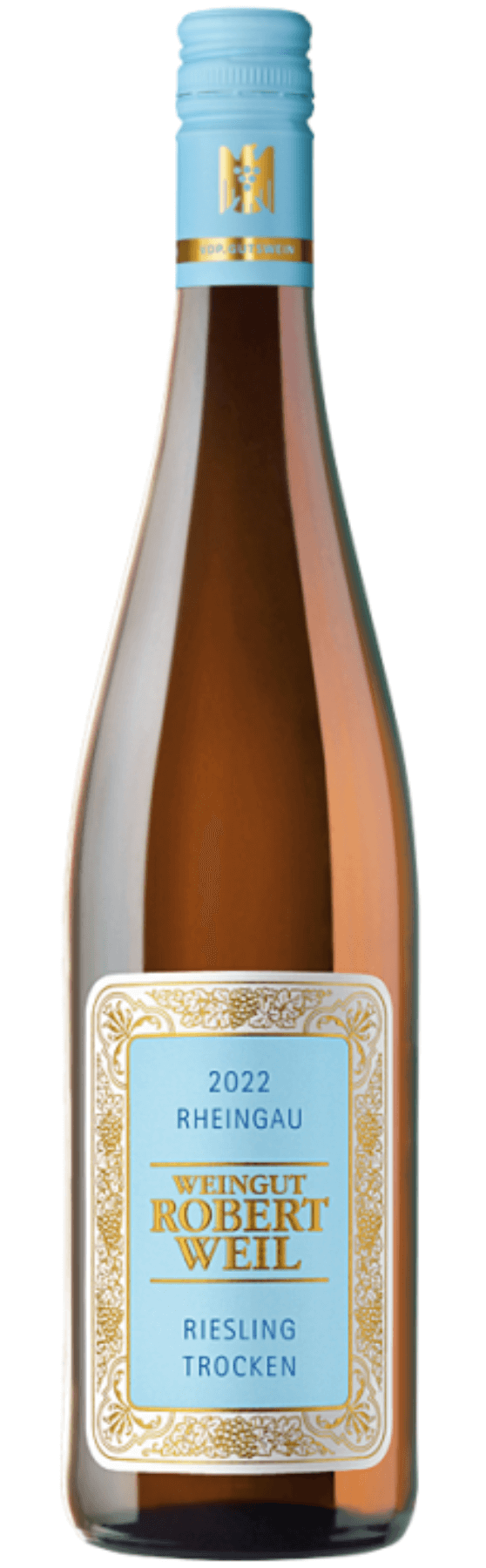
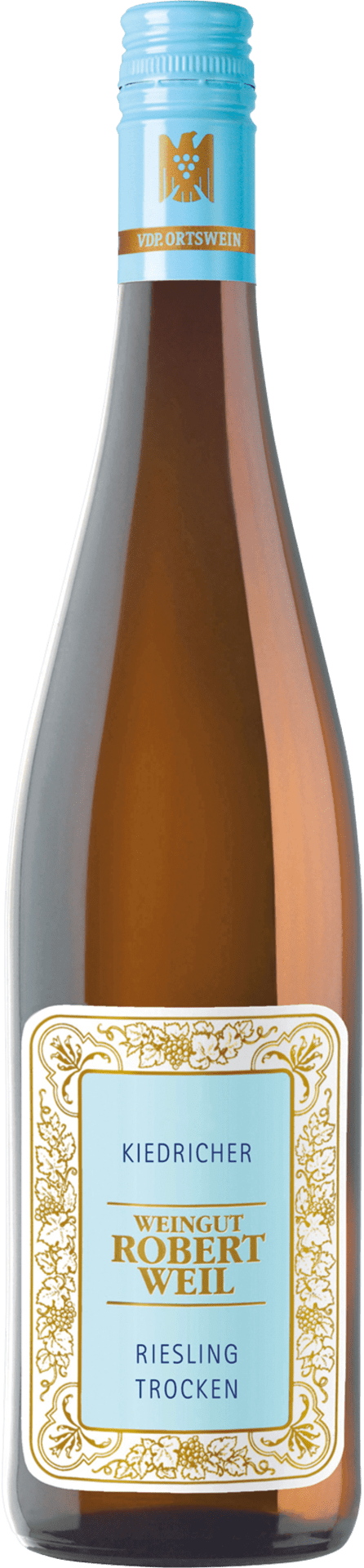
The range follows the VDP pyramid: the Rheingau Riesling forms the entry level—fruity, with lively acidity and clear minerality, part of it pre-aged in wooden barrels for texture. Above this is the Kiedricher Riesling as a local wine, vinified from plots in the three mountain sites. The Kiedricher Klosterberg and Kiedricher Turmberg follow as Erste Lagen: the Klosterberg appears more accessible and finely fruity, the Turmberg more powerful with red slate influence. The crown is the Kiedrich Gräfenberg Riesling GG—salty minerality, taut acidity structure, long finish, grown on quartzite-interspersed slate weathering soil with a gradient that requires manual work in every row.
In addition, the estate produces noble sweet Prädikat wines from Spätlese to Trockenbeerenauslese, for which it is particularly well-known internationally: concentrated Botrytis fruit, perfect acidity-residual sweetness balance. Anyone drinking Robert Weil consistently has a 100 percent Riesling in their glass—whether dry or sweet, always with the mineral depth of the Kiedrich mountain sites as a common denominator.
Kiedrichweingut-robert-weil.com
Award-winning wines
Falstaff Wineguide Deutschland 2024 - 97 Punkte
Awarded by Falstaff
Sakura Awards 2023
Awarded by Sakura Japan Women's Wine Awards