From a farming family to the largest winery in Liguria
The name Lunae refers to a millennia-old heritage: Portus Lunae, the Roman colony founded in 177 BC at the mouth of the Magra, shaped this corner of the coast between Liguria and Tuscany long before wine was bottled here. Pliny the Elder already praised the wines from Luni in his Naturalis Historia as the most valuable in Etruria. On this soil, just one kilometer from the Luni excavation sites, Paolo Bosoni began to realign the family heritage in 1966: he took over his ancestors' agricultural land and consistently transformed a mixed farm into a pure wine estate.
Today, the family continues to run the winery in the next generation. Paolo's son Diego, a trained oenologist, is responsible for the cellar and viticulture; daughter Debora manages the visitor center with tasting rooms and the wine museum that Paolo Bosoni built over three decades. With around 85 hectares of vineyards spread across Ortonovo, Castelnuovo Magra, and the plain around the ruins of Luni, Cantine Lunae is now the largest winery in Liguria by area.
Small-scale plots, Mediterranean microclimate, no herbicides
The vineyards are located in the extreme east of Liguria, in the Colli di Luni DOC, where the Apuan Alps protect the slopes from cold snaps and the Gulf of La Spezia sends sea breezes into the vineyards during the day. This interplay of mountain and sea winds creates distinct diurnal temperature fluctuations that directly influence the aroma and acidity structure of the wines. The soils vary greatly: loamy-clayey in the flatter areas, more mineral-rich and permeable in the hilly areas. This results in vineyard units of rarely more than two to three hectares — small enough to vinify each plot type separately.
The estate works without herbicides and is committed to organic farming. In addition, there is the Terra Viva Lunae project: around 20 hectares managed by over 100 local small-scale winemakers under the technical guidance of the winery to keep the regional grape varieties and traditions of the Colli di Luni alive. In the cellar, the guiding principle, clearly formulated by Diego Bosoni, is: quality is created in the vineyard and preserved in the cellar — not forced.
Vermentino as a compass — and a range that goes beyond it
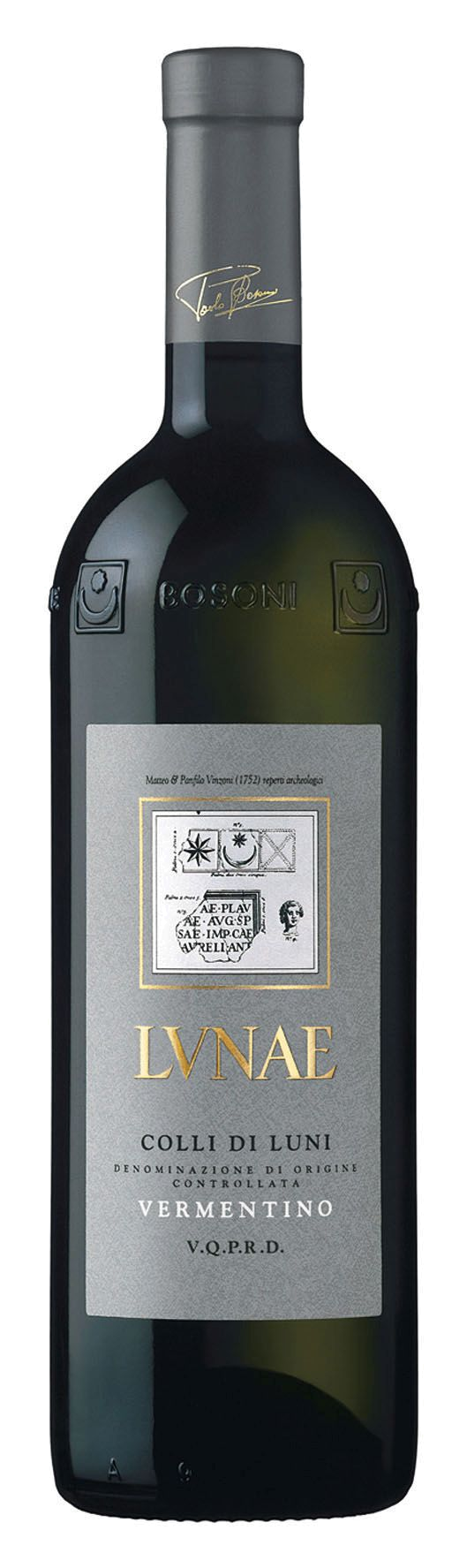
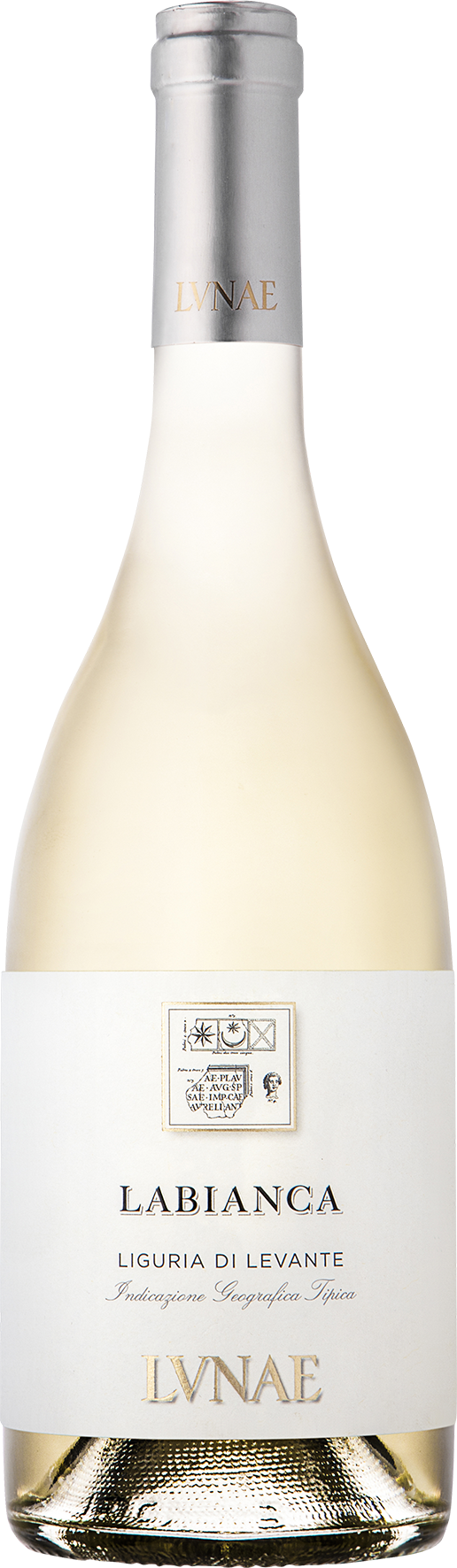
Vermentino is the estate's leading grape variety and is the focus of the range in several lines. The Etichetta Grigia Colli di Luni Vermentino DOC — 100% Vermentino, steel-fermented and aged for three months on the fine lees — shows what this grape variety achieves on the limestone-clay soil of the Colli di Luni: ripe pear and citrus on the nose, a creamy center, and then mineral austerity on the finish that keeps the wine complex without making it heavy. The Labianca Liguria di Levante Bianco IGT expands the palette with autochthonous varieties like Albarola and Vermentino Nero — grape varieties that Lunae specifically preserves and develops because they reflect the terroir of the Lunigiana in a way that international varieties cannot.
In addition to the white wines, the winery produces red wines from Sangiovese, Ciliegiolo, Canaiolo, and Merlot, as well as a classic-method sparkling wine from Vermentino and Albarola. The house's wines combine Mediterranean warmth with the salinity that the sea air carries into the glass — a style profile that clearly distinguishes itself from the aromatic Vermentino of Sardinia and focuses on texture and tension rather than volume.