From Rioja pioneer to the heart of Cigales
At the end of the 1990s, the Grupo Barón de Ley decided to leave its roots in the Rioja DOCa and explore new terroirs. After an extensive search, the choice fell on Cigales — a small Denominación de Origen north of Valladolid, which, despite a long winemaking history, hardly knew any winery operations and whose centuries-old vineyards were hardly used by anyone. Agricultural scientist Tomás Jurío took over the project and traveled the region for years to track down plot by plot and gradually acquire them from local winemakers. Thus, a contiguous estate of over 200 hectares was created. In 1999, the first harvest was vinified — still provisionally in the old Ermita del Cristo de Cigales — before the own bodega took shape from 2000 onwards and the striking building made of Campaspero stone and brick was completed in 2004. Finca Museum was thus the first branch of the Barón de Ley group outside of Rioja.
Vineyard and precise cellar
The soils are nutrient-poor and store the heat of the long Castilian summer days, only to release it again during the cool nights — a natural mechanism that promotes the aromatic and phenolic ripening of the grapes. The climate is continental with Atlantic influence: temperature fluctuations reach up to 20 °C within a day, winters are long and frosty, summers are dry and hot. At around 800 meters above sea level, the vines grow — many of them a hundred years old and older — almost exclusively in the Tempranillo variety, here called "Tinta Fina".
In the cellar, vinification follows the principle of maximum respect for the grape. Harvesting is done exclusively by hand, with strict berry selection for the premium plots. Fermentation takes place in specially developed, flattened small tanks that specifically increase the contact between must and berry skins. The barrel cellar with 5,000 barrels is one of the largest in the region — 70% French, 30% American oak. For the top wines like the Numerus Clausus, three additional French foudres with 5,000 liters capacity each are available, which allow for a gentler, more oxidative maturation.
Deep red wines and the spirit of the place
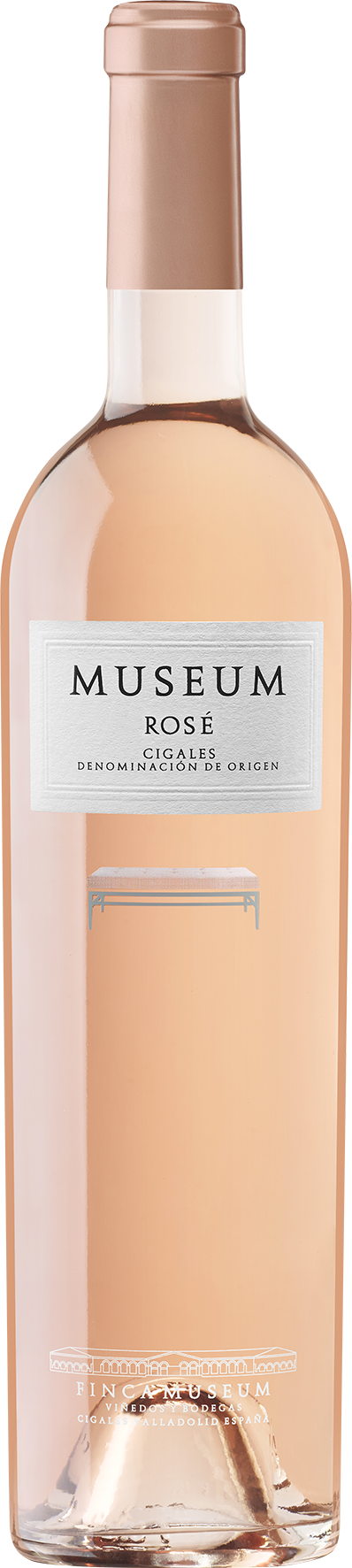
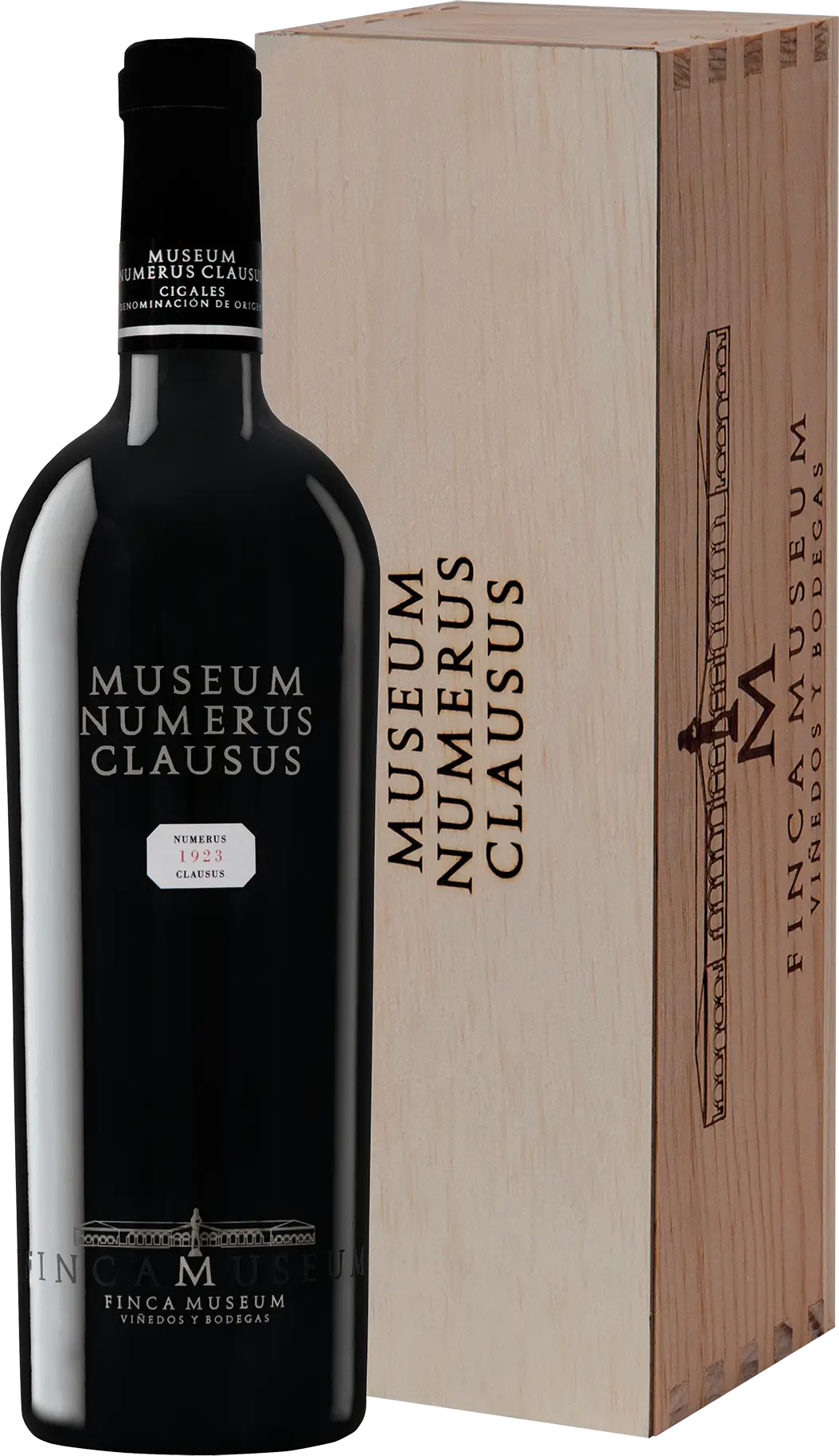
Finca Museum has helped shape Cigales — a D.O. that was historically known for its light rosado (clarete), but long underestimated the potential for aged red wines. This is exactly where the winery focuses its efforts: Crianza and Reserva wines made from Tinta Fina, which are given time in the cellar before they go into the bottle. The result is wines with dark cherry fruit, spicy depth, and a velvety finish polished by oak aging. The Museum Real Reserva stands for the classic style of the house; the Numerus Clausus — from selected old vine plots — shows where the journey goes with maximum care. In addition, there is a Rosé Reserva that reinterprets the historical strength of the region. The name "Museum" is no coincidence: the bodega sees itself as a living open-air museum of the vine, complemented by an art collection in the cellar rooms — including the sculpture "Vinea" by the Madrid sculptor Víctor Ochoa, an allegory of vine and fruit.